 Retro Replay Retro Gaming History, Reviews & Emulation
Retro Replay Review
Gameplay
The Treasures of Montezuma opens with an immediately understandable challenge: swap adjacent stones, make matches, and remove enough gem-bearing tiles before the ticking pocket watch empties. That directness is its strength. You are not asked to learn a complicated puzzle language before having fun; within minutes, you are scanning for moves while keeping one eye on the gem counter above the grid.
The early boards let you settle into the rhythm, but the pressure rises steadily as each level asks for five more gems than the last, eventually reaching 200. This is where the game stops feeling like a lazy Bejeweled-style diversion and starts demanding sharper decisions. Clearing a convenient match is not always enough; you need to notice opportunities that will set off the colored Aztec totems and remove large chunks of the board or buy yourself precious seconds.
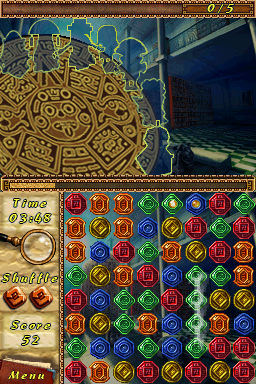
The six colored totems give the familiar swapping a welcome tactical wrinkle. Match two pairs of the same color and the corresponding statue activates, with the red Fire Totem blowing up groups of tiles and the orange Time Totem extending the clock. Golden stars earned from successful levels fuel these power-ups, so there is a satisfying feedback loop between playing well now and gaining a stronger safety net later.
Frustration can set in when the targets get high and the clock is moving fast. Two board shuffles offer an emergency escape, while hints can be bought with points, but neither replaces quick reading and efficient matching. That is a fair trade if you enjoy time-attack puzzle games; if you prefer patiently planning every move, Montezuma’s insistence on speed may feel more stressful than clever.
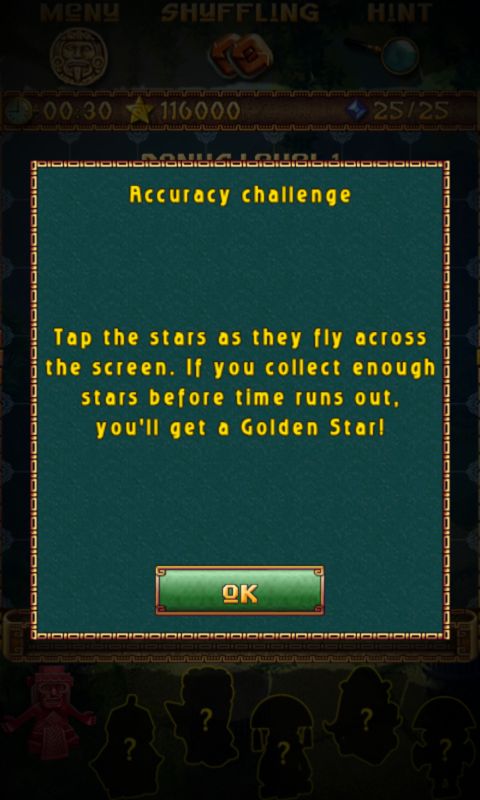
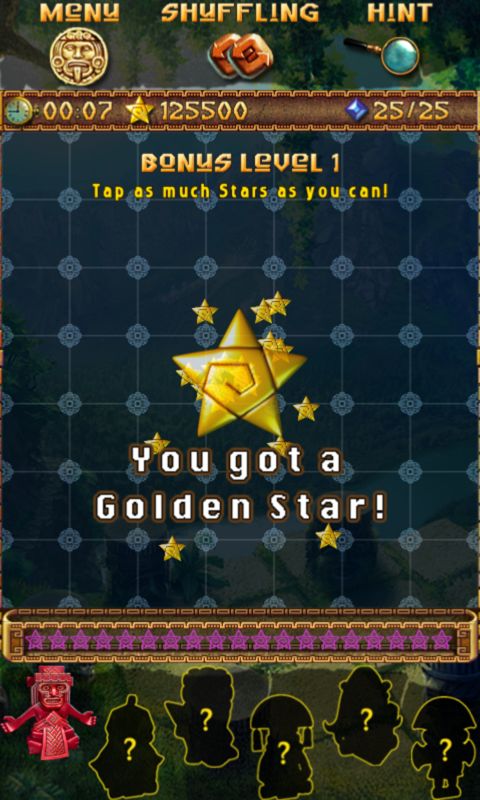
The timed diversions, including star-clicking accuracy tests and a matching-pairs concentration game, do not replace the main attraction, but they keep the 41-level run from becoming too samey and provide more chances to earn stars. Completing Adventure unlocks Hard mode, which raises the goals and quickens the pace. The first run is substantial enough on its own, while the harder pass is aimed squarely at anyone who enjoyed the pressure rather than merely endured it.
Graphics
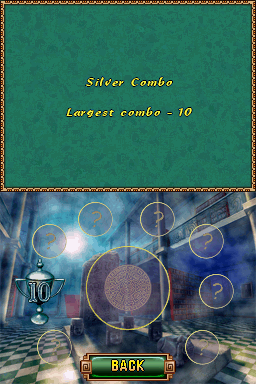
The action is viewed on fixed puzzle boards filled with colored stones, sparkling gems, and Aztec statue totems. The important pieces are easy to pick out: gem tiles mark your real objective, the six totem colors are distinct, and the pocket-watch timer keeps the urgency visible without distracting from the grid.
Story
Dr. Emily Jones’s 1935 search begins at an archaeological museum in Cancun after an ancient stone tablet catches her attention. Her conclusion—that tile-matching puzzles will lead to a hidden Aztec city—is knowingly pulpy, and the game wisely treats it as a reason to keep advancing rather than a dense adventure plot.
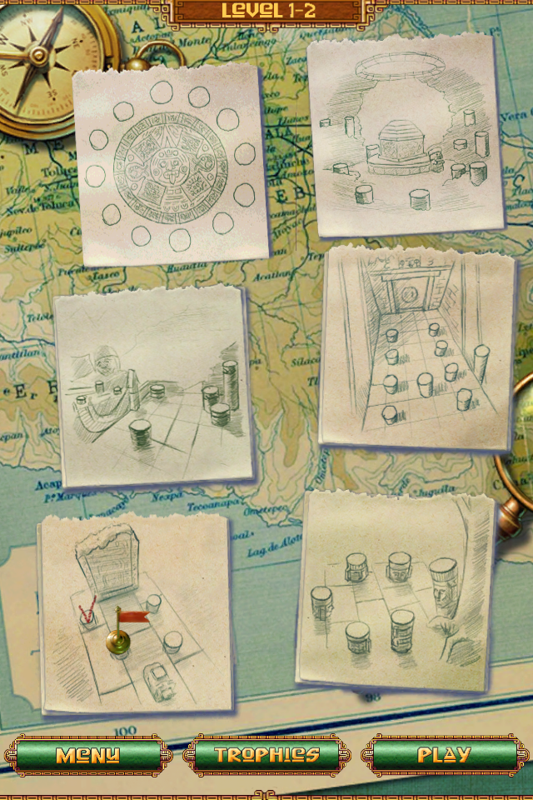
Emily’s journal, newspaper articles, and other documents move the tale between stages on a fixed path. You are not shaping the expedition or solving story puzzles; you are getting small bits of context between matching sessions. That makes the narrative easy to take in and easy to ignore when you just want another board.
The five chapters give the campaign a better sense of progress than a completely disconnected sequence of puzzle screens would have. Still, the story is a garnish, not a payoff. Come for the escalating tile challenges, and treat Emily’s expedition as a pleasant thread tying them together.
Overall Experience
At its best, The Treasures of Montezuma turns a very familiar match-three foundation into a tense little sprint. The first hour pulls you along with straightforward objectives and quick wins; later, higher gem requirements force you to use totems intelligently and make decisions under pressure. That arc is simple, but it works.
The game does not pretend to reinvent tile matching, and it does not need to. Its useful additions are the ones that matter during a crowded board: a visible collection target, limited shuffles, purchasable hints, power-ups tied to earned stars, and a clock that makes every match count. The mini-games are modest interruptions, but they arrive often enough to refresh the pace.
You should give it a chance if you want match-three play with a firm time limit and a campaign structure, rather than an endless score chase or a slow, contemplative puzzle. The rising demands can be punishing, particularly near the end, but the tools are there and the difficulty feels aligned with the game’s core skill: spotting productive matches fast.
For a game built around swapping stones one move at a time, Montezuma has more momentum than its premise suggests. The story will not linger, but the push to clear one more increasingly demanding board—and then tackle Hard mode—makes the overall package worth the tension.


Reviews
There are no reviews yet.