 Retro Replay Retro Gaming History, Reviews & Emulation


Retro Replay Review
Gameplay
Limbo starts before you have time to settle in. There is no opening explanation or tutorial cushion: you control a small boy, move forward, and quickly learn that the world is far more dangerous than it first appears. That blunt introduction is one of the game’s best decisions. You are encouraged to poke at the environment, try a jump, tug a lever, and discover the rules through consequences rather than instructions.
The controls are deliberately spare. Movement, a modest jump, and an action button cover pulling objects, pushing them into place, grabbing ropes, and hanging from ledges. Because the boy is fragile and cannot leap very far or survive falls, even ordinary-looking gaps demand attention. Puzzles get their bite from using the objects already around you, often with physics involved, so progress feels less like selecting an answer and more like figuring out how this particular hostile space works.
Death is frequent and often gruesome, whether you misjudge a trap, fail a chase, or get too close to something hunting you. Fortunately, the game reloads immediately before the current puzzle, making experimentation easy to accept. You will still hit a few moments where a timing-based answer or the one intended solution is not immediately obvious, and that can turn curiosity into trial and error. Yet Limbo is usually smart about making a solved obstacle feel obvious in hindsight.
The game also knows how to shift its pressure. At times you are calmly arranging a route onward; at others, dangerous creatures or hostile children force you to act quickly. Strange discoveries, including a glowing worm that alters gravity and the threat of a giant spider, keep the rules unstable enough that you never entirely relax. It is a single-path game, but the changing situations give that path a steady, unsettling momentum.
Graphics
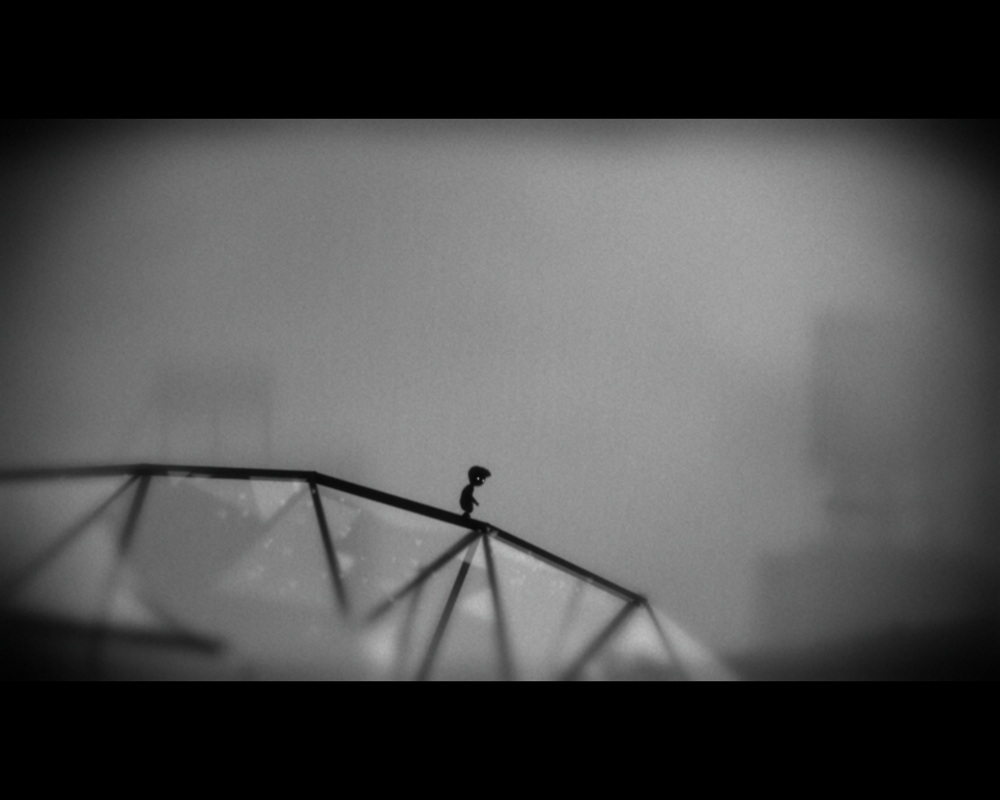
The world is rendered in stark monochrome, with the boy reduced to a dark silhouette against foggy, dusty grey scenery. Forests, an abandoned city, and industrial areas slide past in layered 2D depth, so the backgrounds feel larger than the narrow path you actually travel. The misted-glass look is simple but memorable, and it makes threats lurking at the edge of the screen especially unnerving.
Limbo does not soften its violence. Traps and failures are starkly animated, while images such as bodies used as a bridge give its horror real weight. The clean silhouette work also keeps moving hazards, ropes, and objects easy to pick out during tense puzzle attempts.

Story
You are told almost nothing outright. The boy is said to be searching Limbo for his sister, but there are no cut-scenes, dialogue, or explanatory interruptions to pin down what this place truly is. That silence asks you to supply meaning yourself, and it makes even a short encounter or a grim piece of scenery feel loaded.
The journey can be read literally as a search, or more metaphorically as an attempt to find companionship and survive an unfamiliar environment. Limbo wisely leaves room for both readings. It does not force a clean answer, which is a large part of why its sparse story lingers after the final puzzle.
Its most disturbing notes come from the rare human encounters. A group of children treats the boy as an intruder and lays traps, lending the game a cruel, feral edge. These scenes do not need much exposition; their brevity makes them feel colder, while the many corpses and abandoned spaces suggest a world where others have already failed.
Overall Experience
Limbo is at its best when you are one step from understanding a puzzle and one mistake from a sudden, nasty death. The first hour pulls you in through pure uncertainty, then the simple controls start to click and you begin reading the world more carefully: what can move, what can kill you, and what object might turn an impossible-looking gap into a route forward.
There will be frustration. A game built around concealed solutions and occasional timing tests can leave you staring at a screen, certain you have missed some tiny possibility. But its fast restarts matter enormously, because they let you test an idea immediately rather than punishing you with repetition. The game turns failure into information more often than it turns it into a chore.
If you want a puzzle-platformer with a clear plot, open routes, or forgiving action, Limbo’s narrow path and merciless hazards may feel restrictive. If you enjoy atmospheric problem-solving and horror that trusts you to sit with unanswered questions, it is an easy recommendation. The payoff is not a neat explanation; it is the sustained feeling of having made it through a cruel, alien place by paying attention.


Reviews
There are no reviews yet.