 Retro Replay Retro Gaming History, Reviews & Emulation


Retro Replay Review
Gameplay
The first hour puts you in Fenton Paddock’s worn-in shoes and quickly establishes the rhythm: investigate a location, inspect the useful-looking clutter, talk to the people standing between you and the next lead, then turn a few scattered objects into a solution. Lost Horizon is not trying to reinvent the graphic adventure. It is trying to carry you through a big old-fashioned expedition without making every step feel like homework, and it mostly has the right tools for that job.
You control Fenton for most of the adventure, though the game occasionally asks you to manage more than one character. Puzzles range from inventory use and item combinations to dialogue challenges and machines. That spread matters. When one form of problem-solving starts to feel routine, another can take over, so the game does not live or die solely on whether you enjoy combining objects.
The machine puzzles are the clearest concession to different tastes, since they commonly offer two difficulty settings. Pick the tougher option if you want to linger over a mechanism; lower it if you are here for the route from Hong Kong to Tibet and beyond. Some puzzles permit more than one solution, but this remains a mostly linear adventure, so do not expect broad freedom in how the plot unfolds.
Practical quality-of-life touches help it age gracefully. Right-click inspection lets you check objects before committing to an idea, and that same button can skip dialogue or movie sequences when you want to keep the pace up. A hotspot function and a hint system offering general guidance on current goals are welcome safeguards. They will not turn every puzzle into a free pass, but they make it easier to recover when frustration starts replacing curiosity.
Graphics
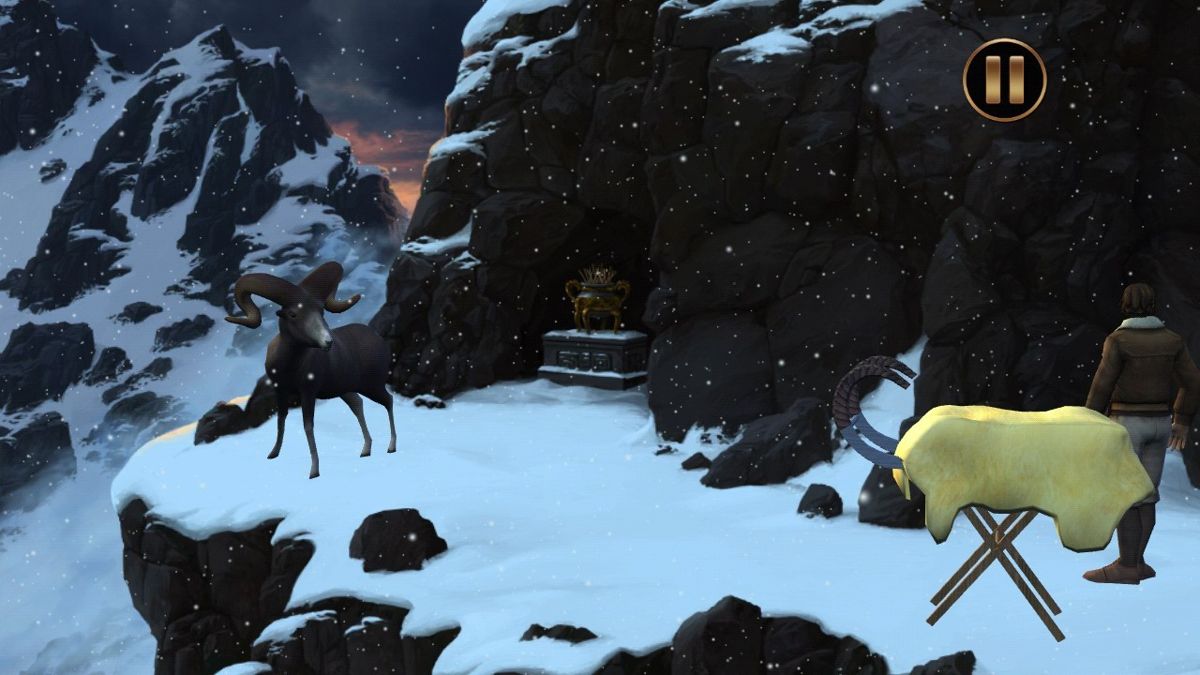
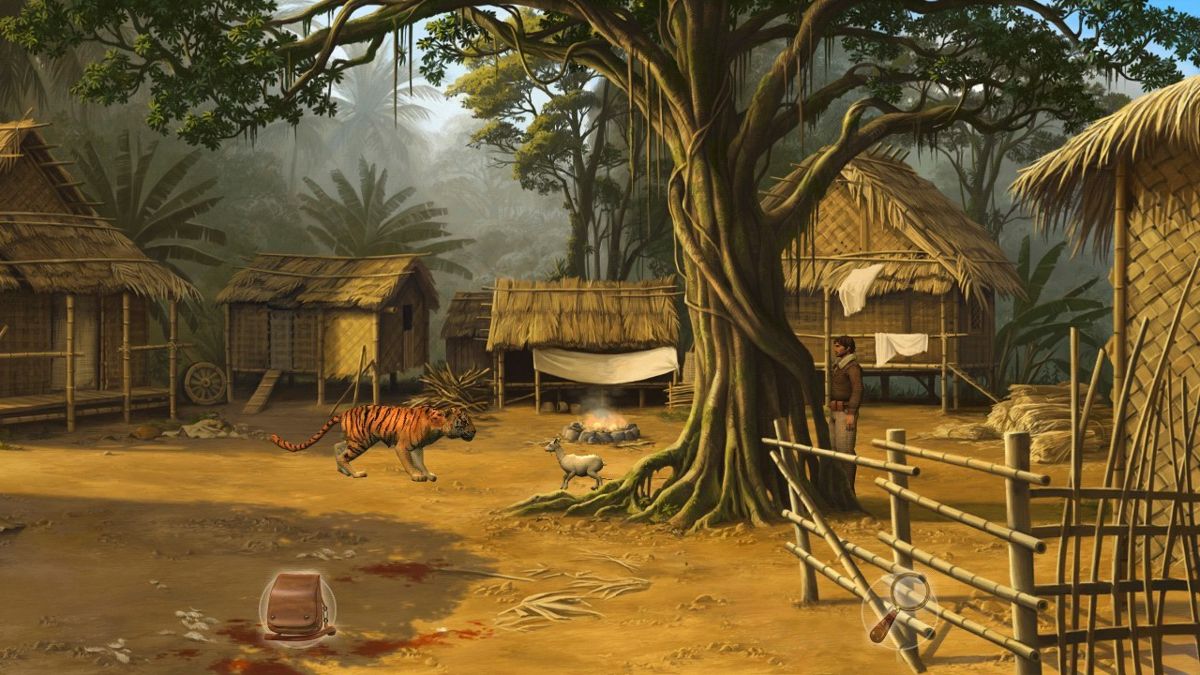
Lost Horizon uses a third-person viewpoint with cinematic camera work to frame Fenton’s travels through multiple continents. The changing locations give the adventure room to breathe, rather than trapping its mystery in a single town or temple.
Story
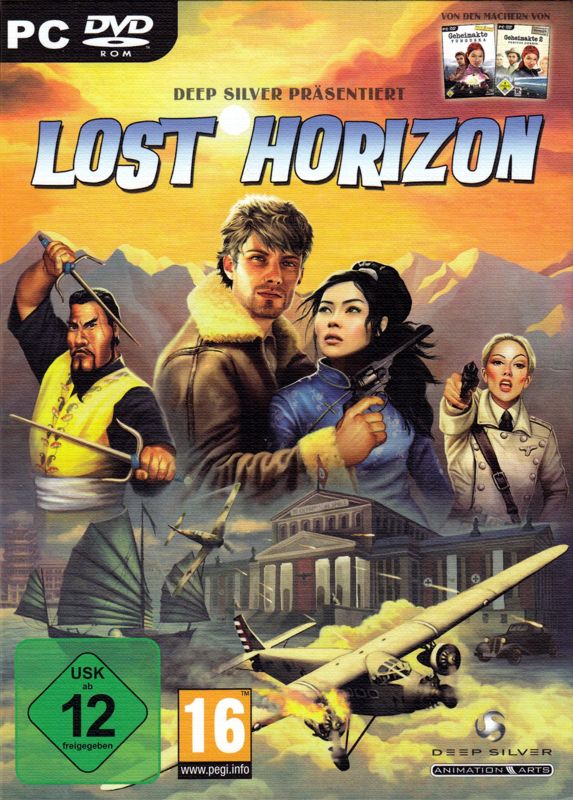
Fenton is a solid fit for this kind of 1936 adventure: a dismissed British Army officer who has landed in Hong Kong as an airborne freight forwarder, taking smuggling work and other questionable jobs. Searching for a friend lost during a Tibet expedition gives him a direct personal reason to leave that life behind, while his own past stays close enough to complicate the trip.
The story leans hard into serial-style danger. Ancient mythologies, a journey across three continents, and confrontations with both the Triads and Nazis promise a broad, escalating hunt rather than a small-scale detective tale. If you enjoy adventure stories that keep widening the map and raising the stakes, that is a strong hook.
Kim Wuang’s help gives Fenton an ally as the search grows more dangerous. The central setup is conventional, but conventional is not a flaw when you want a confident globe-trotting yarn with a clear objective. You are following a missing-person search that keeps opening into larger trouble, and that forward motion is the story’s most reliable strength.
Overall Experience
Lost Horizon earns its 1930s adventure tone through momentum rather than complexity. You get an accessible point-and-click structure, a protagonist with enough baggage to fit the danger around him, and a route that moves from Hong Kong toward Tibet and across the world. The result should feel comfortable to anyone who misses puzzle adventures built around locations, conversation, and inventory logic.
Its biggest limitation is also easy to identify: the plot is largely linear. If you want an adventure where choices radically reshape the story, this is not that game. The occasional alternate puzzle solution adds some flexibility, but the pleasure comes from solving the next obstacle and seeing where Fenton’s chase goes, not from authoring your own version of events.
Give it a chance if you want a guided, globe-hopping mystery and appreciate help systems that keep a stalled puzzle from derailing an evening. Machine-puzzle difficulty options make it easier to tailor the friction, while the varied puzzle types give the journey some welcome texture. It is a good fit for a relaxed adventure-game mood: less about mastery than steadily pushing through a pulpy expedition with enough hazards and mythology to hold your attention.


Reviews
There are no reviews yet.