 Retro Replay Retro Gaming History, Reviews & Emulation
Retro Replay Review
Gameplay
Chains of Satinav understands the old point-and-click pleasure of being stuck in a small place with too many suspicious objects and one nagging question: what on earth is this piece of junk for? You guide Geron through fixed scenes, interact with people and objects, and work toward solutions through observation and conversation. The opening in Andergast gives that structure a nice hook, since the town’s celebrations sit beside the increasingly nasty crow problem.
Interaction is streamlined in a useful way: the game selects the relevant action for the object you have chosen rather than making you cycle through a long list of verbs. That keeps the focus on the puzzle itself. Conversations use a circular arrangement of dialogue choices, which makes chats feel a touch less static while still giving you clear choices to pursue.
Geron’s break spell is the first wrinkle that separates the game from a purely conventional inventory adventure. It can shatter thin glass and clay objects, while Nuri’s repair ability later opens the opposite line of thought. Once you start asking whether an obstacle should be broken or restored, the puzzles gain a more satisfying internal logic. Frustration can still set in when you have exhausted a scene and need to reconsider an earlier object or conversation, but the simplified mode’s hints are there for exactly that moment.
The side content has some welcome replay value. Certain side-quest achievements account for multiple solutions, so experimentation is not merely tolerated; it is occasionally acknowledged. If you like squeezing alternative answers out of an adventure game rather than racing to a final solution, that is a worthwhile extra nudge.

Graphics
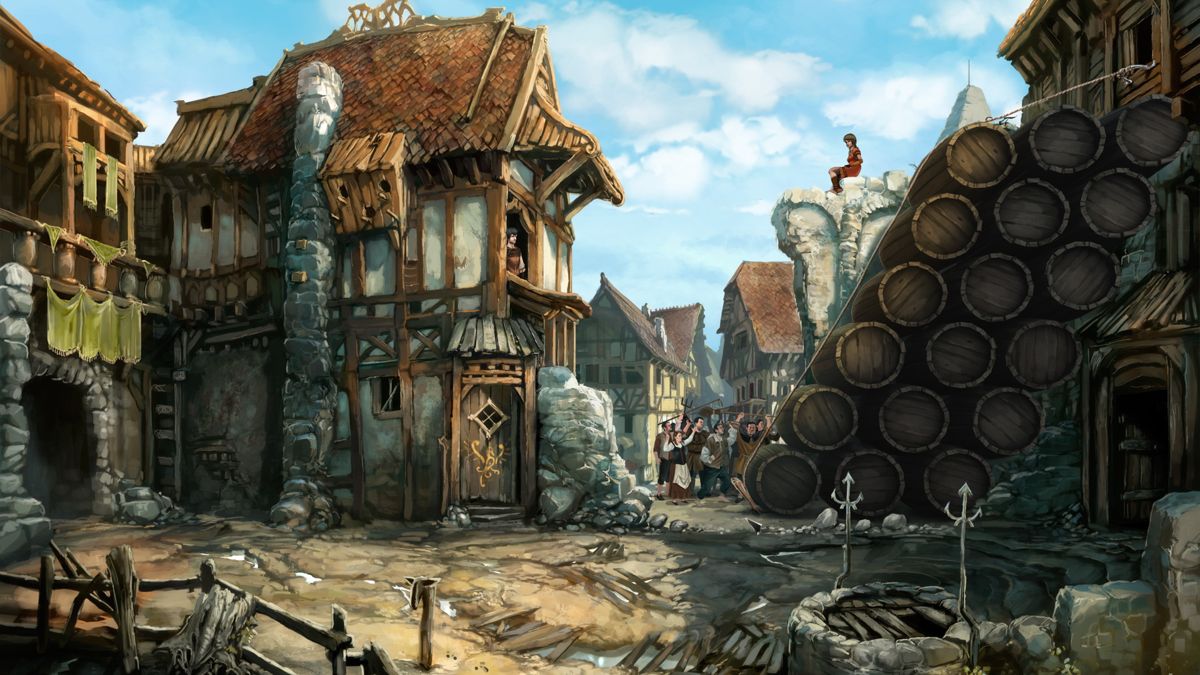
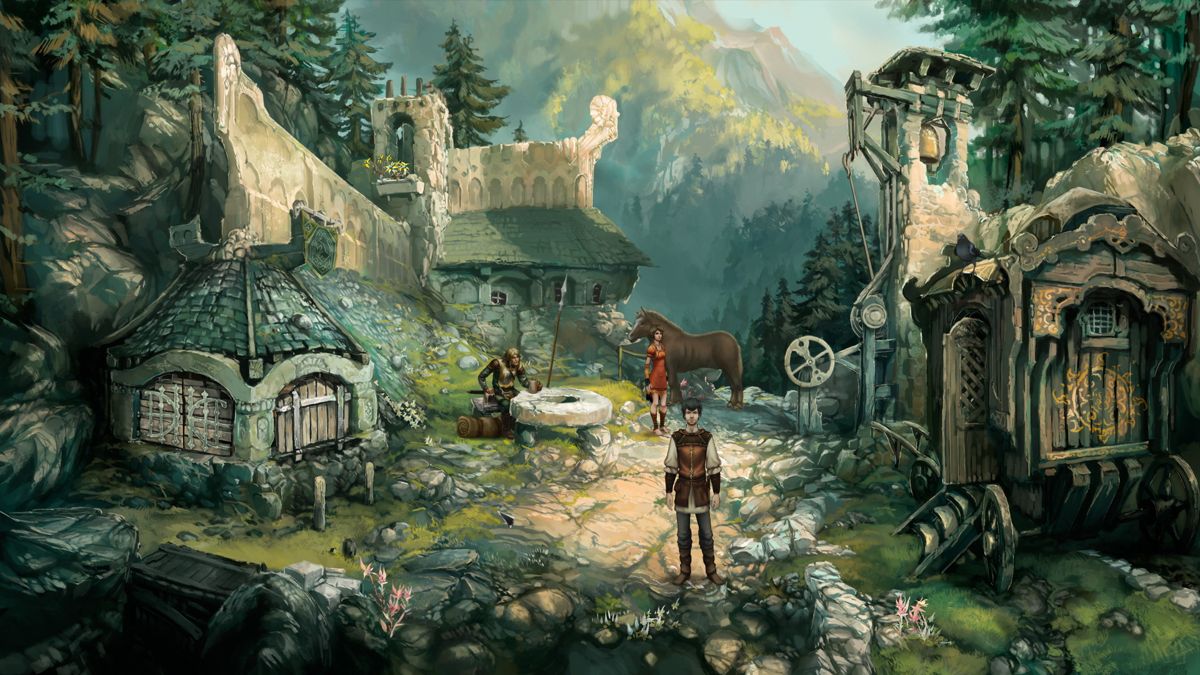
The game uses a third-person, fixed-screen adventure view, keeping Geron, Nuri, the townspeople, and each puzzle-filled location in clear focus. This is a scene-by-scene journey through Aventuria rather than a game built around free roaming, and that framing suits careful object hunting and character conversations.
Story
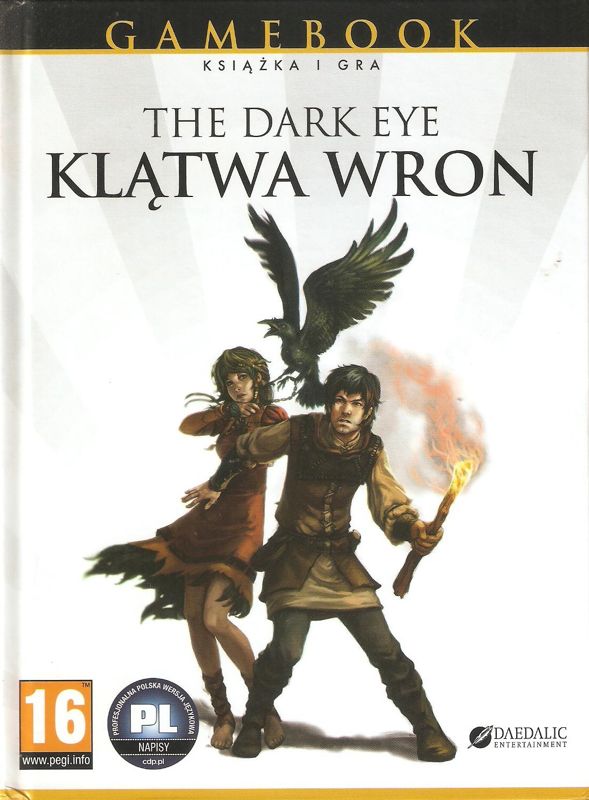
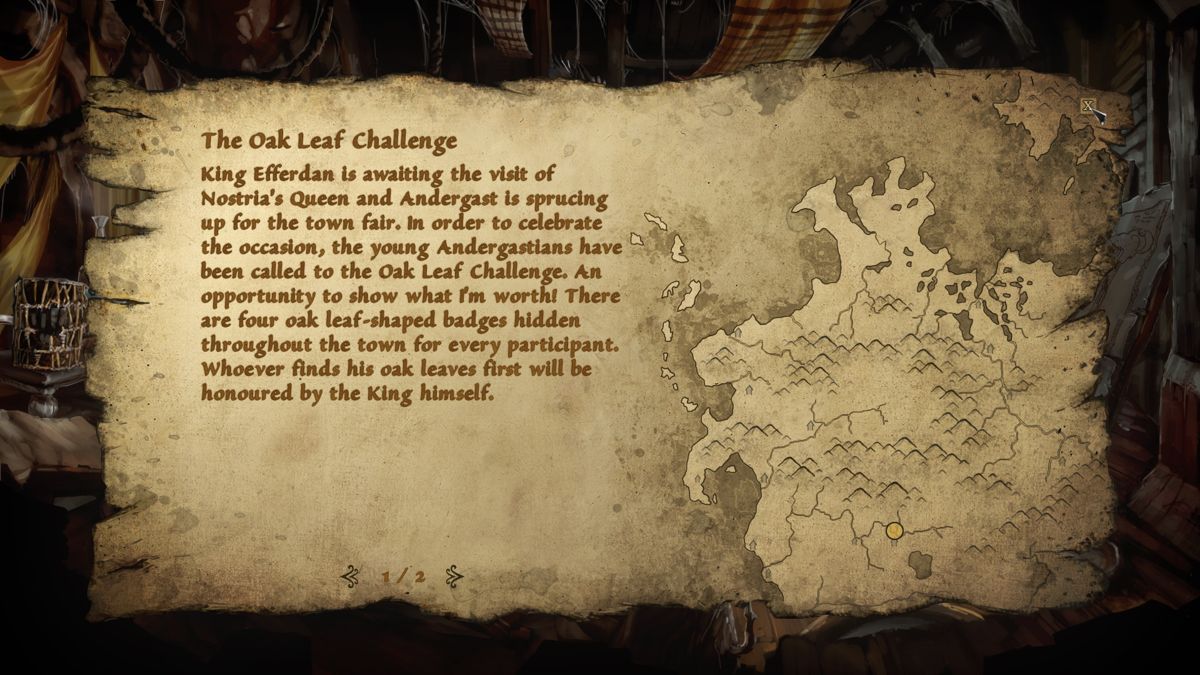
The story earns its momentum from an effectively grim start: crows descend on Andergast, some attack people, and others bring nightmares. Geron is hardly a grand hero at first, which makes his involvement more appealing. He begins as a young contestant in the Oak Leaf Challenge, only to be pulled into a danger connected to a Seer executed thirteen years earlier.
That threat has a suitably old-school fantasy shape. The Seer’s former captors are dying, suspicion grows that he has returned, and his plans hinge on finding a fairy who can play a sacred harp. Geron’s task becomes urgent without losing the personal texture of a reluctant, unlucky protagonist trying to protect Nuri while escaping the Seer’s followers.
Nuri is more than a convenient magical tool, because the journey is built around Geron traveling alongside her. Their partnership gives the middle of the game a clear emotional center as they move through Aventuria. Familiarity with the setting is not required, though fans can place it alongside the related The Dark Eye game.
Overall Experience
This is a good fit when you want a traditional fantasy adventure that asks for patience instead of quick reflexes. The pleasure comes from gradually understanding a scene, combining mundane objects with unusual magic, and following a dark fairy-tale mystery from troubled streets to a larger threat. It is less likely to win over anyone who hates revisiting locations or being briefly stumped by adventure-game logic.
The payoff is worth the occasional stall because the game has a concrete sense of escalation: a local plague, a murdered past, a hunted fairy, and a world-saving goal all build naturally from Geron’s initially humble position. Use hints without guilt if you hit a wall; preserving the story’s momentum is more valuable than proving you can brute-force every puzzle.
At 7.7, Chains of Satinav lands as a solid, story-forward point-and-click with smart magical twists and enough alternate puzzle solutions to reward a second look. For game-specific release background, see The Dark Eye: Chains of Satinav’s history; for playing it, come for the crows and stay once Geron and Nuri’s partnership starts to click.

Reviews
There are no reviews yet.