 Retro Replay Retro Gaming History, Reviews & Emulation
Retro Replay Review
Gameplay
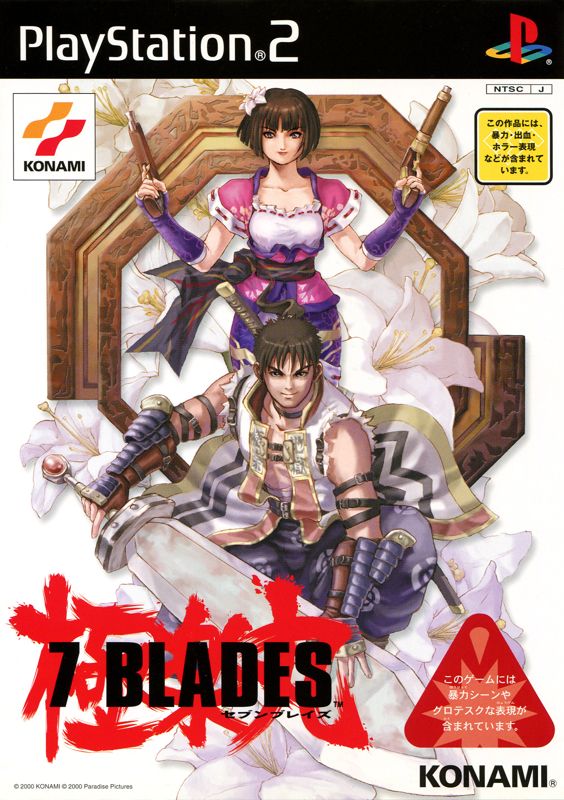
The first hour of 7 Blades throws you into a wonderfully strange historical-fantasy mess: ninja violence, Nagasaki intrigue, foreign influences, and a golden dragon looming over the coast. That setup has more personality than the usual anonymous stage-to-stage action game, and the central choice matters immediately. Gokurakumaru is a sword-carrying mercenary built for getting close, while Oyuri fights with pistols, rifles, and other firearms. Picking one is not simply choosing a different character model; it changes how you approach danger.
Gokurakumaru is the better fit if you want the direct satisfaction of a blade-focused action game. His variety of swords gives his side of the adventure a close-range, confrontational feel. Oyuri’s firearms put a different kind of pressure on the same broad format: positioning and dealing with enemies from range become the focus. Neither route replaces the other, which is important because 7 Blades is at its best when you treat both protagonists as halves of the same story.
The stage structure keeps the game moving. One mission may ask you to reach a destination, another to clear out enemies, and another to defend someone. That variety prevents the action from becoming one long uninterrupted string of fights, even if the objectives themselves are familiar. Frustration can set in if you want an open-ended adventure or a highly elaborate combat sandbox; this is a directed action game with jobs to complete. Meet it on those terms and its pace has a blunt, old-school pull.
The practical advice is simple: do not stop after one character if the premise has hooked you. The two campaigns intertwine, and the contrast between steel and gunfire is where the game finds much of its replay value. For a deeper overview of its background, see the game’s history and release information.
Graphics
7 Blades uses a third-person viewpoint suited to its close-quarter sword fights and firearm-led encounters. Its most distinctive imagery comes from the period-fantasy premise: Dejima under attack, Nagasaki’s coast, ninja squads, and the mysterious golden dragon give the game more memorable scenery and enemy context than a generic action backdrop.
Story
The story begins with several strong hooks colliding at once. In Kanei 17, Dejima is attacked by ninja sent by the shogunate, while a golden dragon appears off Nagasaki. Gokurakumaru, Oyuri, and their assistant Togizo head toward the trouble hoping to make money, which is exactly the sort of selfish, practical motive that suits a mercenary adventure.
Gokurakumaru’s womanizing rogue persona and Oyuri’s place as his lover create a more character-led frame than the title’s simple action-game structure first suggests. The important part is that each playable lead has an individual storyline. Their routes cross, so changing characters lets you see the same larger conflict from another angle rather than merely repeating events with a new weapon.
There is a pleasingly pulpy energy to the whole setup. Historical Japan, foreigners on Dejima, shogunate ninjas, hired blades, and a supernatural dragon are not subtle ingredients, but 7 Blades does not need them to be. If you enjoy adventure stories that pile intrigue and myth onto a sturdy action framework, the premise gives the stages a reason to matter beyond the next fight.
Overall Experience
7 Blades is a modest but distinctive PS2 action game whose best decision is making its two leads play so differently. Gokurakumaru’s swords and Oyuri’s guns turn the character choice into a real tonal and tactical change, while the intertwined campaigns encourage you to see more than one route through the conflict.
Its weaknesses are tied to its narrowness. The staged goals—reach a point, defeat enemies, protect an ally—are dependable action-game material, not a radical reinvention of the genre. If you need a huge world or endless mechanical complexity, this will likely feel limited. The payoff instead comes from committing to its oddball setting and returning for the other protagonist’s perspective.
At a 6.5, this is not essential for every action fan, but it is easy to recommend to someone with affection for compact, eccentric PlayStation 2 games. Give it a chance if sword-and-gun dual campaigns, ninja-era fantasy, and a story built around mercenaries chasing profit sound more appealing than polish for polish’s sake.


Reviews
There are no reviews yet.