 Retro Replay Retro Gaming History, Reviews & Emulation
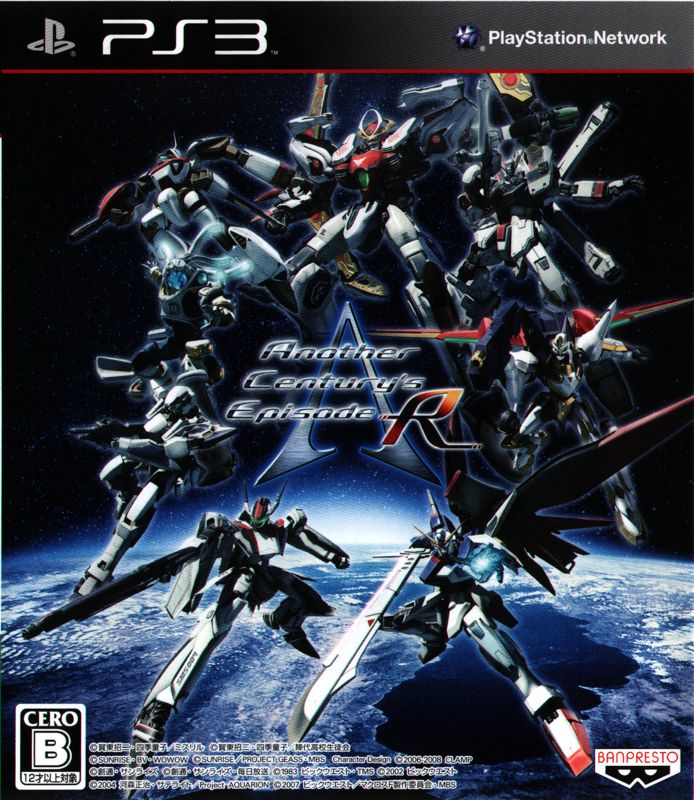
Retro Replay Review
Gameplay
The first hour understands exactly why you showed up: you choose a route tied to one of the included series, take control of a famous-style mecha, and get straight into fast third-person battles. It is a direct, mission-based action game, and that directness is often its strength. You are not buried under elaborate objectives before you get to pilot something powerful.
What keeps the fighting from becoming completely mindless is the way each machine handles its own balance of close- and long-range attacks. You earn points from missions and put them into upgrades, so there is a steady reason to keep pushing forward even when an assignment itself is uncomplicated. The tension bar is the most important rhythm-builder: use lesser attacks, build momentum, then cash that momentum in for higher-level moves. It gives combat a useful rise and release instead of asking you to repeat your biggest option forever.
Movement tools matter, too. Shields help against distant fire, boosts let you close on enemies that want to keep their distance, and transformable units can switch modes quickly. That combination gives the roster practical differences beyond its crossover appeal. When you move from one machine to another, you have to adjust how you approach distance and attack selection rather than merely admiring a different nameplate.
The limitation is mission design. Objectives are usually about destroying every enemy or a designated set of enemies, and the early route-specific missions eventually converge into a shared run of stages. If you need constantly changing goals or tactical complications, the structure will wear thin. If you can enjoy improving a machine, learning its attack ranges, and clearing waves efficiently, the repetition is easier to forgive.
Graphics
The focus is squarely on the machines: a broad mix of super robots, more grounded mobile suits, transformable units, and enemy android forces seen from a third-person combat view. Swapping forms during a fight gives the action a welcome bit of visual motion, while the crossover roster supplies the main reason each new selection feels distinct.
Story
The setup is cheerfully crossover-heavy. A call draws aces from ten different universes to the ruins of a dead planet, where none of them know why they have been brought together or how to return home. That mystery gives the campaign a clear throughline without getting in the way of getting back into a cockpit.
Autumn Four, the amnesiac girl connected to the summoning, becomes the center of the larger conflict when Winter One’s android army attacks. Rivalries among the summoned pilots begin to surface, sides form, and the separate routes ultimately feed into the same story. It is a sensible framework for putting such a mismatched collection of series in one place.
Do not come expecting each route to remain a wholly separate saga all the way through. Their unique beginnings are a nice nod to the individual series, but the eventual convergence makes this feel more like one shared crossover campaign than ten fully independent stories. That is a trade worth making if you want the cast to collide; less so if your favorite series is the only reason you are here.
Overall Experience
Another Century’s Episode: R is at its best when you treat it as a hangout for mecha fans with a solid action-game spine. Pick a machine you like, learn how it wants to fight, upgrade it, and enjoy the small satisfaction of turning a routine elimination mission into a cleaner, faster clear. The crossover is not just decoration because the different stats, attack ranges, and transformations give you reasons to experiment.
Its rough edge is that the campaign asks the combat system to do a lot of work. Repeated destruction objectives and converging paths can make the middle feel like a long sequence of variations on the same assignment. The payoff is worthwhile when the act of piloting and improving machines is already enough to make you happy; it is harder to recommend if you need inventive mission conditions to stay engaged.
Give it a chance if a PS3-era mecha action game built around an unusually broad anime roster sounds like a good evening. Fans can also find useful background on Another Century’s Episode: R before deciding whether this particular crossover lineup is the one they want to ride with. For everyone else, it is a competent but specialized brawler whose best moments arrive when you stop chasing novelty and start enjoying the machine in your hands.


Reviews
There are no reviews yet.