 Retro Replay Retro Gaming History, Reviews & Emulation
Retro Replay Review
Gameplay
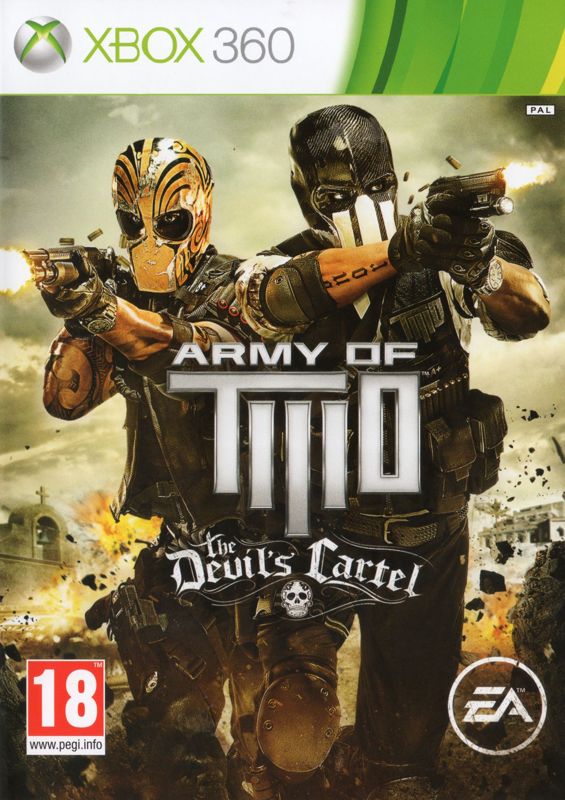
The first hour makes the priorities plain: stay close to your partner, push through hostile territory, and keep shooting. Alpha and Bravo are hired to confront La Guadana, and the game channels that job into regular third-person firefights rather than elaborate tactical puzzles. That directness has a certain old-school appeal. You can sit down with a friend and immediately understand the rhythm without a long learning curve.
Co-op remains the reason to play. A second person makes the action feel more active and less like a routine march from one gunfight to the next, while the shared focus on kills gives both of you a constant reason to stay involved. The series has always been built around a two-person team, but this installment puts less weight on special partner interactions and more on straightforward combat. If you wanted a sequel that doubled down on elaborate coordinated approaches, that change will feel like a step back.
The progression loop has enough hooks to keep the shooting from feeling completely flat. Kills earn cash that also serves as experience, and your chosen approach can affect the rewards you receive. Being able to customize masks, gear, and weapons lets you put a little personality into Alpha or Bravo rather than treating them as blank soldiers. It is not a substitute for deeper encounters, but it gives you something tangible to work toward between missions.
Overkill is the clearest burst of excess in the design. Fill its gauge through kills and you can briefly become invulnerable, fire without ammo limits, slow time, and deal heavier damage; you can spend that advantage on one operative or activate it for both. It is a strong panic button and a satisfying way to blow through a packed firefight. Yet it also underlines the game’s preference for escalation over tactical variety: when the shooting starts to blur together, the answer is often simply to shoot harder.
Graphics
The behind-view camera keeps the action centered on Alpha or Bravo as they fight through the cartel conflict, and the destructible environments give gunfights some visible messiness when parts of the surroundings can be destroyed or manipulated. Custom masks, gear, and weapons also give the two operatives a more personalized look.
Story
This is a clean revenge-and-cleanup assignment: Mexican Mayor Cordova hires T.W.O. operatives Alpha and Bravo to bring down the La Guadana drug cartel and its leader, Estaban Bautista. The setup gets you into the conflict quickly and suits a shooter that wants to keep moving.
Series regulars Salem and Rios are not the leads this time, and that matters. Alpha and Bravo have the burden of carrying a new chapter while the game is already asking you to accept a more conventional combat focus. The result is a story that functions as motivation for the next battle, rather than one that becomes the main reason to continue.
That does not make the campaign incoherent; it makes it utilitarian. The cartel setting, the hired-operatives premise, and the pursuit of Bautista all give the action a clear target. Go in expecting a brisk crime-shooter framework, not a character-driven continuation built around the original duo.
Overall Experience
The Devil’s Cartel is most enjoyable when you treat it as a co-op evening game. Bring someone who is happy to trade fire, build toward upgrades, and trigger Overkill at the right moment. On your own, its reliance on regular shootouts is more exposed; with a partner, even familiar combat can retain some momentum.
Its main frustration is not that it lacks things to do in the short term. Customization, cash-as-experience progression, destructible spaces, and the Overkill meter all keep your hands busy. The problem is that these systems sit inside a sequel that narrows the special two-player flavor that once made the series stand out. More shooting is not automatically more memorable shooting.
At 5.8, this lands as a decent but limited co-op shooter. Give it a chance if customization and uncomplicated partner-based action sound like a good match for you, and especially if you have a reliable second player. If your favorite part of Army of Two was its more distinctive teamwork, temper your expectations. For release and series background, see Army of Two: The Devil’s Cartel’s history.


Reviews
There are no reviews yet.