 Retro Replay Retro Gaming History, Reviews & Emulation
Retro Replay Review
Gameplay
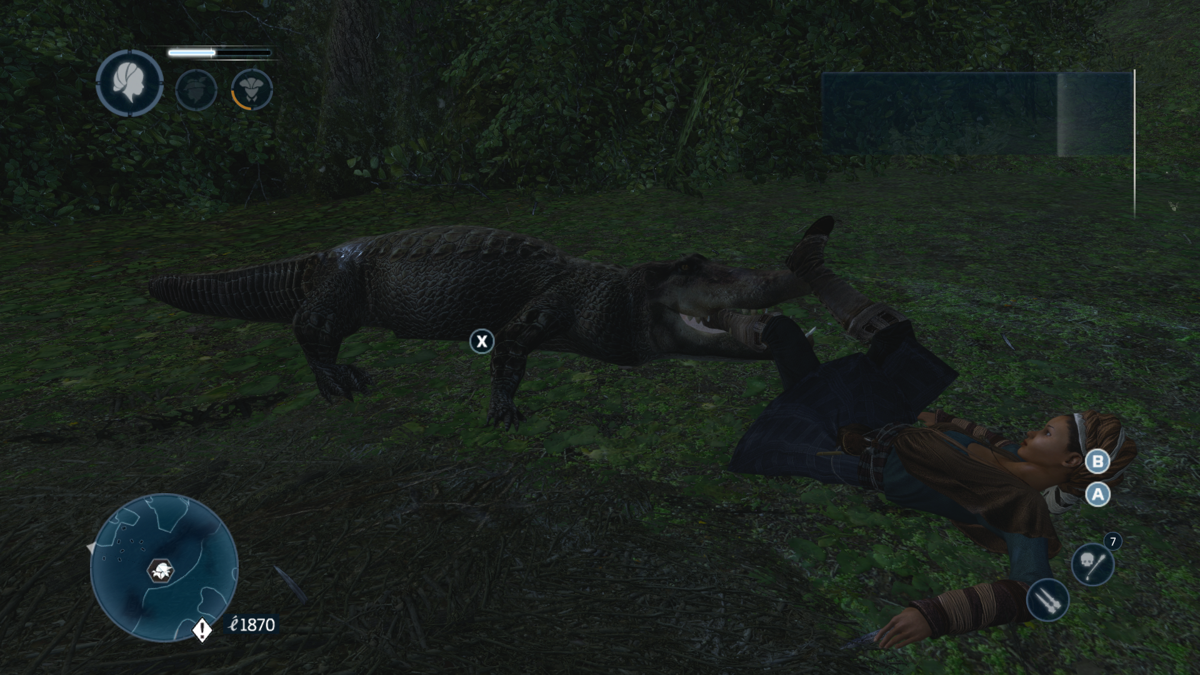
The first hour’s hook is Aveline herself. She moves through the same broad kind of colonial stealth-action space associated with Connor in Assassin’s Creed III, yet her tools encourage you to think about access rather than only speed. You can still approach trouble as an assassin, climbing and acting directly, but Liberation becomes more interesting when you stop treating every mission as a rooftop route to a target.
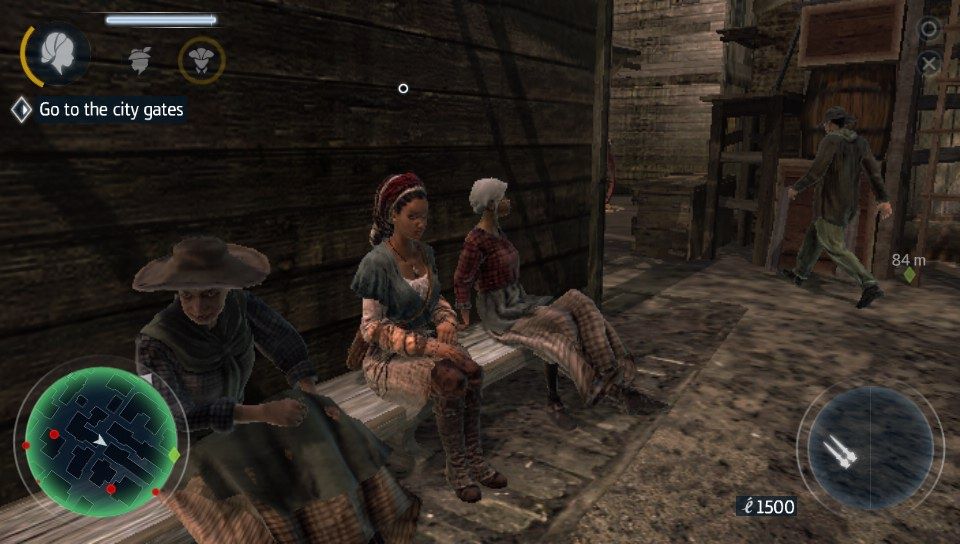
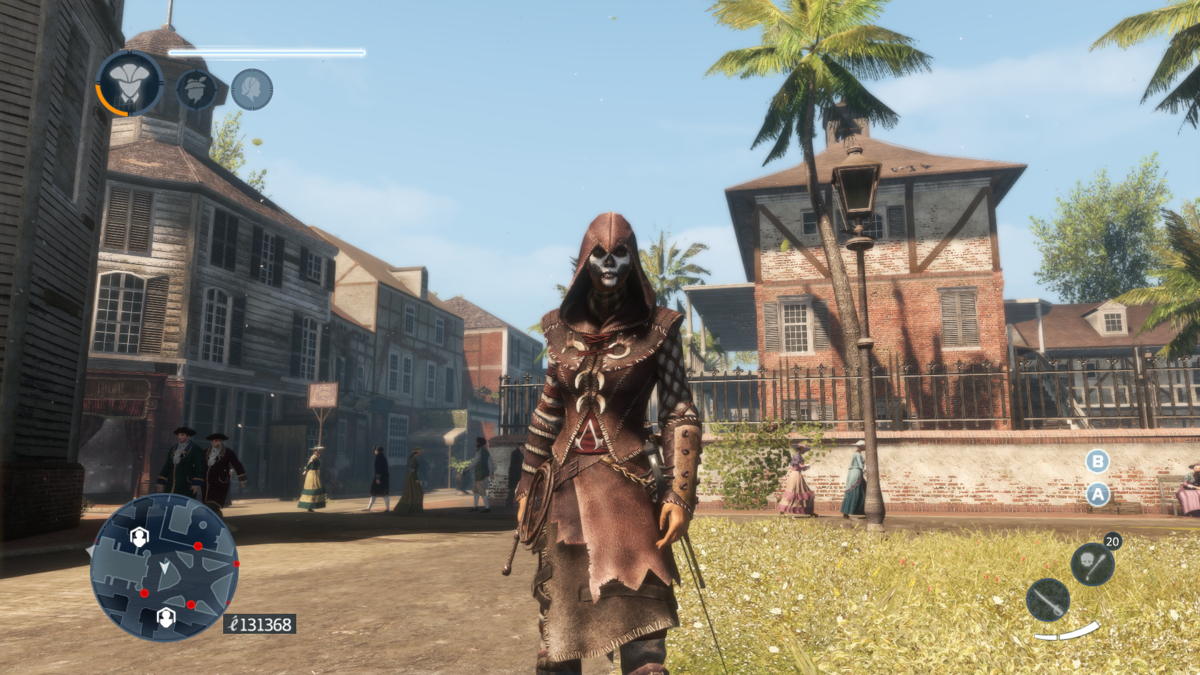
The three disguises give the game its personality. The assassin outfit is the straightforward choice for mobility and covert action. Dressing as a lady trades climbing for social leverage, letting Aveline seduce men and bribe guards; the slave disguise brings its own advantages and constraints. That friction is important. You are not merely selecting a costume for flavor—you are choosing which routes and solutions will be practical, then living with what that choice closes off.
That system clicks when you plan an entry around the role you are wearing, rather than forcing an assassin-style solution onto every situation. It can also frustrate you when the outfit you want for one obstacle is a poor fit for the next. Still, the restrictions make the strongest moments feel more deliberate than a standard climb, hide, and strike routine. Come for a smaller Assassin’s Creed adventure that asks you to adapt your social position as well as your stealth tactics.
Graphics
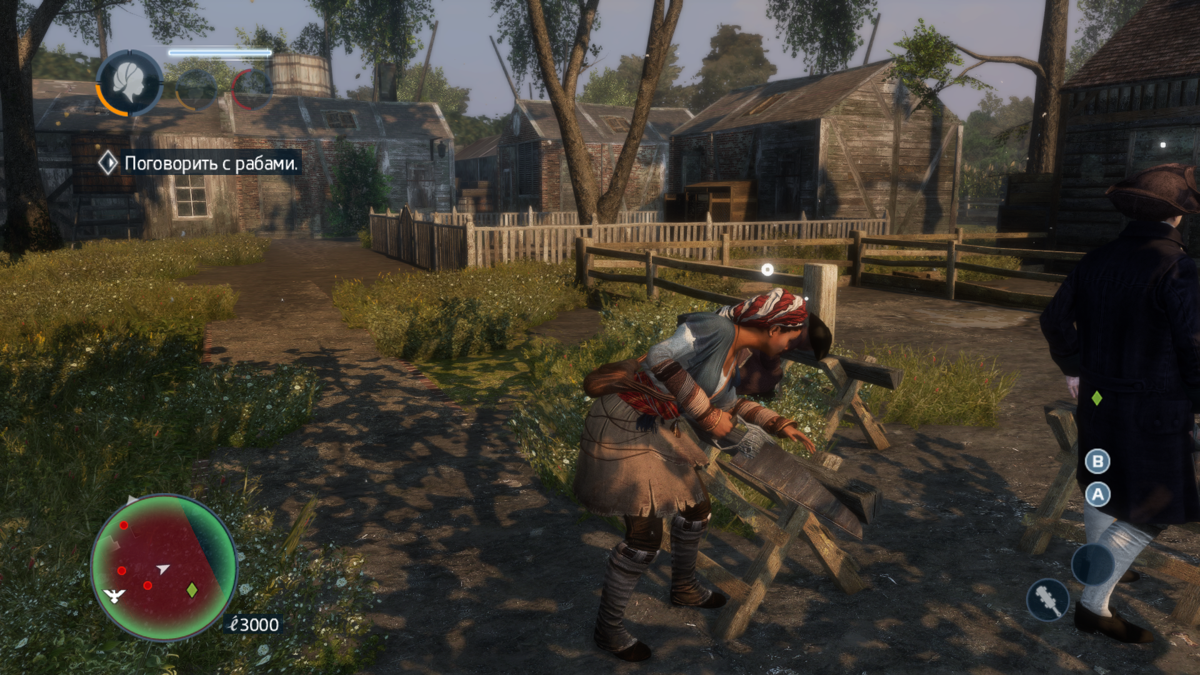
Liberation uses the Assassin’s Creed III engine, so its behind-the-back action has a familiar colonial look. Aveline’s three distinct outfits are the clearest visual touch: switching between lady, slave, and assassin attire immediately changes how she reads in the world, matching the practical change in how you can handle guards and movement.
Story
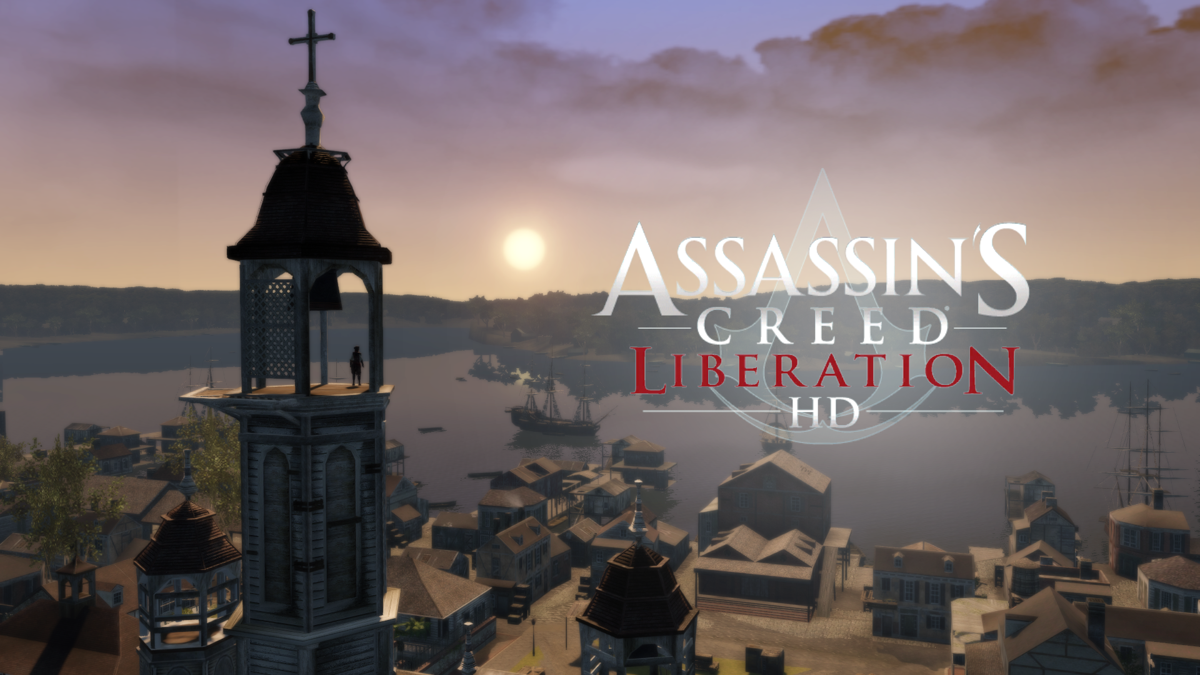
Louisiana between 1765 and 1777 is a strong place to put an Assassin’s Creed story, and Aveline de Grandpré is a worthwhile lead. Her position as the series’ first female protagonist is not just a casting footnote; the disguise-driven structure gives her a different relationship to the people and power around her than the franchise’s usual heroes.
The game also steps away from Desmond Miles. Instead, its modern framing concerns an unknown individual connected to Abstergo Industries. That makes Liberation feel more self-contained, which can be refreshing if you mainly want to spend time in its historical setting rather than track the ongoing Desmond storyline.
If continuity is your main reason for playing, read it as a companion to Assassin’s Creed III, not a replacement for it. If Aveline and the Louisiana setting sound more compelling than another pass through the usual series perspective, though, the story has a clear reason to exist. For broader background on the game itself, see its release and development history.
Overall Experience
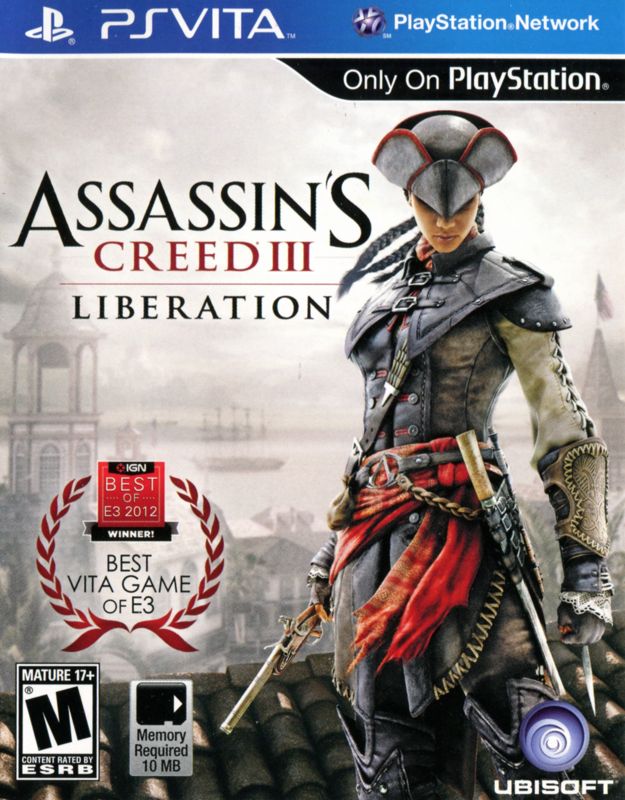
Assassin’s Creed III: Liberation is at its best when it lets Aveline’s disguises complicate a familiar formula. The basic action DNA will be immediately recognizable to anyone coming from Assassin’s Creed III, but the choice between agility, influence, and alternative access gives this entry a useful twist instead of making it feel like a simple repeat.
The catch is that the same system that creates its best decisions also creates its rough edges. Every outfit has limits, and you will sometimes feel those limits more sharply than their advantages. This is not the entry to pick if you want uninterrupted freedom to climb and improvise your way through everything.
For a fan willing to meet it on its own terms, Liberation is worth the detour. Aveline is an engaging lead, Louisiana is a welcome historical backdrop, and the role-based stealth ideas give the game a point of view beyond its connection to the larger series. It is an uneven experiment, but a meaningful one.


Reviews
There are no reviews yet.