 Retro Replay Retro Gaming History, Reviews & Emulation


Retro Replay Review
Gameplay
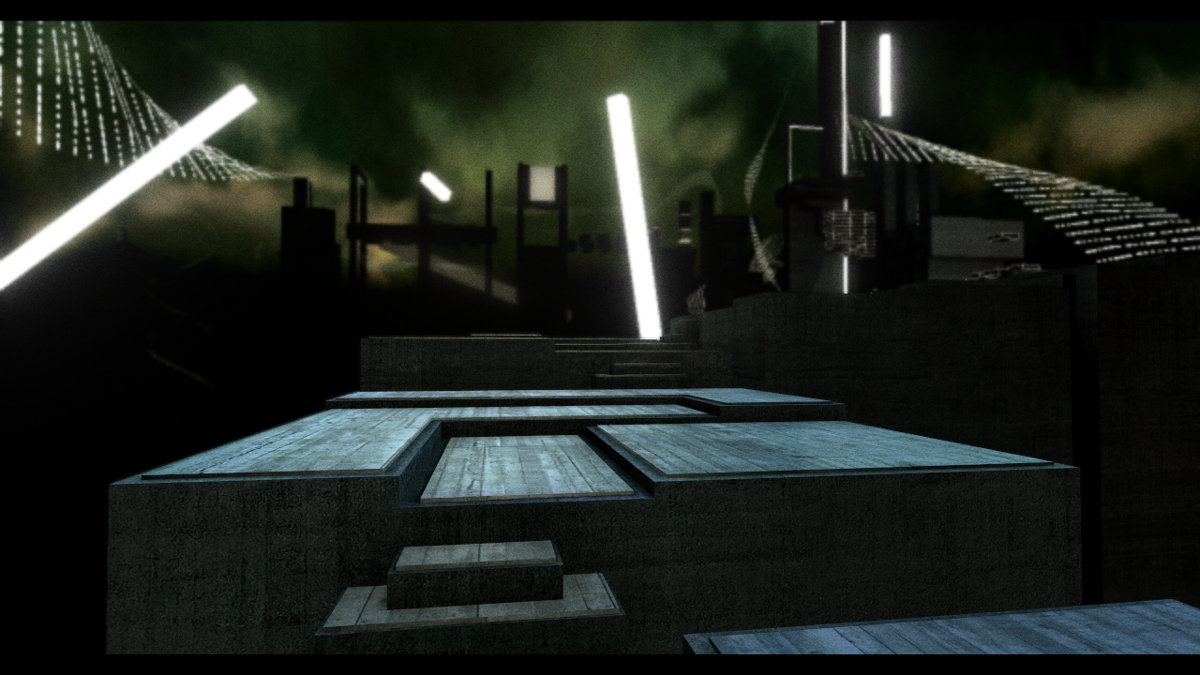
The first hour makes its intentions clear: this is the Desmond’s Journey-style side of Assassin’s Creed: Revelations, expanded into a seven-mission campaign centered on Clay Kaczmarek. You see everything in first person, move through the Animus by jumping between platforms, and spend much of your time figuring out how to cross dangerous spaces without meeting the many deadly traps waiting below or ahead.
What keeps the format from becoming a straight repeat is the ability to cast helpful objects into the world. The familiar simple platform and triangle let you build routes where none exist, while the jump pad introduced later opens up a few more possibilities for clearing gaps and hazards. There is satisfaction in spotting a safe sequence, placing the right piece, and then executing the jumps cleanly. If you enjoyed the abstract platforming detours in Revelations, this delivers more of that exact flavor rather than trying to turn it into conventional Assassin’s Creed action.
The limitation is equally straightforward: if those first-person Animus challenges left you cold, seven missions built around them are unlikely to change your mind. The Lost Archive commits to platforming-oriented puzzles and trap avoidance, so its payoff comes from mastering that rhythm, not from stealth assassinations or free-running through a historical city. Go in for a concentrated puzzle-platformer detour, and the narrow focus feels purposeful.
Completionists get a concrete reason to search carefully. All 20 decipher fragments are needed to unlock the hidden ending, giving the campaign an extra layer beyond simply reaching each mission’s exit. The DLC also includes Vlad the Impaler Prison, an Ezio mission previously tied to certain special editions, alongside capacity upgrades for the gun, crossbow, and bombs.
Graphics
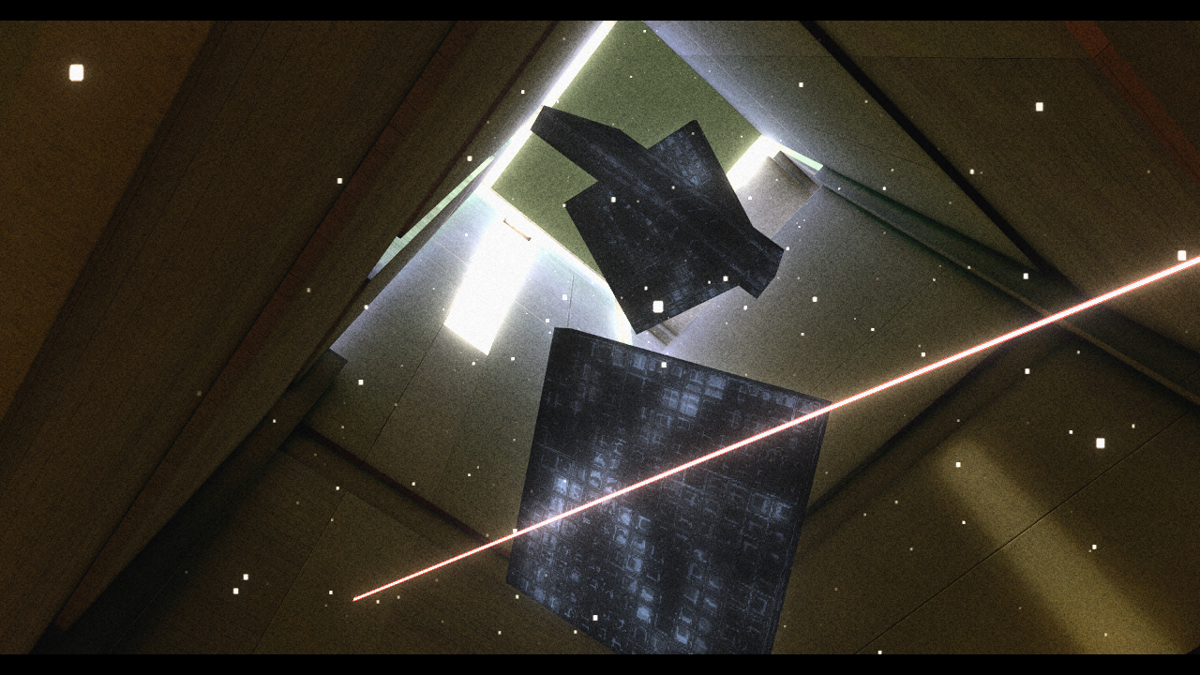
The campaign uses the abstract virtual-machine spaces associated with Desmond’s Journey, viewed from Clay’s first-person perspective. That makes platforms, the castable shapes, jump pads, and lethal traps the important things to watch as you plot a route through each challenge.
The three Ezio skins offer more familiar costume variety outside that stripped-down Animus campaign: Turkish Assassin Armour, Altaïr’s robe, and the Armour of Brutus.

Story
The Lost Archive’s strongest reason to exist is its focus on Clay Kaczmarek, Subject 16 of the Animus Project. Rather than treating the seven missions as disconnected challenge rooms, it frames them as his memories, giving this unusual branch of Revelations a clear lore-centered purpose.
That focus will matter most if Subject 16 already caught your attention in the main series. Clay is explicitly an ill-fated figure, and the campaign’s value lies in spending more time inside his corner of the Animus mythology. It is a mini-campaign, though, so expect a concentrated companion piece rather than a sprawling new chapter.
Finding every decipher fragment unlocks a hidden ending, which is a smart fit for a story built around buried memories and recovered information. If you only want to clear the puzzles, you can move through the seven missions; if Clay’s story is the draw, the fragments turn thorough exploration into part of the narrative reward.
Overall Experience
The Lost Archive is an easy recommendation for the Revelations fan who wanted more Desmond’s Journey and more context for Subject 16. It knows exactly what it is: a short, abstract first-person platforming campaign where careful construction and precise movement matter more than the series’ usual assassin fantasy.
It is less persuasive as a purchase for someone hoping for a large Ezio-led adventure. Vlad the Impaler Prison is welcome, and the gun, crossbow, and bomb capacity upgrades have practical value, but the core of the add-on remains Clay’s seven puzzle missions. The Turkish Assassin Armour, Altaïr’s robe, Armour of Brutus, plus the Crusader, Ottoman Jester, and Ottoman Doctor multiplayer characters round out the bundle without changing that central equation.
For the right kind of Assassin’s Creed player, the focused structure is the point. You get a compact set of demanding Animus rooms, a new jump-pad wrinkle in the later missions, and a collectible trail that leads to a hidden ending. For everyone else, it is a specialized detour: thoughtful and worthwhile when you want more of this specific Revelations experiment, but not a substitute for the main game’s broader adventure.

Reviews
There are no reviews yet.