 Retro Replay Retro Gaming History, Reviews & Emulation

Retro Replay Review
Gameplay
The opening hour gives you a clear, satisfying problem: Marty has landed in a warped 1986, the DeLorean has crashed, and the one man who might help is the person running Hill Valley’s restrictive new order. That setup gives even routine adventure-game errands some urgency. You are not just looking for an object because the game says so; you are trying to get close to Citizen Brown without immediately fitting into his rules.
Interaction follows familiar point-and-click adventure logic, though Marty himself is moved with the direction keys or by dragging him with the mouse. Most progress comes from inventory puzzles: pick up an item, inspect the available spaces, then work out where it belongs. Conversations matter too, because gathering the right information and choosing the right dialogue can solve certain roadblocks. When those two sides feed each other, the episode has a pleasant investigative rhythm.
The friction comes from the same old adventure-game bottleneck. A useful clue may be waiting behind a particular conversation or a single object interaction, and the game can make you circle through locations until you find it. Be methodical: talk to people again after learning something new, and do not treat dialogue as flavor text. If you enjoy nudging a chain of small deductions into motion, that is part of the fun; if you want constant forward momentum, the pauses may test your patience.
Graphics
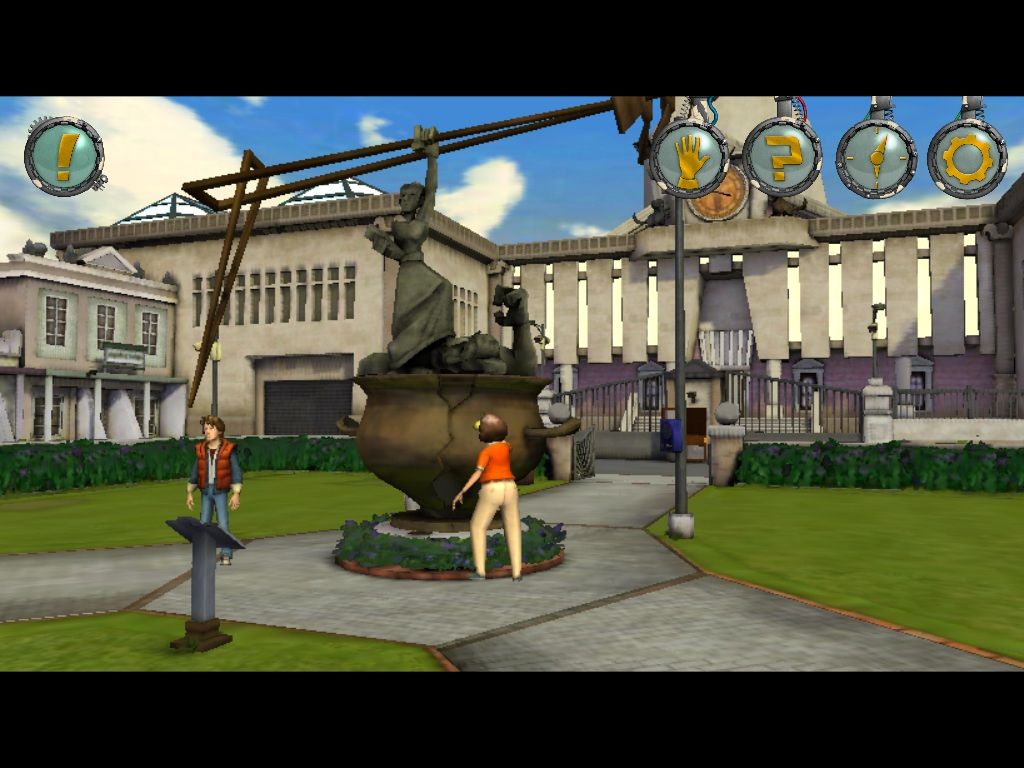
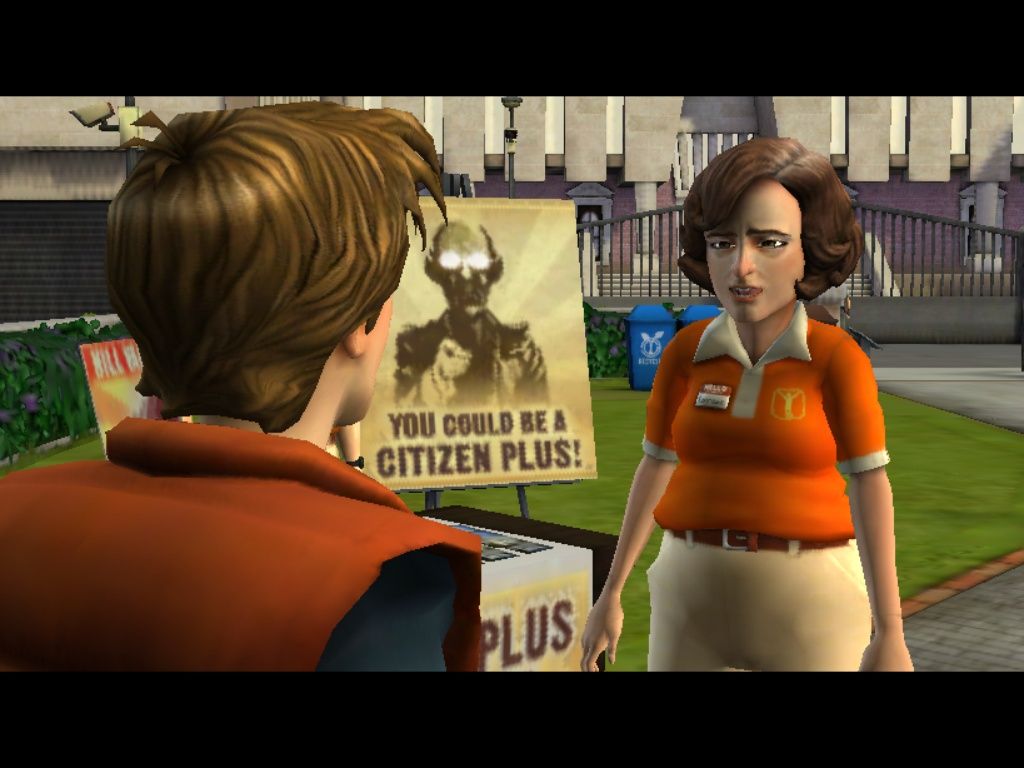
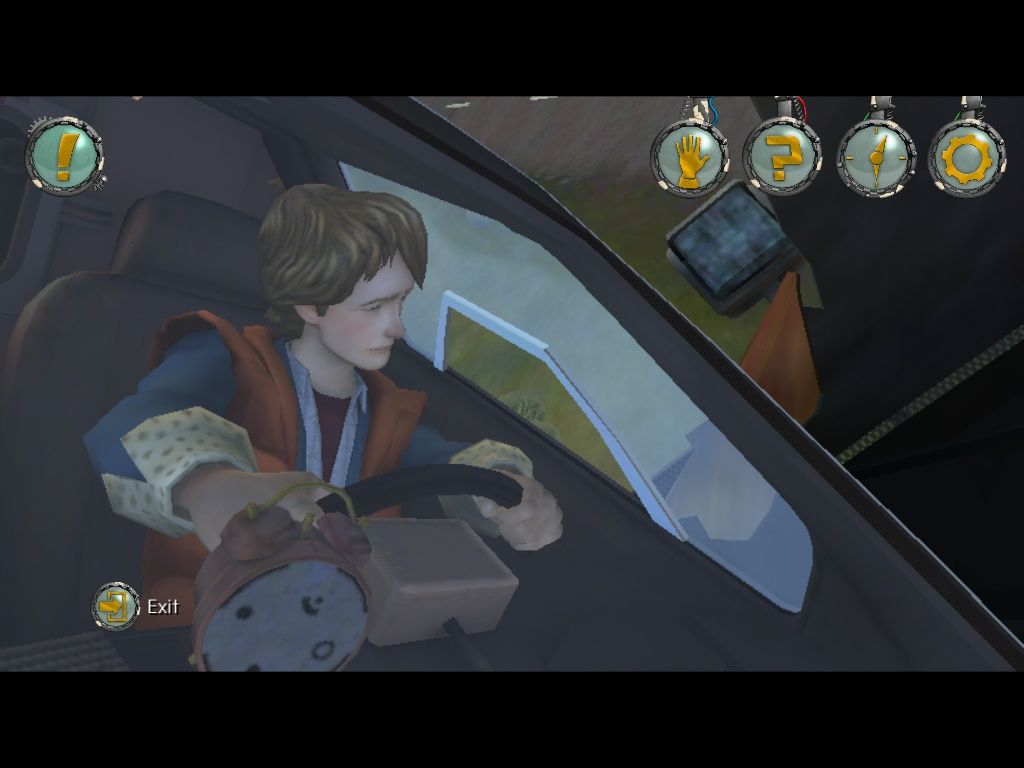
The game uses real-time 3D character scenes from a third-person viewpoint, with fixed, pivoting, and scrolling camera angles around Hill Valley. The altered 1986 setting has a concrete visual hook in Citizen Brown’s fenced-in compound, while the camera framing keeps attention on Marty, the people he questions, and the objects you need to inspect.
Story
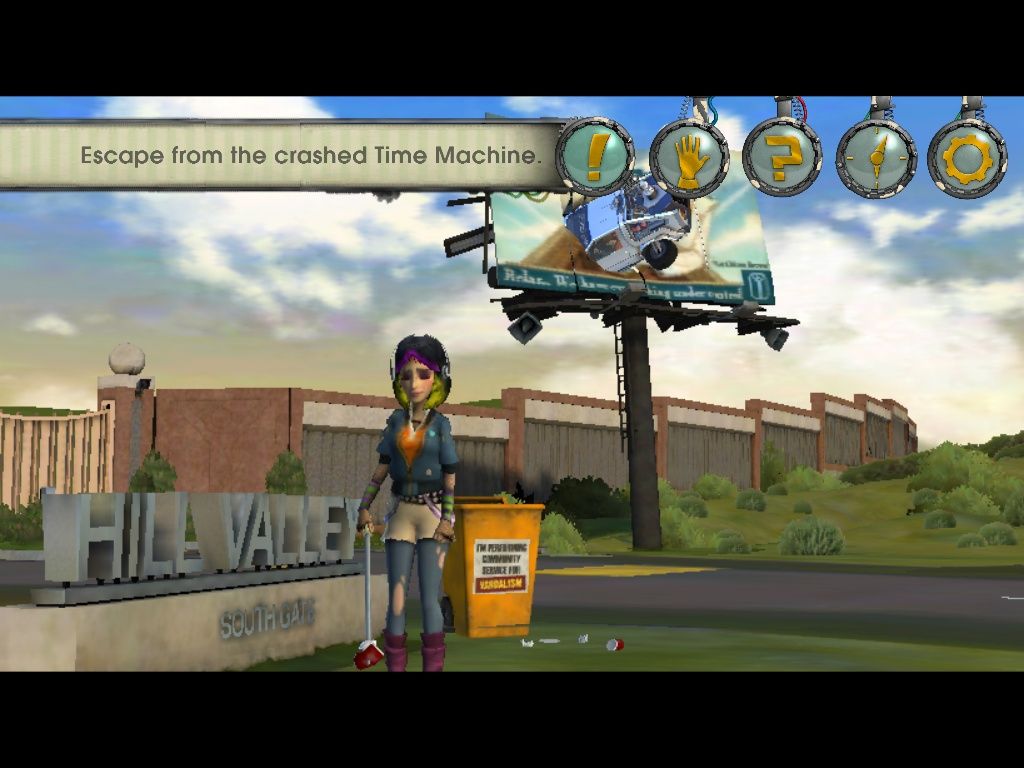
Citizen Brown earns its place as the middle chapter by refusing to let the previous episode’s fix stay fixed. After Marty and Doc restore the Kid Tannen and Grandpa Artie timeline in 1931, their return jump goes wrong: Doc disappears, the time machine hits a billboard, and Marty finds another altered present waiting for him. That is exactly the kind of escalating consequence this series needs.
Citizen Brown’s version of Hill Valley is secure, clean, peaceful, and fenced off—but that calm comes with surveillance and rules Marty must break to make any headway. It is a smart complication because it turns the episode’s central authority figure into both obstacle and potential solution. Marty needs Citizen Brown’s help, which gives the conversations more tension than a simple hunt for a villain would.
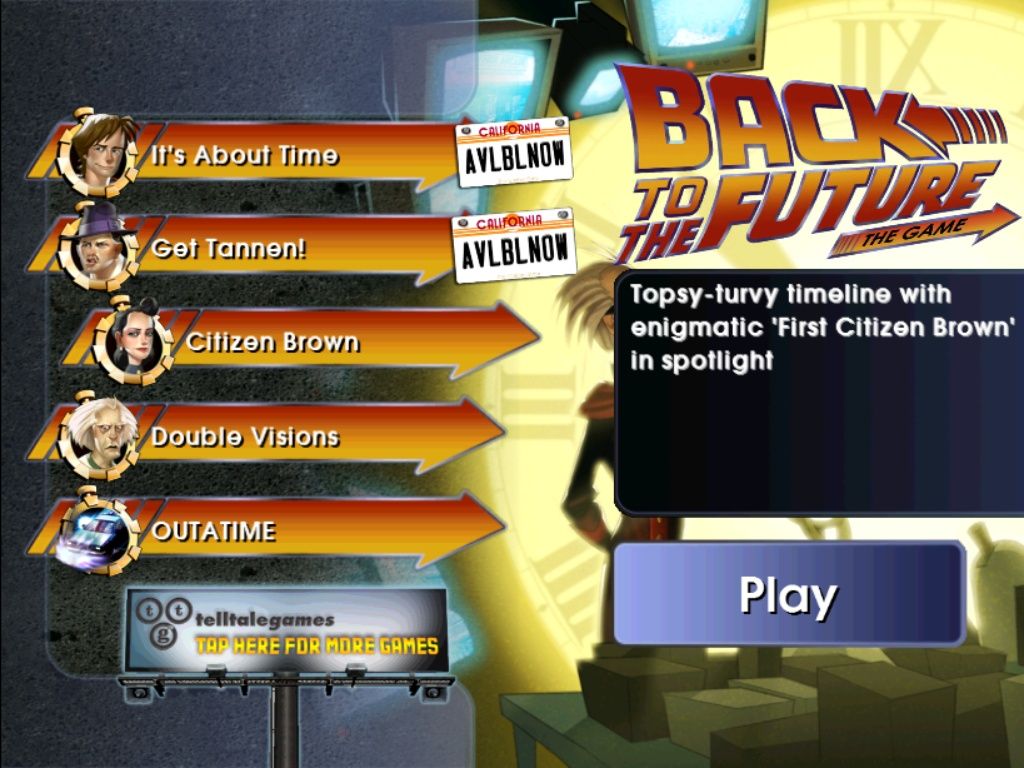
As episode three of five, it is deliberately tied to what came before and what comes next. You get a new timeline problem rather than a detached side trip, and the wrecked time machine keeps the stakes grounded: Marty cannot simply leave when things become uncomfortable. Start with the earlier episodes if the ongoing history is new to you; the premise lands harder when you understand how many attempts it has taken to put time right.
Overall Experience
This is a solid continuation for anyone enjoying the series’ mix of familiar characters, timeline repairs, and conversational puzzle solving. Its strongest quality is the way it makes Hill Valley feel freshly hostile without abandoning the basic Back to the Future setup. Marty is stranded in a recognizable year that has become strange, and you spend the episode prying at the rules holding that new reality together.
The game will not convert someone who already dislikes inventory-driven adventure puzzles or dialogue gates. Progress can be narrow, and the episode format means you are stepping into an ongoing story rather than receiving a self-contained adventure. Still, the altered-1986 hook is strong enough to carry the familiar structure, especially once you start connecting what people say to the next item or location you need.
Give it a chance if you are already following Marty and Doc through Telltale’s five-part story, or if the idea of a controlled, surveilled Hill Valley sounds like the sort of alternate-history detour you want from this series. The payoff is less about mechanical surprise than seeing how another time-travel correction has made the present worse—and working patiently through the mess Marty has to undo.


Reviews
There are no reviews yet.