 Retro Replay Retro Gaming History, Reviews & Emulation
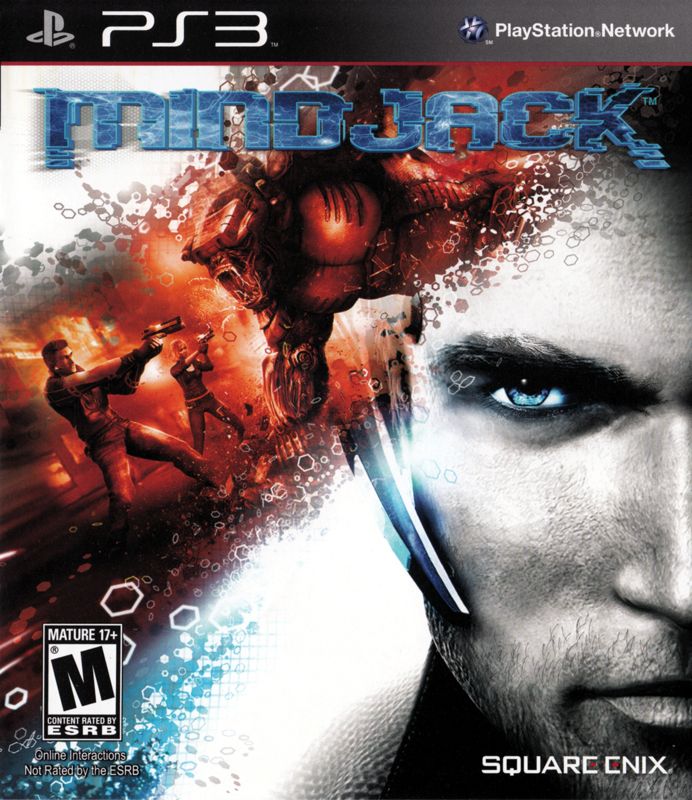
Retro Replay Review
Gameplay
The first few fights make Mindjack feel like it might be a forgotten cult favorite. You move through combat as FBI agent Jim Corbijin in familiar third-person, cover-based fashion, but your real advantage is the ability to mind-hack people in the arena. Taking direct control of an enemy soldier changes your immediate position and weapon access; converting someone into a mind slave gives you another body on your side. When a firefight starts to go badly, that flexibility can be genuinely exciting.
What starts to click is the habit of looking beyond the nearest piece of cover. Enemies are not just targets, and bystanders are not merely scenery: they can become part of your plan. That makes the basic act of surviving a room more reactive than simply popping out to shoot. Experience also feeds into Arts, which improve your abilities, and Rules, which modify the game, so there is at least some reason to engage with its progression rather than treating every encounter as a disposable shooting gallery.
Still, Mindjack never escapes the feeling that its boldest system has been attached to a merely adequate shooter. The cover mechanics and gunplay do the job, but they do not carry the game when the mind-hacking novelty wears thin. Frustration can set in when you want clean, reliable third-person action and instead get a game whose best moments depend on improvising around its central gimmick. The online feature, where other people can enter a game and control enemies, is a clever extension of the premise; it can turn an ordinary encounter into a much less predictable contest.
Graphics
Mindjack uses a behind-the-back camera for its shooting, keeping Corbijin, enemy soldiers, and cover positions in view during combat. Its futuristic 2031 setting is built around armed operatives, civilians caught in the crossfire, and technology-driven conflict, with the mind-hack concept supplying the game’s most distinctive on-screen idea.
Story
The setup has plenty of pulpy sci-fi momentum. Governments are weakening, terrorists and conspirators exploit advanced technology, and Corbijin’s attempt to intercept activist Rebecca Weiss goes wrong. Forced into an uneasy alliance, the two pursue the figure behind a broad mind-control conspiracy. It is the kind of premise that invites paranoia, shifting loyalties, and a lot of questions about who is acting under their own will.
That setup is more interesting than the story’s delivery. Mindjack leans hard on a dark, technology-soaked conspiracy, but Corbijin and Weiss are not enough on their own to make the chase feel personal. You may keep going because you want the next strange combat situation, not because the mystery has you desperate for answers.
There is a nice thematic fit between the narrative and the action, though. A game about remote control and manipulated participants lets you enact that idea directly by taking over opponents and bystanders. Even when the plot becomes more functional than gripping, the player’s ability reinforces what the story is trying to talk about.
Overall Experience
Mindjack is a messy game with one unusually good idea at its center. Possessing enemies and recruiting them as allies gives its combat a tactical wrinkle that remains more memorable than the surrounding cover shooting. The option for online players to enter another game as hostile forces is exactly the sort of risky, playful feature this concept needed.
You should give it a chance if you have patience for ambitious shooters that do not always land cleanly. Go in wanting to experiment with bodies, alliances, and battlefield control rather than expecting a polished genre leader. The campaign’s conspiracy and conventional shooting are unlikely to win over skeptics, but the core hook is weird enough to justify the trip for the right kind of sci-fi action fan.
At 5.1, Mindjack sits in the uncomfortable middle ground between failed potential and cult curiosity. It is not a recommendation for everyone, and its payoff never fully matches its premise. Yet it is far more interesting than a forgettable shooter: when you are jumping from one mind to another and turning a bad situation around, you can see the sharper, stranger game it wanted to be. For game-specific background, see MindJack’s history and release information.


Reviews
There are no reviews yet.