 Retro Replay Retro Gaming History, Reviews & Emulation



Retro Replay Review
Gameplay
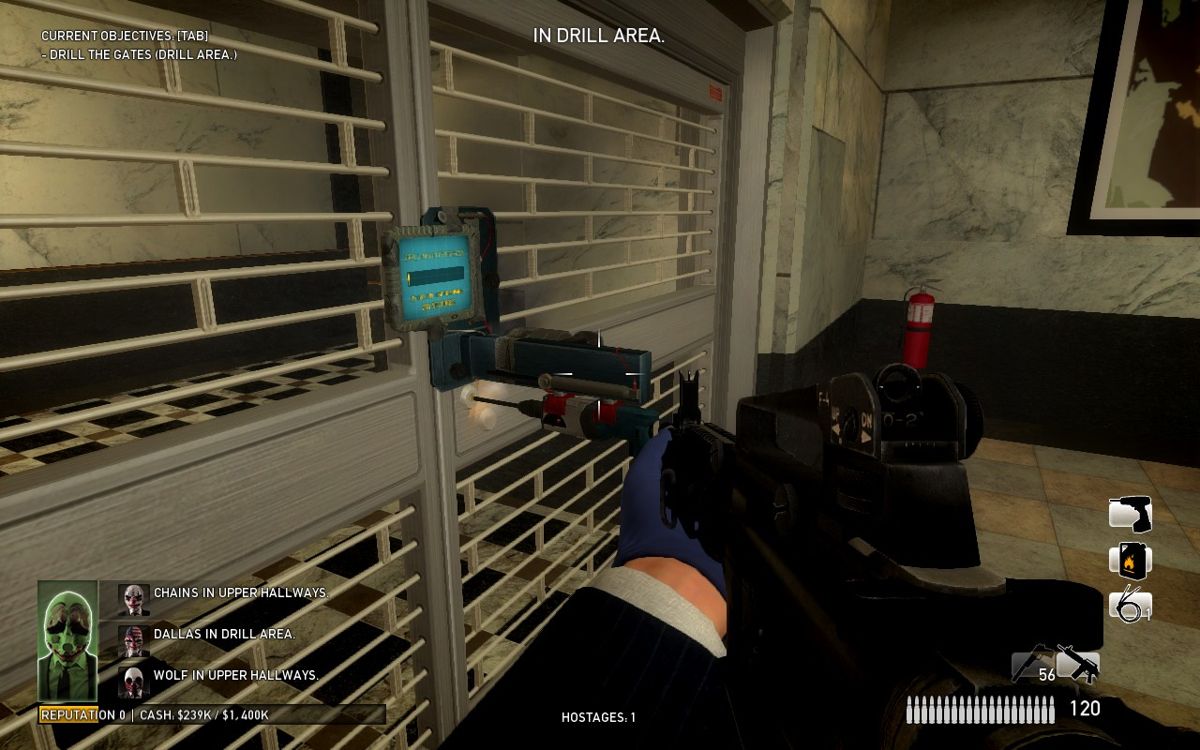
The first hour of Payday: The Heist makes a strong case for its stripped-down heist format. You and up to three partners enter a job, work through a chain of objectives, then try to get out while police attacks refuse to let up. A bank robbery can ask you to drill a gate, remove security footage, and use thermite on the vault, but the important part is how those tasks turn into shared emergencies once the shooting starts. Someone needs to keep the pressure off the drill, someone needs to watch the downed teammate, and everyone needs to know when it is time to stop fighting and run.
The best moments arrive when a plan begins to unravel without quite collapsing. Ammo scarcity stops you from treating every wave like a target range, while the escalating opposition means delay is never harmless. Basic guards and police eventually give way to FBI agents and heavily armed bulldozers, creating a simple but effective rhythm: finish the job quickly, conserve what you can, and do not leave a teammate stranded. Downed partners can be revived, while civilians can become hostages to trade for someone who has been taken out permanently. That gives the team a reason to think beyond raw aim.
There are only six heists, set across places including a bank, prison, and office complex, so repetition can set in once you know the routines. The pressure is also less forgiving with bots, because the game’s best stories come from real people making quick calls under fire. Online co-op is where it clicks: communication turns a messy shootout into a successful getaway, and failure usually leaves you with a clear sense of what the group should have handled better. If you enjoy tightly contained missions built around coordination rather than wandering, it remains an easy game to recommend with a regular crew.
Progression gives repeated runs a useful pull. Cash comes from loose wads as well as objectives and challenges, feeding reputation and level-ups. Each level restores health and ammunition and awards an item, perk, weapon, equipment piece, or upgrade. Choosing among assault, support, and sharpshooter branches before leveling adds welcome direction without locking you into a bad early choice, since you can switch branches and mix their rewards. The 48 upgrades in each branch give committed teams plenty to work toward, even if the mission count itself stays small.

Graphics
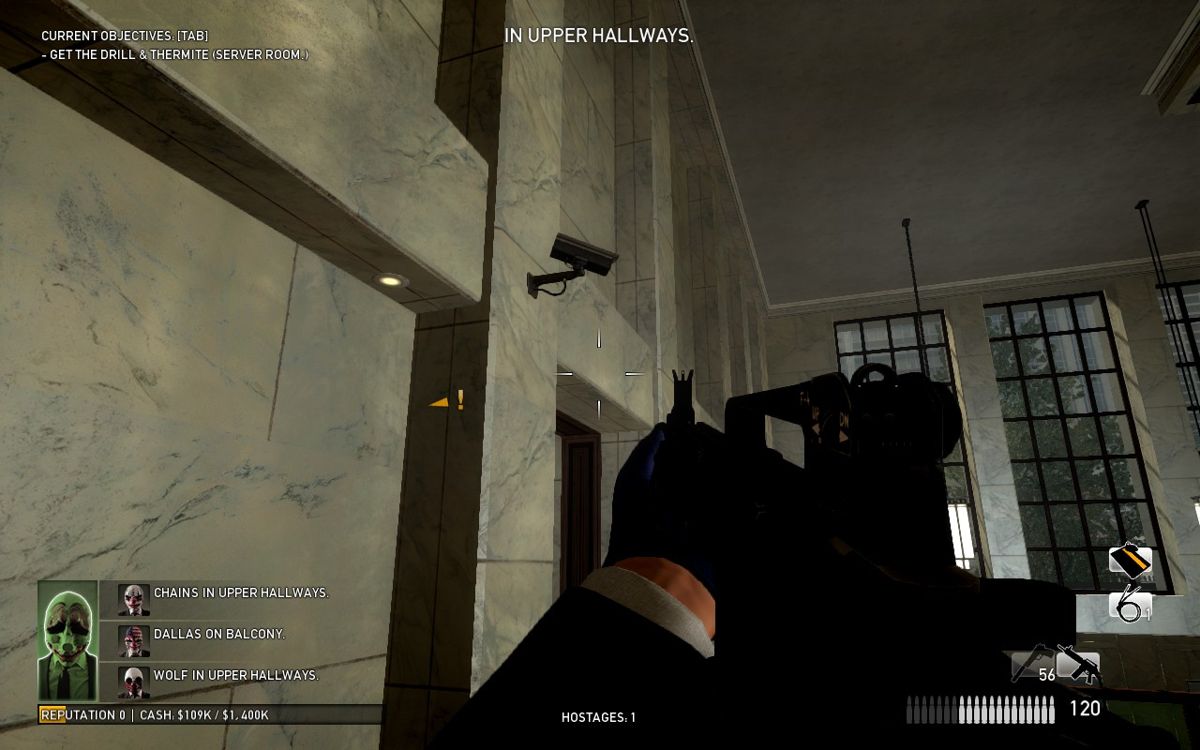
Payday: The Heist keeps you in a first-person view, putting the practical landmarks of each job in front of you: bank gates and vault work, prison spaces, and office interiors. The most useful visual contrast comes from the changing police response, from ordinary guards to FBI agents and heavily armed bulldozers, so the rising danger has a clear face even in a busy firefight.
Story
This is a crime-game framework rather than a sprawling narrative campaign. You are one of four career criminals taking on a sequence of six heists, and each location supplies the immediate context: get into a bank, prison, or office complex, complete the work, and escape.
That light touch suits the game’s focus. The drama comes less from exposition than from the changing state of a job: a teammate goes down, the police become tougher, ammunition starts disappearing, and an exit suddenly feels far more important than another kill. The hostage-trading system gives even civilians a tense role in that unfolding disaster.
Do not come in expecting a character-driven crime saga. Come in if you like making your own small heist stories with friends—the rescue that barely worked, the objective completed under pressure, or the dash to the escape at the last possible moment. For basic history and release context, see this Payday: The Heist overview.
Overall Experience
Payday: The Heist is at its strongest when four people understand that every second spent shooting is a second the job is getting harder. Its objectives are concrete, its enemy escalation is easy to grasp, and its scarce ammunition keeps the action from becoming mindless. That clarity makes successful runs satisfying even when the underlying structure is straightforward.
The limited number of heists and the reliance on repeated runs keep it from feeling as deep as the genre’s most expansive co-op games. Solo players can still take bots through every job, but the design loses much of its spark when you cannot rely on a human teammate to cover a drill, revive you, or make a risky hostage trade matter. This is a game that asks you to bring the social part yourself.
At 6.9, it lands as a solid, focused co-op shooter rather than an essential one. Gather a consistent group, accept that the police waves will force you to keep moving, and there is real tension in its compact heists. Go in alone expecting a broad single-player crime campaign, and the same narrowness will feel more like a limitation than a strength.


Reviews
There are no reviews yet.