 Retro Replay Retro Gaming History, Reviews & Emulation
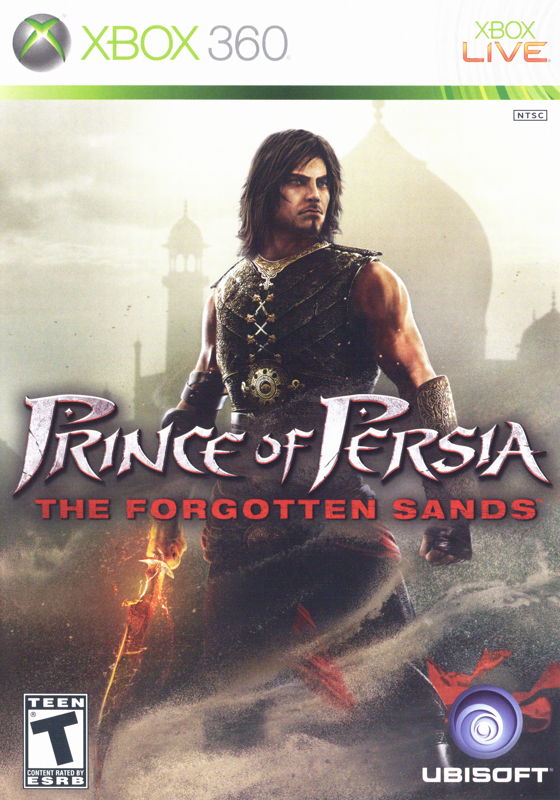
Retro Replay Review
Gameplay
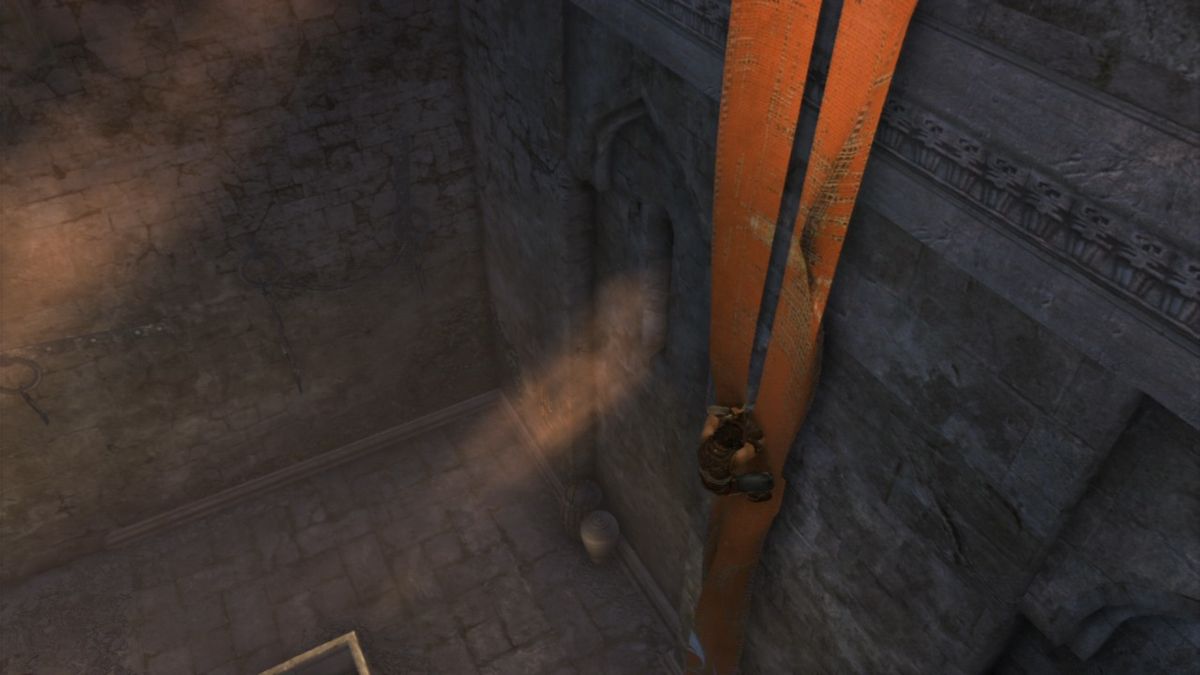
The Forgotten Sands gets its hooks into you with motion. You arrive at Malik’s castle during an invasion, and before long you are guiding the Prince through broad rooms and dangerous routes built around climbing, wall-running, rails, flags, jumps, and careful landings. That familiar over-the-shoulder perspective makes this feel like a return to the Sands of Time formula rather than a reinvention, and that is mostly a compliment. There is a simple pleasure in seeing a route across a seemingly impossible gap, committing to it, and landing safely on the far side.
The rewind ability remains the great safety net. Miss a jump, mistime a wall-run, or misjudge a landing and you can pull back time, provided you have sand to spend. That makes difficult traversal inviting instead of punishing, because you can experiment without constantly being sent back by one mistake. Sand comes from defeated enemies and breakable scenery such as vases, so there is a practical rhythm to smashing through objects and clearing combat encounters before the next demanding route.
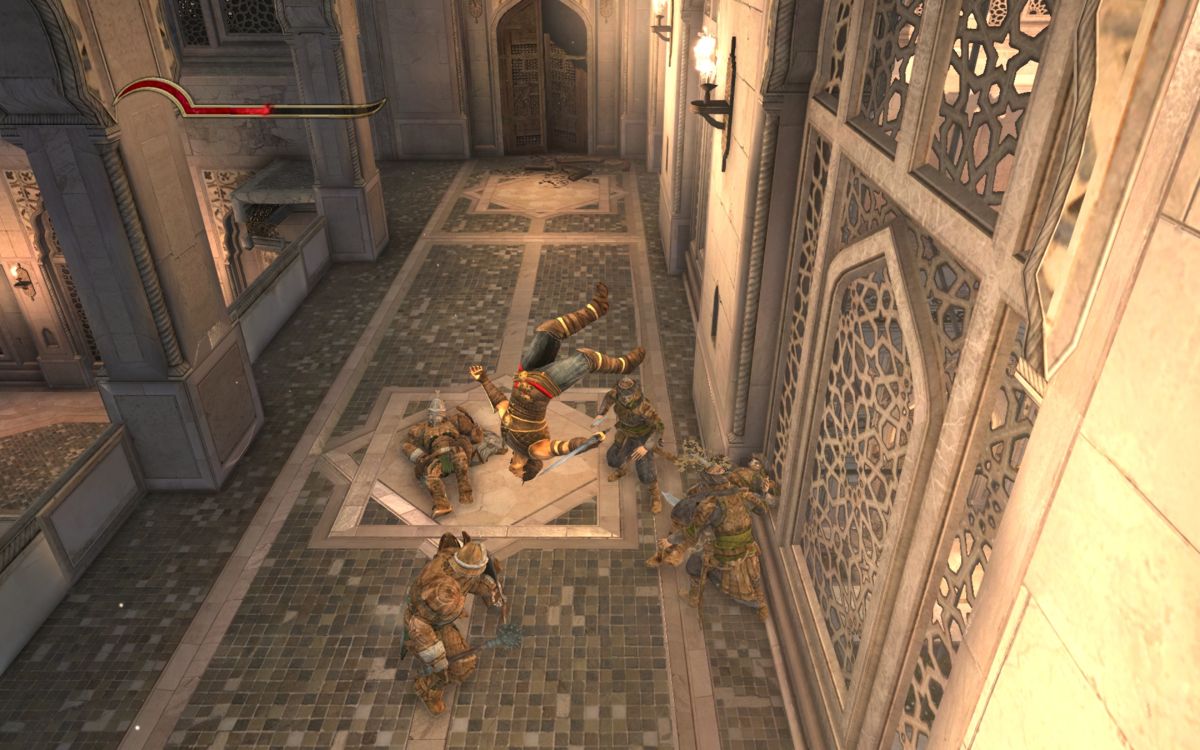
Combat is built for crowds. The Prince faces hordes of enemies, many of them undead, and can chain attacks with kicks, jumps, and a finishing death attack against enemies knocked to the ground. It is more about controlling a messy group than carefully dueling one opponent. As enemy essence earns experience and upgrade points, the skill tree gives your growing collection of powers some welcome direction rather than handing everything over at once.
The magic powers are where the game finds its own footing. Freezing water, rebuilding broken parts of the city, and covering the Prince in stone armor all have limited energy, replenished by fighting. That creates a nice loop: combat fuels the tools that help you survive and traverse the next section. The frustration comes when a big room asks for precise movement while you are also managing a resource, but the rewind mechanic keeps those stumbles from becoming deal-breakers.
Graphics
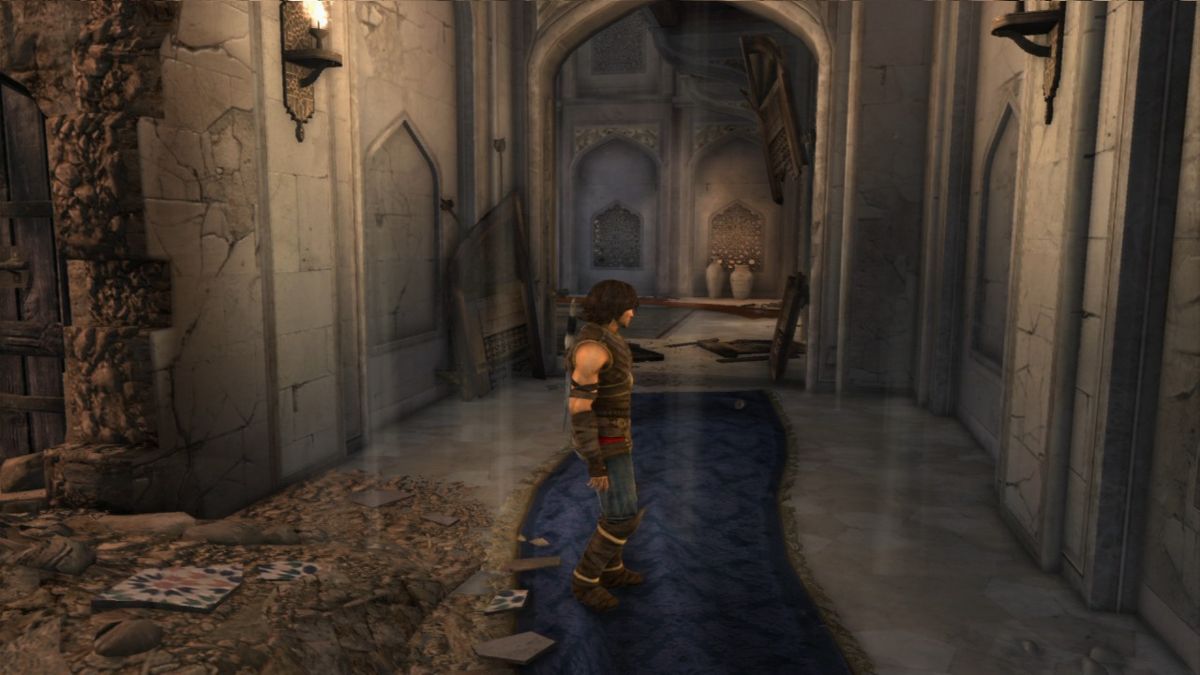
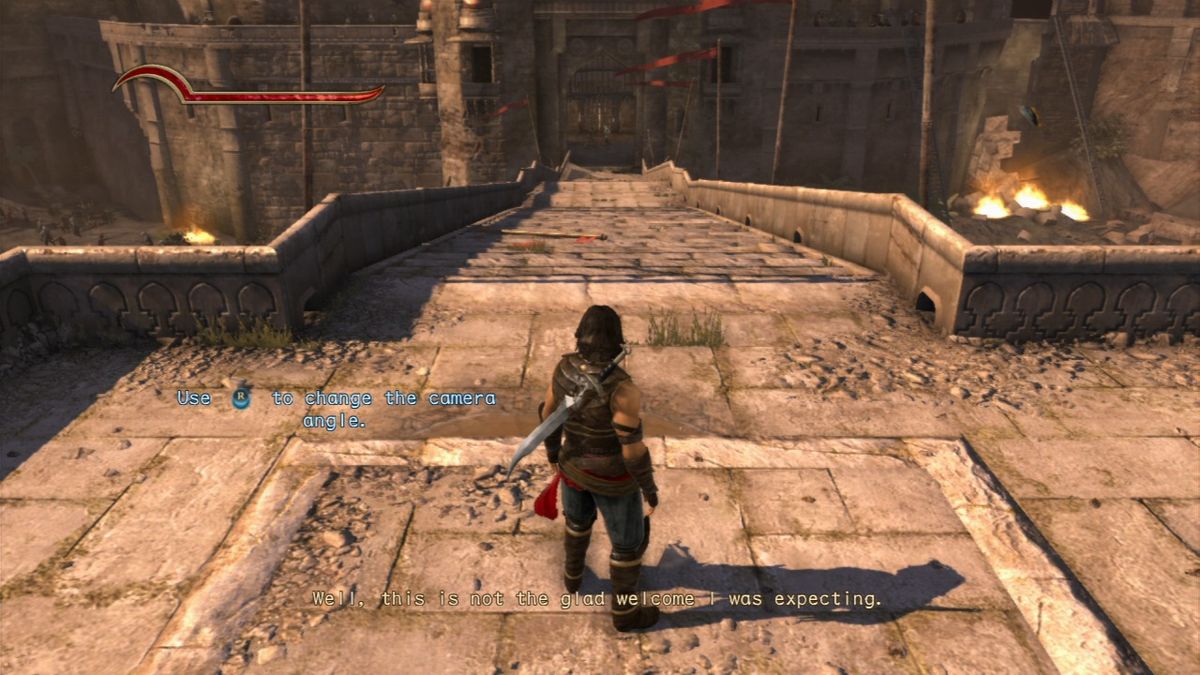
The game returns to a more grounded look after the cel-shaded detour of the previous Prince of Persia. You spend much of the adventure moving through a sprawling castle and city under threat from sand, facing large groups of undead opponents in third-person action scenes. The wide rooms are especially well suited to the Prince’s acrobatic routes, giving wall-runs, rails, and crumbling paths room to read clearly.
Story
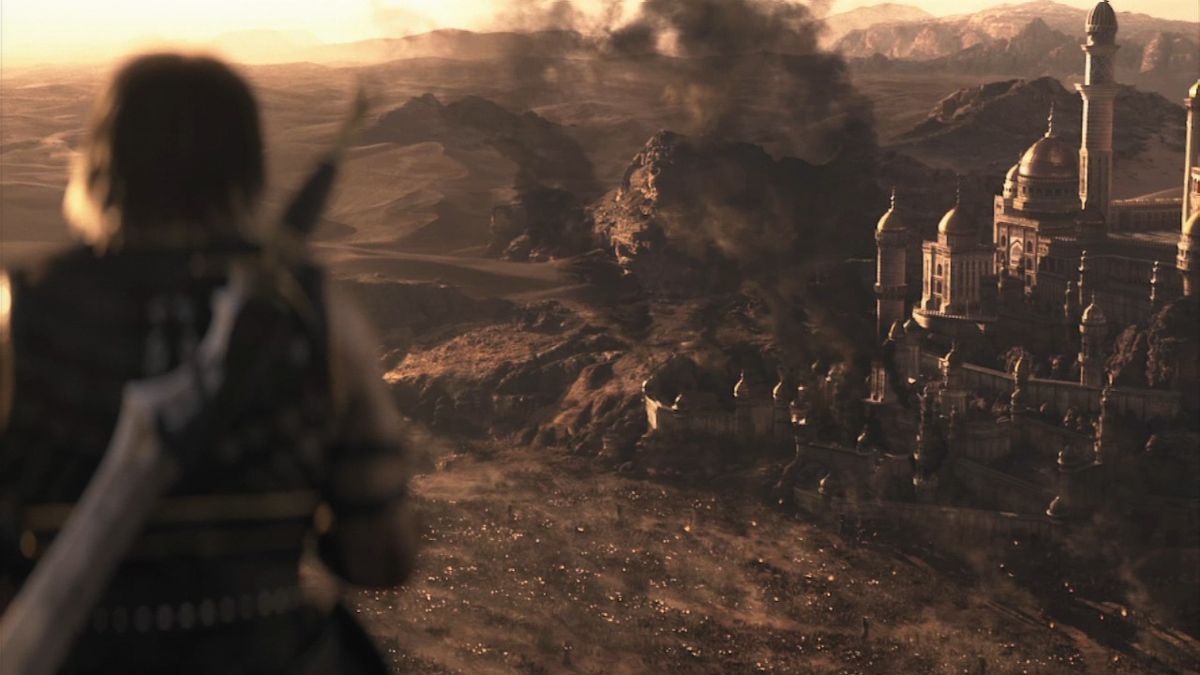
This is a crisis story with a useful sense of urgency. The Prince comes to visit his brother Malik and instead finds a castle about to fall to Osman’s army. Malik’s desperate decision to open a sealed portal unleashes the Sand Army, a force that attacks friend and foe alike. It is a strong opening situation because the disaster is immediate and personal: the Prince is not arriving to seek trouble, but has to deal with the consequences of his brother’s mistake.
Razia, Queen of the Djinn, gives the adventure its path forward. She understands the Sand Army’s creation and joins the Prince’s effort to contain it before the kingdom is consumed. The story is positioned between The Sands of Time and Warrior Within, so its main value is in returning to that era of the Prince and filling in part of the gap between those games.
Do not come in expecting the plot to overshadow the action. The threat of the Sand Army and the Prince’s mission to stop it keep the journey moving, but the real reason to stay is how naturally the story keeps sending you toward another dangerous route, another chamber, and another escape.
Overall Experience
Prince of Persia: The Forgotten Sands is a satisfying return to the Sands of Time style of acrobatic action. It understands that the Prince should feel capable but not invincible: you can flow across walls and through giant spaces with confidence, then rewind and rethink a failed attempt before the momentum disappears. That rhythm still works.
The new powers give the familiar platforming a worthwhile twist, and the progression system gives you a reason to keep cutting through enemy groups. Combat can become crowded, but it has a clear purpose beyond delaying the next platforming sequence, since it refills the sand and energy that keep your abilities available. When the pieces connect, the game has a brisk, forward-driving quality.
If you want another trip through the world and style of the original Sands of Time trilogy, this is easy to recommend. You should give it a chance for the traversal first, treat the story as a functional bridge between larger chapters, and enjoy the way freezing water and restoring broken routes refresh a formula that still knows how to make a jump across a massive room feel good.



Reviews
There are no reviews yet.