 Retro Replay Retro Replay gaming reviews, news, emulation, geek stuff and more!
Retro Replay Review
Gameplay
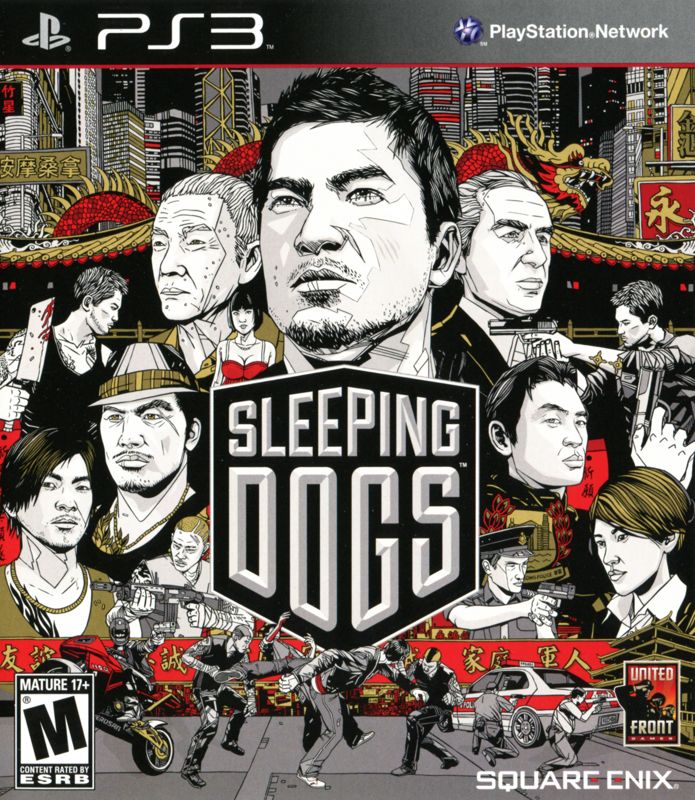
Sleeping Dogs feels strongest when you are surrounded. A handful of Triad enforcers close in, Wei Shen starts chaining punches and kicks, and suddenly the usual open-world crime-game rhythm gives way to a proper martial-arts scrap. Blocking, counters, and long combos make fights more involved than simply hammering one attack, while contextual environmental attacks add a satisfyingly nasty punctuation mark. Slamming someone into a wall or sending them into a telephone booth never stops feeling more personal than firing a gun from behind cover.
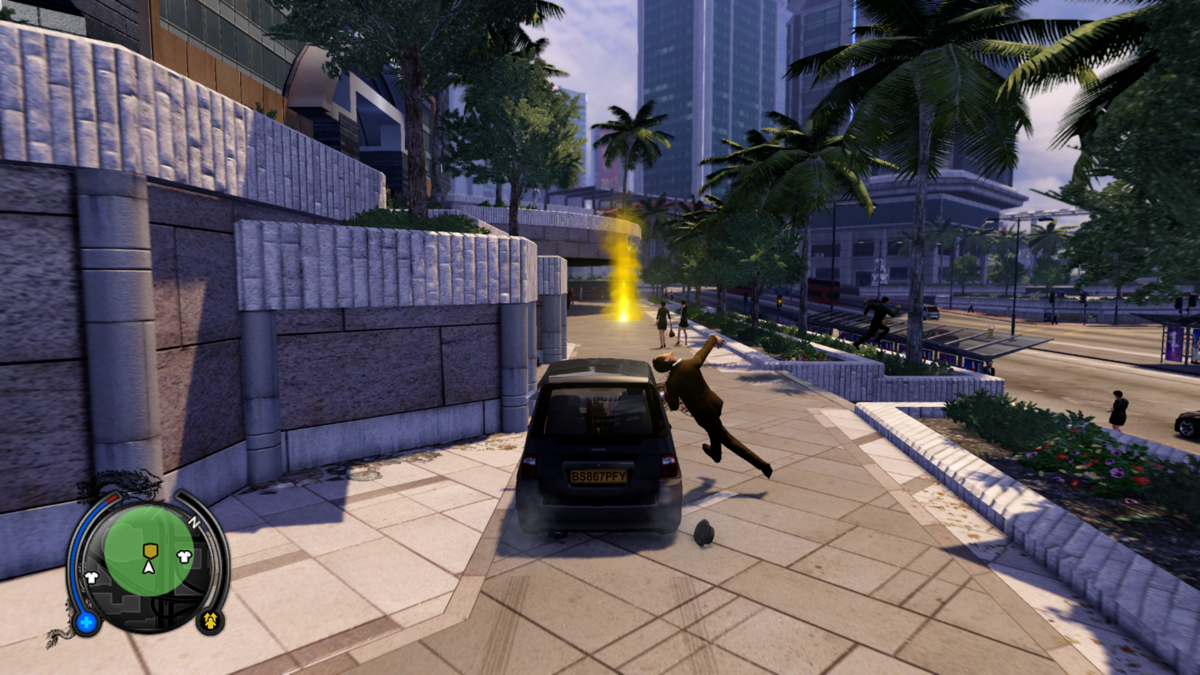
That focus is a smart choice. Guns arrive later and remain relatively scarce, so firefights do not drown out the hand-to-hand identity that makes Sleeping Dogs stand apart. On-foot movement also has some welcome energy: Wei can sprint, climb, vault, and slide, and brief slow-motion moments make chases feel punchier. Vehicle pursuits raise the stakes further, especially when the action shifts between cars, motorcycles, boats, and the occasional leap from one moving vehicle to another.
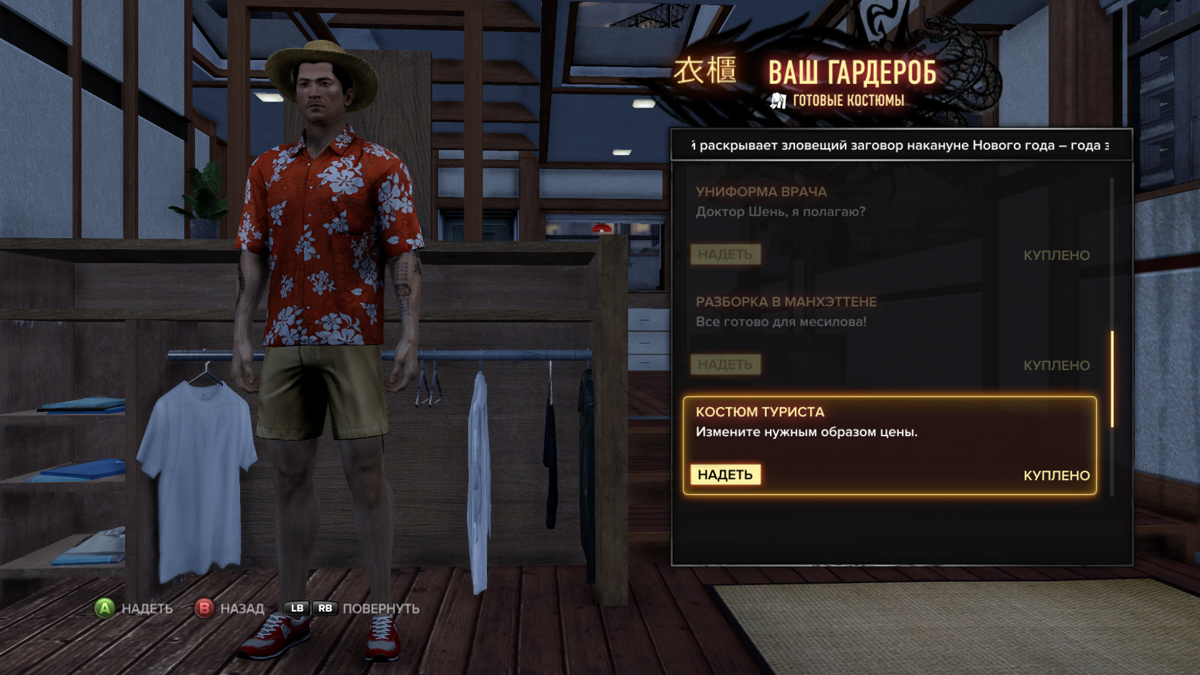
The first stretch is deliberately structured around working your way into Sun On Yee through basic jobs such as extortion. Main missions unlock more of Hong Kong, so you cannot simply ignore the campaign if you want the city to open up. Still, there is a lot to do once you step away from the next marker: street races, fighting rings, police cases, Triad deliveries, gambling, karaoke, favors, shopping, clubs, and markets. Not every activity has the same pull, but the variety makes the city feel like somewhere you can inhabit rather than merely drive across.
Progression gives your behavior some texture. Triad and Cop experience reflect which side of Wei’s life your actions serve, while Face represents his broader reputation. Skill-tree upgrades and purchasable fighting moves give you reasons to keep earning points and money, and food stalls offer a quick health refill when you need one. The camera-hacking minigame, built around a number-based Mastermind-style puzzle, is a nice change of pace, though it is hardly the main reason to play.
There are familiar open-world irritations. Objectives are tracked through the mini-map, and missions can lean on chases or scripted action sequences rather than letting you solve every situation your own way. Death also costs wealth and sends Wei to the hospital. But the core loop has enough momentum that these rougher edges do not sink it. If you like crime sandboxes but want fists, counters, and improvised brutality to matter more than automatic weapons, Sleeping Dogs is unusually well aimed at you.
Graphics
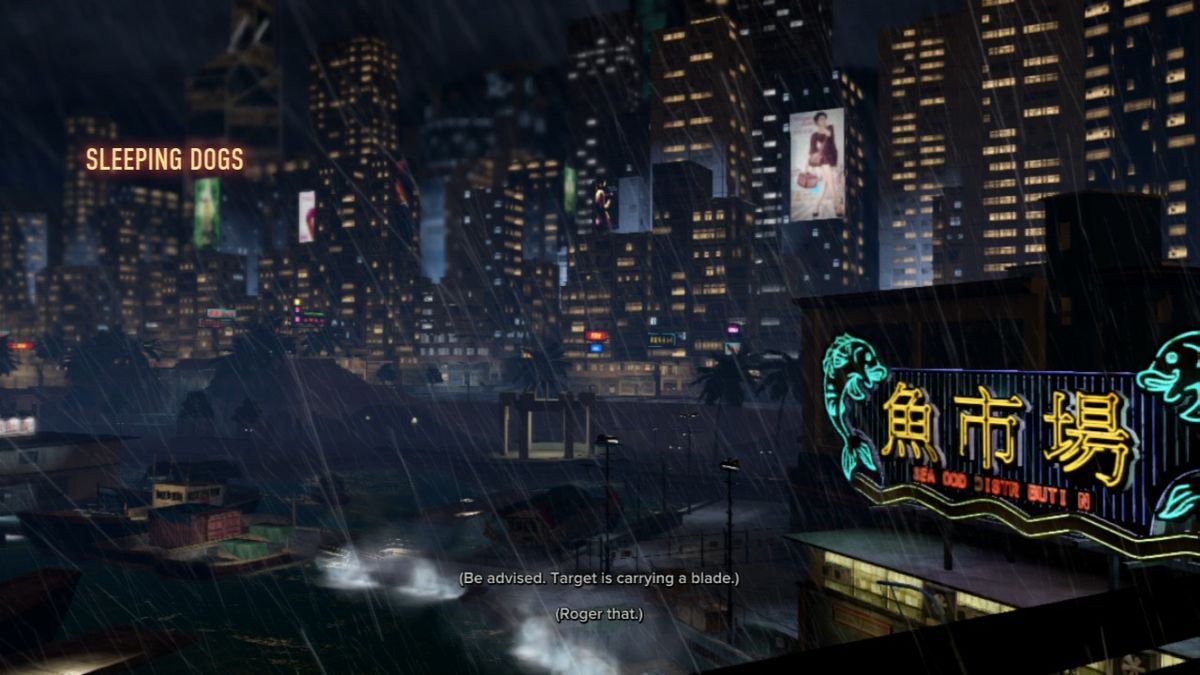
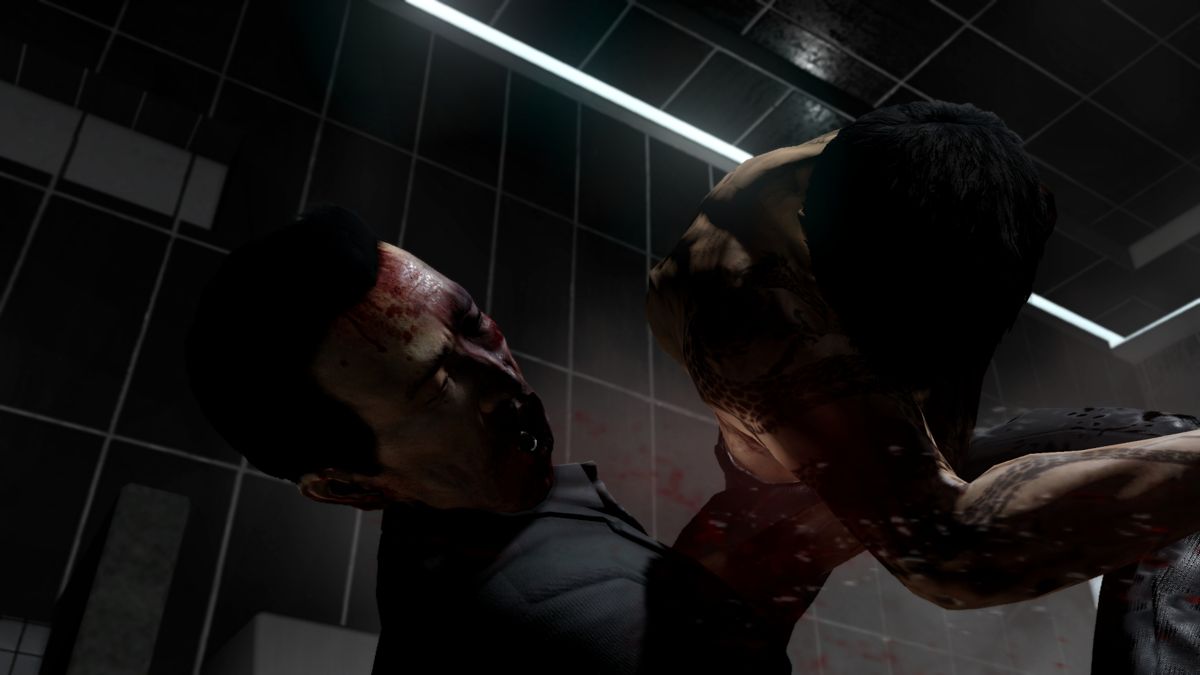
The game uses a behind-the-back camera for exploration, driving, and combat, keeping Wei and the people around him close enough for brawls to be easy to read. Hong Kong’s streets are crowded with pedestrians following routines, while cars, boats, motorcycles, markets, clubs, and food stalls give the city a lived-in variety.
Combat benefits most from the camera work: you can follow groups circling Wei, see a counter coming, and spot nearby walls or street fixtures that can become weapons. The brief slow-motion actions and cinematic vehicle jumps add welcome flair when a pursuit hits its peak.
Story
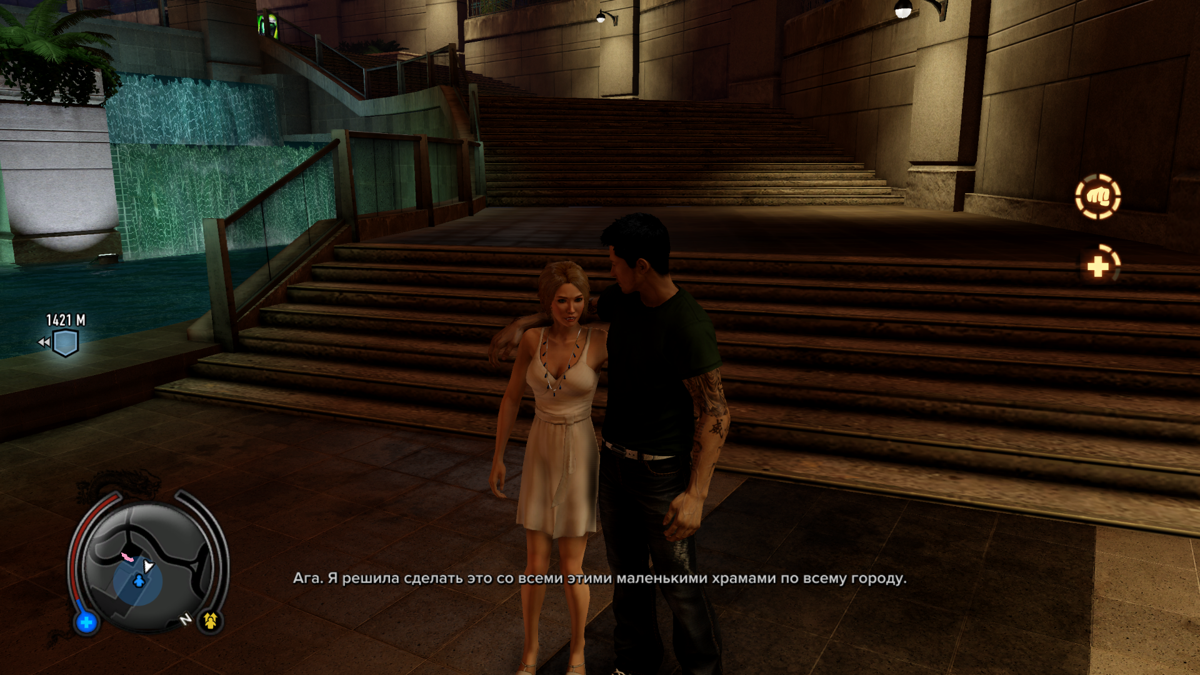
Wei Shen’s undercover role gives Sleeping Dogs its hook. He returns to the Hong Kong neighborhood of his youth as a Chinese-American police officer, reconnects with old friend Jackie Ma, and gains an introduction to Triad boss Winston Chu. Because people remember him, he is not a blank stranger dropped into the criminal world; he has history there, and that makes his return feel immediately complicated.
The story’s best pressure comes from the simple fact that Wei has to earn his place within Sun On Yee. He begins with low-level work for the organization, while his job demands loyalty to the police. The Triad and Cop progression systems reinforce that split in play, but the premise does much of the heavy lifting: you are repeatedly asked to act like a criminal in order to remain useful as a cop.
Do not expect the campaign to abandon open-world structure entirely. Missions guide the pace and unlock districts, and the broader city can distract from the undercover thread for long stretches. Yet that structure also makes the climb through the organization feel earned. For a game built around car thefts, brawls, and side pursuits, Wei’s position gives the violence and errands a stronger dramatic reason than they usually get.
Overall Experience
Sleeping Dogs is an open-world action game with a clear favorite weapon: Wei’s hands. That choice pays off. Its fighting has more bite than its occasional gunplay, and its Hong Kong setting gives familiar crime-game ingredients—stolen vehicles, races, side jobs, apartments, clothing, and a busy city—a more distinctive backdrop.
The city is easy to get lost in for an evening. You can follow the undercover story, chase upgrades, pick up a motorcycle, buy something to eat from a stall, take a detour into a fighting ring, or simply roam until another distraction catches your eye. The world is packed enough that it rewards curiosity, even if some of its diversions are lighter than the central campaign.
Its biggest strength is how well its pieces meet in the middle. The undercover premise makes the missions feel consequential, the progression systems give your actions a little extra meaning, and the brawling makes routine confrontations enjoyable instead of disposable. It is not trying to reinvent the crime sandbox; it is trying to make one with better punches, sharper tension, and a city you will want to keep driving through. That is more than enough to make it worth your time.


Reviews
There are no reviews yet.