 Retro Replay Retro Replay gaming reviews, news, emulation, geek stuff and more!



Retro Replay Review
Gameplay
The first few minutes of Sound Shapes make a strong case for its central idea. Your yellow, one-eyed character can jump, cling to walls forever, and hang upside down, which immediately makes each 2D course feel less like a standard left-to-right platformer. You are not wrestling with elaborate move lists. You are reading surfaces, avoiding anything red, and deciding when to stick, unstick, accelerate, or make a jump.
What makes that movement memorable is how collecting notes builds each song. A level begins sparse, then gains instruments and activity as you move through it. Sometimes that growth is decorative; often it changes the route in useful or dangerous ways. A glowing element can bump you, sung vocals can create a platform only while the voice lasts, and bass can bring a mass of red hazard into the level. The best moments arrive when your eyes and ears agree on the same move. You hear a cue, recognize what it means, and jump before the obstacle fully becomes a problem.
That increasing musical density is also where frustration can set in. Later in a stage, more pieces demand attention at once, and timing by sight alone is not always enough. Fortunately, touching red means an immediate respawn, while checkpoints prevent longer sections from becoming punishing repeats. There are also light puzzle wrinkles involving movable items and manipulated platforms, which give some levels a welcome change of pace without pulling the game away from its rhythm-platforming core.
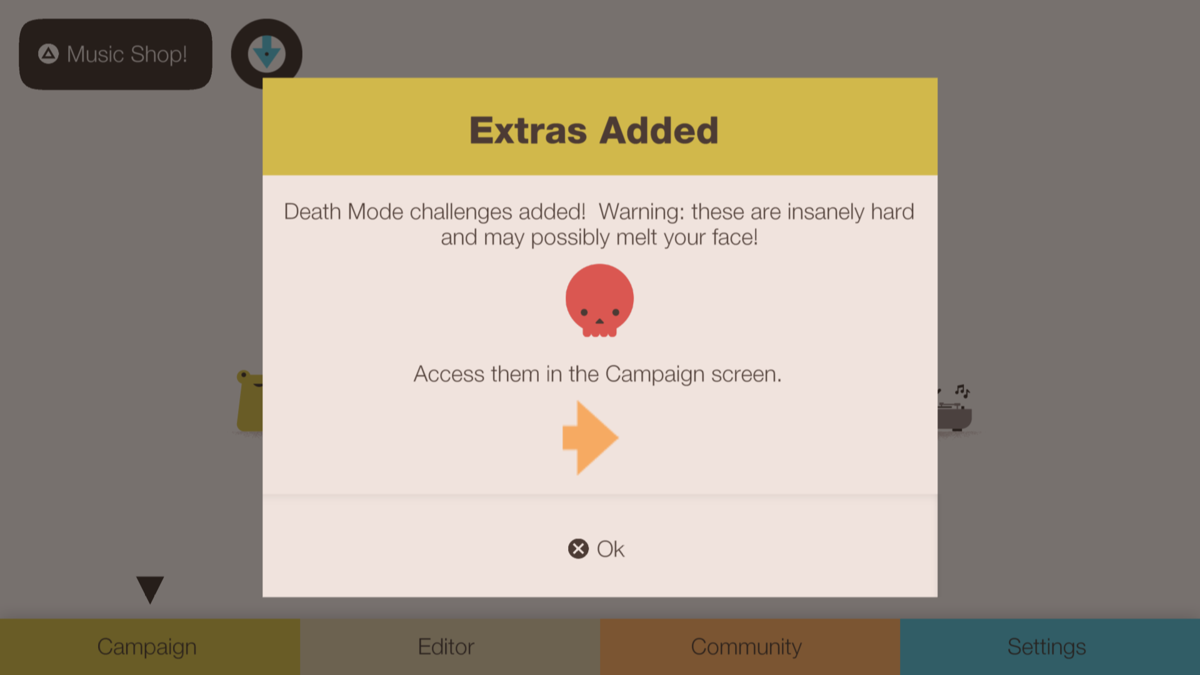
After the campaign, Death Mode turns levels into timed coin-collection challenges, and Beat School asks you to recreate beat sequences. The Edit mode is the substantial extra: a grid-based sequencer doubles as a level editor, with tempo, key, scale, terrain, sound assets, and the rest of the game’s art available for remixes. If the main game leaves you wanting to make your own playable song, it gives you real tools rather than a token add-on.
Graphics
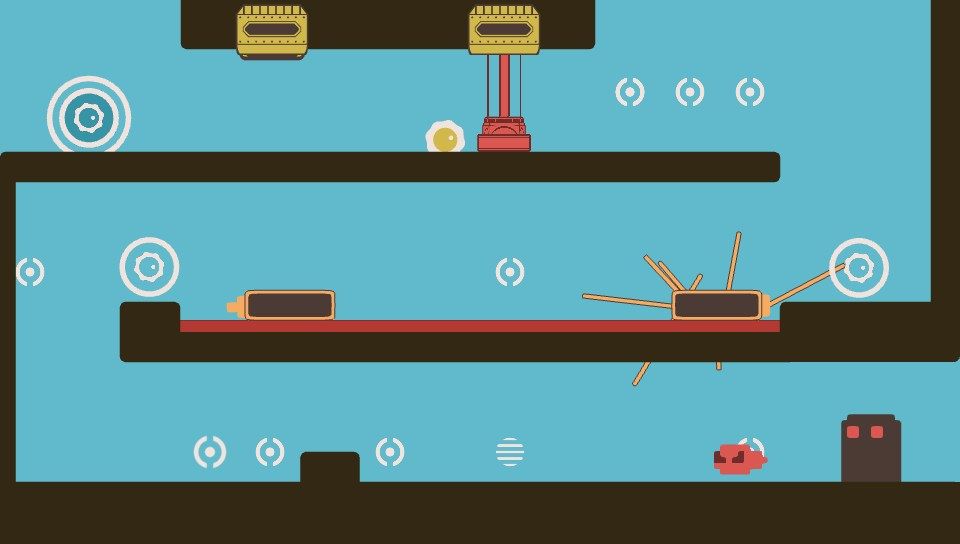
Sound Shapes keeps its visual language clean and purposeful: the yellow blob is easy to pick out, while red elements clearly mark what will kill you. The courses shift between city rooftops, factories, offices, an 8-bit dream world, frozen areas, a spaceship, and underwater spaces, giving the campaign’s albums distinct backdrops.
The animation changes alongside the music as notes are collected, and that motion matters because it can reflect the hazards and platforms you need to time. The clarity of the red dangers and the strong contrast around the player character help when a stage becomes busier.

Story
Sound Shapes does not lean on a character-driven tale. Its campaign is organized as five albums, each made up of three to five levels, and the journey is carried by songs, places, and the escalating interaction between sound and obstacle.
That structure suits the game. A factory, rooftop, or frozen setting can establish a different mood quickly, while the changing arrangement gives a stage its own arc: sparse opening, growing complexity, then a denser finish. You are progressing through musical spaces rather than chasing a plot twist.
The artists are a major part of that character. Tracks from Beck, deadmau5, I Am Robot and Proud, and Jim Guthrie give the levels distinct personalities, and the arrangements can vary from session to session rather than unfolding as a fixed linear recording. For more game-specific background, the Sound Shapes history and release overview is useful context.
Overall Experience
Sound Shapes earns its reputation because it does not just paste licensed music over platform levels. It makes the music part of the route, the timing, and often the danger. When it clicks, you stop separating soundtrack from action: a vocal phrase, beat, or bass hit becomes information you can play.
The campaign’s compact album format works in its favor. It keeps introducing fresh themes instead of stretching one idea too far, and the fast respawns encourage another attempt when a sequence goes wrong. The tougher late-stage clutter will test your patience, especially if you prefer platformers whose cues are entirely visual, but the payoff is satisfying once you learn to trust the rhythm.
Give it a chance if you like precise platforming but want something more musical than a conventional score beneath the action. The community sharing and editor add lasting value for anyone with an urge to build, remix, and download new creations across the supported PlayStation versions. At 7.8, it is a strong recommendation: inventive, focused, and most rewarding when you let your ears join your thumbs.

Reviews
There are no reviews yet.