 Retro Replay Retro Gaming History, Reviews & Emulation
Retro Replay Review
Gameplay
The first hour gives you a clear escape from execution, a dragon attack, and a wide-open invitation to wander. Skyrim understands the pleasure of being pointed toward a big quest and immediately getting distracted. You can chase the central dragon crisis, take side quests in any order, join groups you encounter, or simply head into the wilderness and see what trouble finds you. Fast travel trims the backtracking once you have visited a place, while horses offer another way to cross the province when you want the trip itself to matter.
Character building is wonderfully permissive. Instead of locking you into a class at the start, the game lets your habits shape the hero: use Destruction magic, work toward its better perks; favor stealth, archery, a shield, or heavy two-handed weapons, and those paths grow through use. Each level asks you to choose Health, Magicka, or Stamina and add a perk, so even a broadly capable character still reflects your priorities. It is a satisfying system for anyone who likes experimenting, though spreading yourself too thin can delay the stronger perks that make a chosen approach shine.
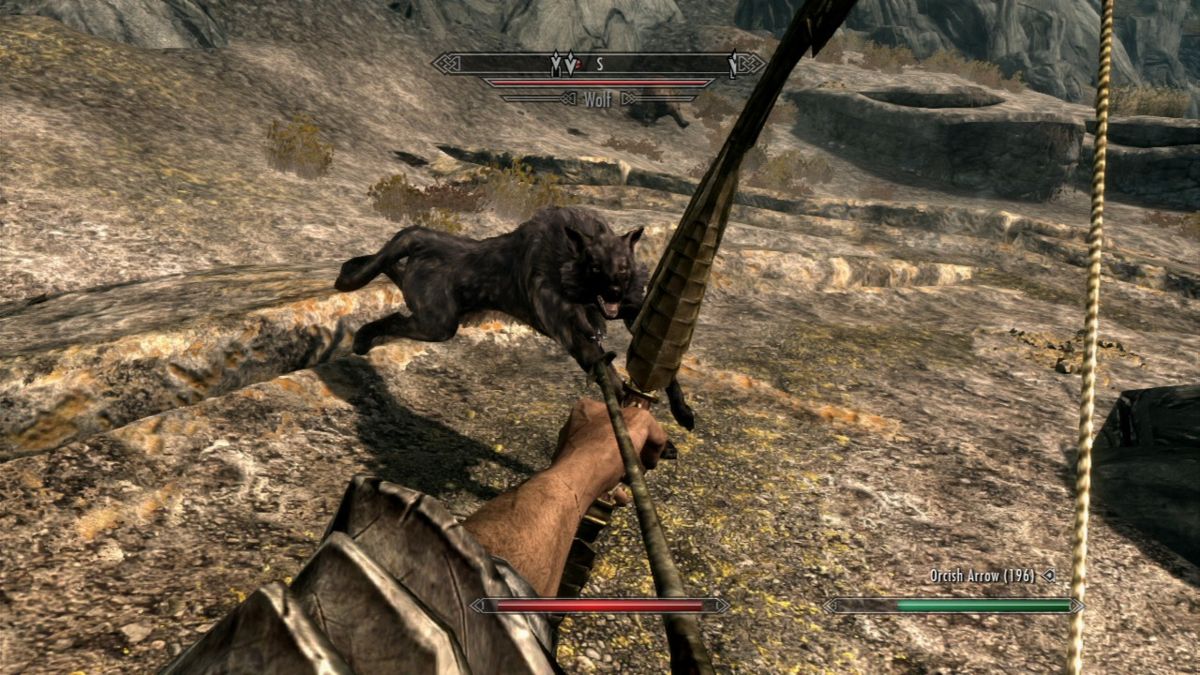
Combat has a direct, practical feel across melee weapons, blocking, bows, and magic. Followers can take some pressure off a difficult fight, and the Shout system gives dragon hunting a tangible reward: find Words at hidden walls, kill dragons for souls, then unlock those powers. Crafting also feeds naturally into the loop. Mining ore, tanning hides, cooking ingredients, brewing potions, enchanting gear, and smithing upgrades can become a full second obsession beside questing. That breadth is rewarding, but it can also leave you rummaging through ingredients and equipment when you meant to be on an adventure.
Skyrim does not stop you from causing trouble, either. Stealing, trespassing, pickpocketing, and attacks on innocents can bring bounties, fines, jail, or a fight with the authorities; getting caught in jail can cost skill progress. That risk gives criminal play a useful edge rather than making it consequence-free. The game is most enjoyable when you accept its messy freedom: make a direction for yourself, but leave room for detours.
Graphics
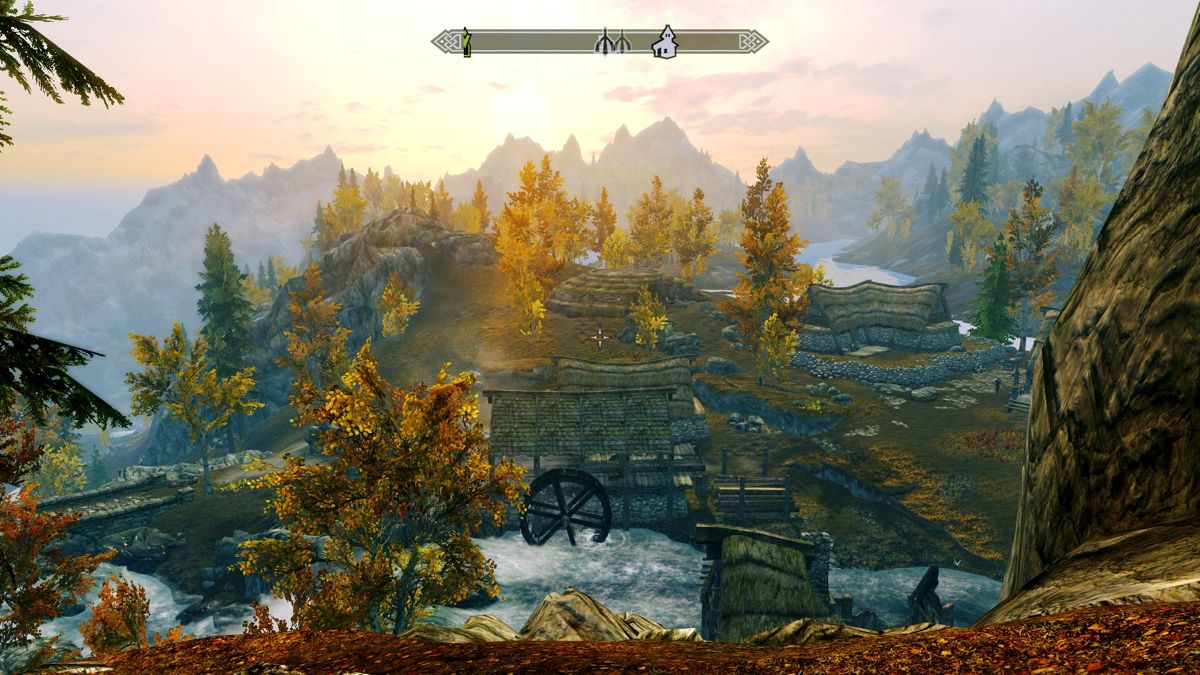
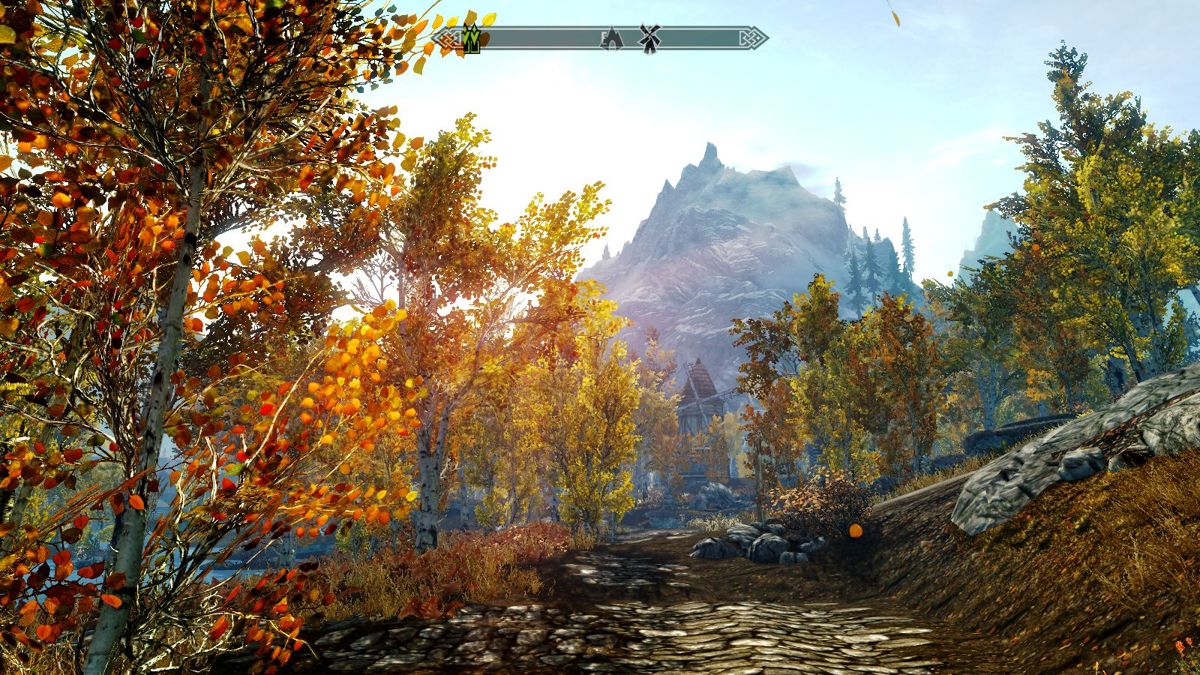
The snowy reaches of Skyrim give the world an immediately recognizable look, especially when you are traveling in first person or pulling back to the behind-view camera on horseback. Dragons, the ten playable races, and the broad northern landscape give your travels plenty of fantasy character, while the map makes revisiting discovered locations straightforward.
Story
Skyrim starts with a strong piece of chaos: an alleged Stormcloak prisoner is about to be executed when a dragon destroys the town and creates an escape. From there, the larger backdrop has real weight. The Empire has weakened, the Emperor has no heir, the Blades have been dismantled, elven nations are taking territory, and Skyrim is split between independence-minded Stormcloaks and those who support the Empire.
The civil war works because it is not just background text. Ulfric Stormcloak’s assassination of Skyrim’s king has made the province’s politics immediate, and the dragon rumors add a second crisis that is harder to ignore. You are free to pursue either the main line or side work in whatever order suits you, which makes the story feel less like a single march and more like a life spent in a country under pressure.
That freedom does mean the urgency is largely yours to manage. You can walk away from major events to hunt materials, work on skills, or follow a guild’s quests, and the game is comfortable with that. If you want a tightly controlled fantasy narrative, the wandering structure can dilute the momentum. If you want a setting that leaves room for your own priorities, it is a major strength. For a look back at the series’ roots, The Elder Scrolls: Arena makes an interesting contrast with Skyrim’s more immediate action and flexible character growth.
Overall Experience
Skyrim earns its reputation through accumulation. One useful perk leads to a new fighting style; one dragon soul makes another Word Wall worth seeking; one side quest sends you into a chain of distractions that feels more memorable than the plan you started with. It is not a game built around restraint, and that can make it overwhelming, but the payoff is an adventure that continually gives you another reason to push on.
Give it a chance if you like action RPGs where exploration and self-directed character building matter as much as the central plot. A patient player can find a comfortable rhythm between combat, crafting, questing, and travel. Someone wanting a leaner, more focused RPG may find the many systems and open-ended priorities exhausting, especially once every new location suggests another possible commitment.
Even so, few fantasy games make a simple decision—take the road, enter the ruin, practice a skill, help a stranger—feel so likely to lead somewhere else. Skyrim is rougher and broader than it is elegant, but its freedom turns that roughness into part of the charm. For release and development background, see this Skyrim history page.


Reviews
There are no reviews yet.