 Retro Replay Retro Replay gaming reviews, news, emulation, geek stuff and more!
Retro Replay Review
Gameplay
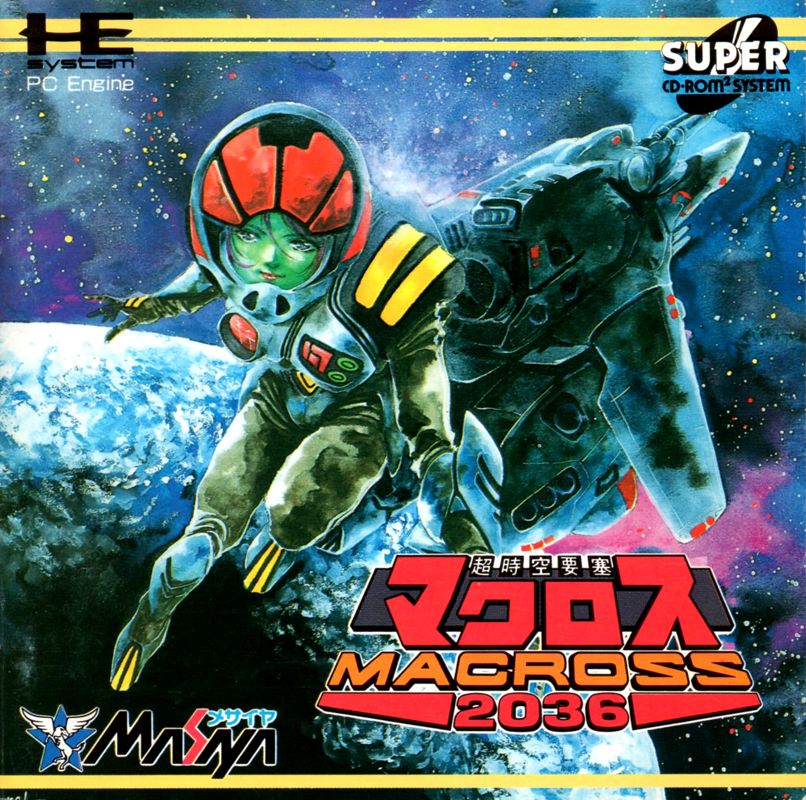
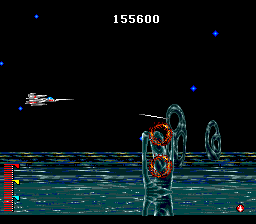
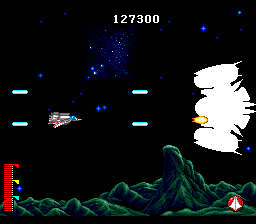
The first stretch is direct and satisfying. You pilot Mylene Jenius’s Veritech across horizontally scrolling combat zones, firing a vulcan gun and dropping bombs into waves of Zentradi ships and robotic soldiers. There is no mistaking what Chō Jikū Yōsai Macross 2036 wants from you: stay alive, clear the screen, and keep your firepower growing.
The upgrade loop gives those routine kills some weight. Power-ups improve the vulcan gun, while points from defeated enemies can be spent on special weapons between stages. That means your performance feeds into the next mission rather than disappearing the moment a stage ends. It is a simple arcade incentive, but it starts to click once you are thinking about both immediate survival and what weapon purchase might help next.
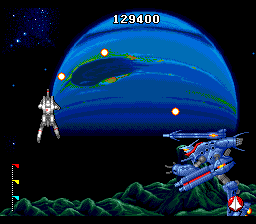
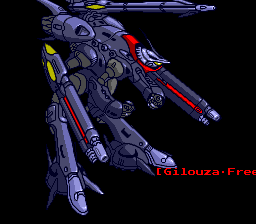
The standout is the boss structure. A flying stage can end with a regular boss, then immediately shift into a one-on-one Battroid battle after the Veritech transforms. In these duels the mech fires automatically; you manage altitude and the angle of its shots. The reduced control scheme makes the encounter feel distinctly different from the scrolling action, though it can also frustrate you if your instincts are telling you to take full command of every shot.
That contrast is why the game is more interesting than a standard licensed shooter. The flying stages reward familiar shooter discipline, while the Battroid clashes ask you to adjust to a more constrained kind of aiming. You may not love both halves equally, but the changeover gives each mission a stronger finish than another identical boss encounter would.
Graphics
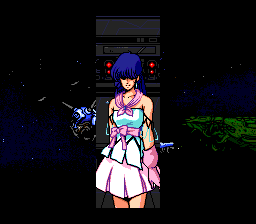
The game moves from side-view space combat to separate giant-mech boss screens, and the transformation into Battroid gives the action a pleasingly Macross-specific change of scale. Anime-style cutscenes between missions provide the clearest character-focused imagery, while the battles center on the Veritech, alien ships, robotic soldiers, and oversized boss opponents.
Story
This is a Macross story told in the right-sized way for an arcade shooter. You take control of Mylene Jenius, facing the alien Zentradi race through a chain of missions, and anime-style scenes push the plot forward between the action.
Do not come in expecting the narrative to crowd out the shooting. The story works chiefly as a reason to move from one fight to the next, then lets the missions carry the momentum. For a licensed game built around quick combat, that is a sensible choice.
Fans interested in the series’ game history may also want to compare it with the related Chō Jikū Yōsai Macross game. Macross 2036 stands apart through its focus on Mylene’s Veritech and the recurring switch from fighter combat to Battroid duels.
Overall Experience
Chō Jikū Yōsai Macross 2036 is strongest when it is changing the terms of the fight. Its ordinary scrolling stages deliver the dependable pleasures of an arcade shooter, but the post-boss Battroid battles give it a structure that sticks in your mind. The game has a genuine rhythm: blast through a mission, face a conventional threat, then prepare to aim differently in a mech showdown.
The catch is that the Battroid controls are deliberately narrow. Since firing is automatic, success rests on placement and shot angle rather than the freer attacking found in the Veritech stages. If that sounds like an intriguing tactical wrinkle, it is the game’s best reason to play; if it sounds restrictive, it may become the source of your irritation.
For Macross fans, the license is more than decoration: the Veritech, Battroid transformation, Zentradi enemies, and anime interludes give the shooter a clear identity. For anyone else, the recommendation rests on whether a classic side-scroller with an unusual boss-fight format sounds appealing. It earns a look for that twist alone, even if its split control styles ask you to meet it halfway.


Reviews
There are no reviews yet.