 Retro Replay Retro Gaming History, Reviews & Emulation
Retro Replay Review
Gameplay
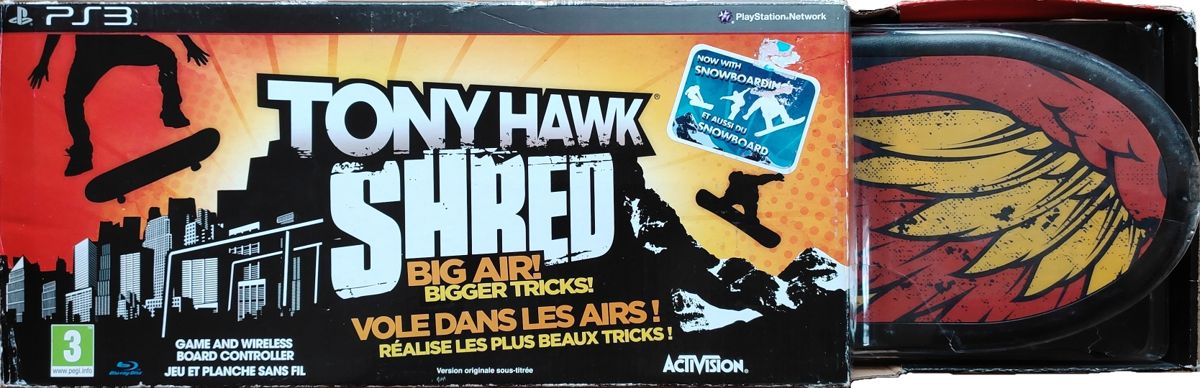
The first hour of Tony Hawk: Shred is dominated by the odd feeling of stepping onto its skateboard controller and asking your body to do work that a thumbstick once handled. That novelty is real. Leaning into a downhill run, chasing points, bonuses, and tricks, and trying to stay composed as the course carries you forward gives Shred a more physical hook than a conventional Tony Hawk game.
Its biggest improvement in concept is the move beyond skateboarding. Snowboarding brings slope runs, big air, and half-pipe events into the mix, so the game has more ways to use the board than its predecessor did. The decision to turn every location into a downhill-type event also gives the collection a consistent pace: you are being pushed onward rather than carving out your own lines at leisure. That can make a strong run feel brisk and arcade-like, but it narrows the kind of skating this is trying to be.
Casual Plus is the control option worth starting with. It blends the on-rails approach with self-correction, creating a bordered path that lets you make mistakes without immediately losing the run. That is a practical middle ground for anyone intimidated by the full motion-control commitment. Start there, learn how the peripheral interprets your stance and movement, then decide whether the more demanding modes feel rewarding rather than exhausting.
Multiplayer and solo play both fit the same score-driven premise, but the peripheral remains the dividing line. Shred is sold with an updated board and also works with the older Ride controller, which is welcome if you already bought in. If you have to acquire the hardware just for this game, the calculation gets harsher: its snowboarding addition and friendlier control setting do not erase how much of the experience depends on embracing that unusual controller.
Graphics
On Xbox 360 and PlayStation 3, Shred trades the prior game’s look for full cel-shaded characters and courses. New Orleans, Morocco, Greece, Hawaii, Melbourne, and the fictional Huck Jam Park give the downhill events a varied travel-poster backdrop. Wii goes in a more realistic visual direction instead, so it is the outlier among the three versions.
Story
Shred’s throughline is a tour of places and disciplines rather than a character drama. You move between destinations such as New Orleans, Morocco, Greece, Hawaii, Melbourne, and Huck Jam Park, with skateboarding and snowboarding sharing the spotlight.
That simple structure suits the game’s score-chasing nature. A slope run is about the next trick, bonus, or recovery, and a big-air or half-pipe session is about turning motion into points. The activity itself supplies the momentum.
Anyone hoping for the personality and broader sense of progression associated with older Tony Hawk entries may find this a thin substitute. Shred puts its energy into the board-controlled runs, so the trip between events matters less than whether each new descent gives you another reason to step back onto the peripheral.
Overall Experience
Tony Hawk: Shred deserves credit for not merely repeating Ride. Snowboarding is a sensible expansion, the all-downhill direction gives the game a distinct rhythm, and Casual Plus acknowledges that motion controls need a gentler way in. When you want a physical arcade challenge instead of a pad-driven skating game, that combination can click.
But it is still a niche sequel built around a niche controller. The board is not an optional flourish; it is the center of every run, and that makes Shred difficult to recommend broadly even with its improvements. It is a better fit for somebody who already owns the peripheral, enjoys competing for trick scores, and is curious about both boards on screen and the one beneath their feet.
For series context and release history, see Tony Hawk: Shred’s game history. As a purchase in its own right, this is an interesting experiment with a few smart refinements, not a convincing replacement for the more traditional Tony Hawk formula. Give it a chance only if the motion-board premise sounds like the reason to play, not an obstacle you hope the game will overcome.


Reviews
There are no reviews yet.