 Retro Replay Retro Gaming History, Reviews & Emulation

Retro Replay Review
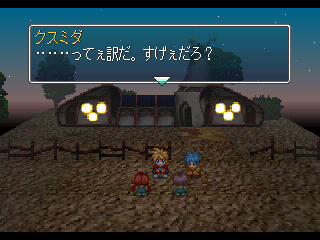
Gameplay
Alnam no Tsubasa settles into the kind of turn-based rhythm that asks you to enjoy the process, not race through it. You guide a party of up to four characters, choosing physical attacks, magic, or special moves in battle. That foundation is familiar, but the split between ordinary actions and specials tied to a gauge gives the party a little more texture than simply selecting Attack every turn.
The magic system is the part most likely to click once you have spent some time winning fights. Rather than merely finding a fixed list of spells, you earn magic points from victories and use them to create spells. That makes battles feel connected to character growth, and it gives routine encounters a purpose beyond experience gains. If you like gradually assembling useful options instead of being handed everything at once, there is real satisfaction in that loop.
The trade-off is a deliberately simple, linear RPG structure. There is little reason to expect the game to bend around your choices, and its basic leveling can feel plain beside more elaborate PlayStation-era role-playing games. Still, the focused format suits its story-driven approach: you move forward, strengthen the group, and learn to spend spells and gauge-powered attacks wisely. Give it a chance if a compact, old-school battle system sounds comforting rather than limiting.
Graphics
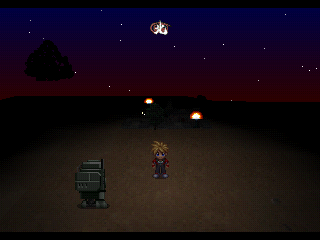
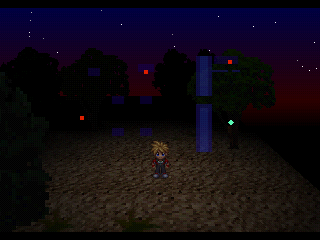
The game combines 3D background environments with 2D character sprites. That contrast places the characters clearly against the scenery, while keeping the people you control rooted in the sprite-based look of earlier Japanese RPGs.
Story
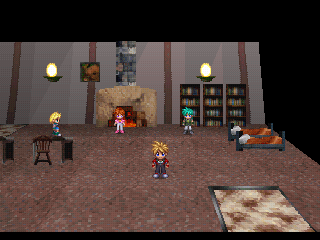
The stakes are enjoyably large from the outset. Fifty thousand years after the earlier battle against ultimate evil, Alnam is still living with the consequences of a cataclysm that scarred the world. The Maya Duchy’s leader turns an ancient power source into poisonous gas for conquest, giving the central threat a harsher edge than a routine “save the kingdom” setup.
Kusumida, a fourteen-year-old orphan, is the human way into that much bigger conflict. The story is explicitly character-driven, and that matters because its progression is otherwise linear: the game has room to keep your attention on Kusumida and the people around him instead of turning the adventure into a loose collection of detours. The premise has a strong sense of inherited history, with old disasters still shaping present-day ambition and fear.
Series fans will get more out of the long shadow cast by Alnam no Kiba: Jūzoku Jūnishinto Densetsu, since this is a direct sequel built around a world recovering from that earlier struggle. Even without that background, Kusumida’s mission is easy to grasp: stop the Duke before his weaponized gas can enable a wider conquest.
Overall Experience
This is a game for the JRPG fan who can still enjoy a direct path, modest character progression, and battles that get better as the party’s options grow. Its strongest quality is coherence. The combat, spell creation, and linear narrative all push you through the same steadily escalating fight against the Duke’s plans.
Patience is important. Anyone looking for open-ended exploration, highly complex character builds, or constant system surprises may find the straightforward leveling and prescribed advancement too narrow. The frustration is not that the game hides what it is; it is that it commits fully to an older style of RPG pacing and asks you to find pleasure in incremental progress.
For the right mood, that commitment pays off. Alnam no Tsubasa is a solid sequel-minded adventure with an unusually bleak central threat, a clear protagonist, and enough party combat choices to keep its traditional formula from feeling entirely automatic. It is worth your time if you want a focused fantasy-and-science-fiction JRPG rather than a sprawling one.


Reviews
There are no reviews yet.