 Retro Replay Retro Gaming History, Reviews & Emulation
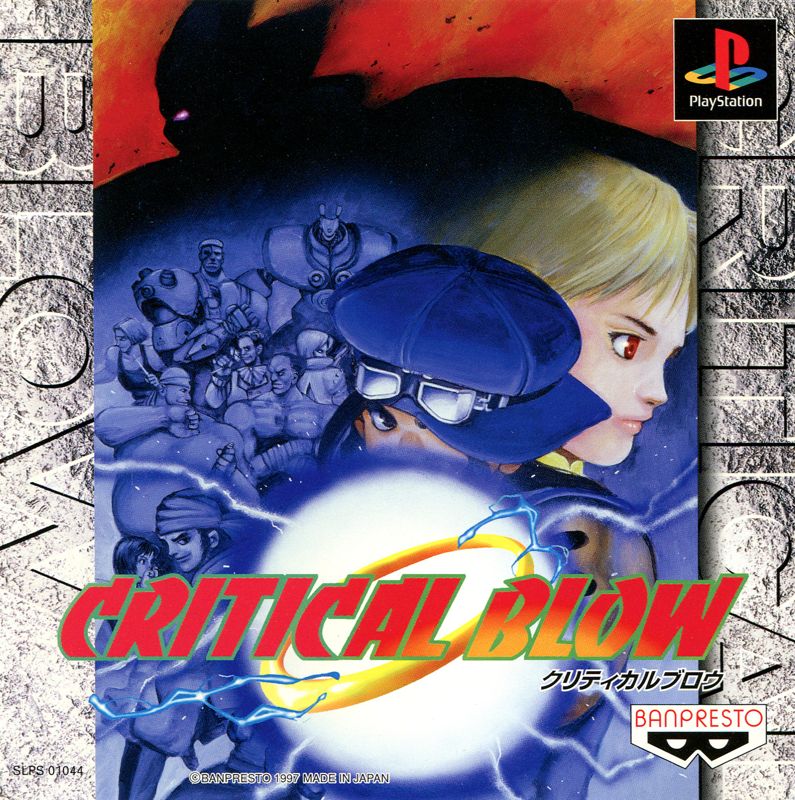
Retro Replay Review
Gameplay
The first few fights invite you in with a simple promise: pick a combatant and trade blows on a traditional side-to-side fighting plane. Critical Blow’s full-3D viewpoint does not turn it into a free-roaming arena game, so you can settle into spacing and face-to-face exchanges rather than wrestling with movement in every direction. That directness is welcome, especially when you just want to test characters in Tournament or sit down for a Versus match.
What separates it from a more routine one-on-one fighter is the Special Gauge. As a battle wears on, it opens access to Assault Blows, Super Blows, and Critical Blows at different power levels. That creates a useful change in rhythm: a round is not only about protecting your life bar, but about recognizing when the growing gauge gives you a reason to press an advantage or fear the other fighter’s comeback potential. The title’s biggest attacks have more weight because they are part of that gradual build rather than the only thing on the table from the opening bell.
The cards are the more unusual hook, and they are also where Critical Blow asks for a little more commitment from you. Cards can add moves, increase attack strength, or confer elemental affinities; Trading mode lets you fight computer opponents to earn more. Bringing that collection into matches gives progress outside of simple character selection, while wagering cards in Versus can make a local match feel less disposable. If you prefer perfectly even, no-modifier sets, you may find that complication distracting. If you enjoy tailoring a fighter and putting something on the line, it is the reason to stick around.
There is a respectable amount to explore around the core bouts. Ten characters are available at the outset, with more unlocked under particular conditions, and the four modes have distinct purposes instead of merely reshuffling the same ladder. Tournament handles the arcade-style sequence, Trading feeds the card chase, Theater carries the main narrative, and Versus is there for direct competition. The package feels most rewarding when you move between them rather than treating any one mode as the whole game.
Graphics
Critical Blow uses a full-3D camera view while keeping combat on a 2D plane. That combination gives the fights a more dimensional frame without losing the familiar left-right structure of a traditional fighter. Theater mode also includes fully animated cutscenes for Rickey Leon’s story, giving the game a clearer break between its bouts and its plot scenes.
Story
The story begins with a good fighting-game-sized mystery: an elite scarab badge arrives as an invitation from the shadowy Merkuar, leading fighters toward a dangerous tournament in England. Money, power, and glory are suitably blunt motives for a roster of martial artists, but the badge gives the contest a little intrigue beyond a generic championship bracket.
Rickey Leon is the central viewpoint, a poor young fighter from Hong Kong who receives one of those invitations. Theater mode follows him through fully animated scenes, so the game does not leave its premise as a paragraph in an instruction manual. You have a specific lead to follow, even as the larger tournament keeps the focus on combat.
Do not come in expecting the plot to overpower the fighting. Its purpose is to give the matches momentum and put a face on the journey toward Merkuar’s tournament. For this kind of game, that is enough: the mystery provides a reason to keep pushing forward, while the character battles remain the main event. For a little more background on Critical Blow’s history and release, its game-specific page is a useful companion.
Overall Experience
Critical Blow is most compelling as a curious, systems-heavy fighter rather than a bare-bones duel game. Its card economy gives the single-player side a purpose, and the option to wager cards in Versus makes the multiplayer side unusually personal. That is a strong idea because it turns some fights into decisions about what you are willing to risk, not merely whether you can win the next round.
The trade-off is that the game’s most distinctive ingredient is also extra baggage. You can ignore the deeper card angle and enjoy Tournament or a quick Versus session, but doing so leaves a major part of its personality unexplored. Conversely, if you are happy to earn cards through computer fights and experiment with their benefits, the structure starts to feel more purposeful than a standard ladder with a few extra modes attached.
Give it a chance if you have a soft spot for PlayStation-era fighting games that try to bolt progression and collection onto head-to-head combat. The 2D-plane battles keep the foundation recognizable, while the gauge-powered blow hierarchy and wagerable cards make the experience distinctly its own. It is not the obvious choice for someone who only wants instant, stripped-down competition, but its odd mix of tournament drama and collectible stakes is worth the patience.


Reviews
There are no reviews yet.