 Retro Replay Retro Gaming History, Reviews & Emulation

Retro Replay Review
Gameplay
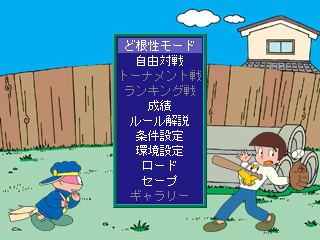
The first hour has a sensible rhythm: you can study the rules before committing to a match, then choose between a structured story route and a more direct versus setup. That makes Dokonjō Gaeru: The Mahjong friendlier than a game that simply drops unfamiliar players at a table and expects them to cope. Traditional mahjong has enough rules and scoring considerations to be intimidating, so a detailed in-game explanation is more than a throwaway extra here.
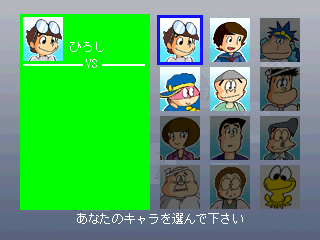
Free play is where the game is at its most straightforward. You pick a character, choose three opponents, and get on with the contest. That is a clean fit for anyone who wants repeatable matches without having to progress through story scenes first. It also gives you control over the table lineup, which is a better reason to return than merely replaying a fixed sequence.
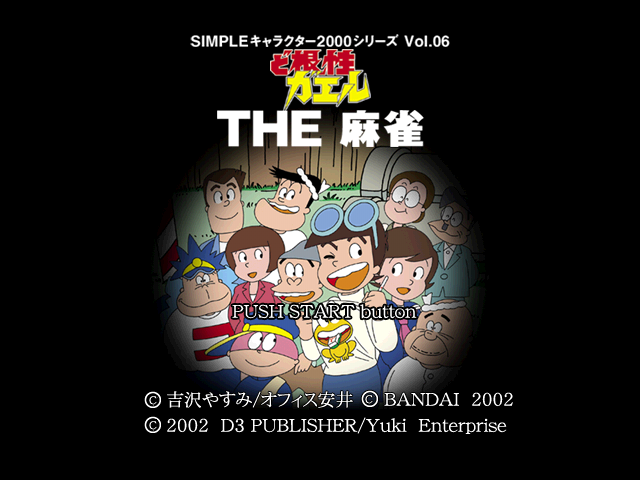
Story mode adds the licensed hook by threading matches together with events involving the titular character and his advice-giving frog T-shirt. Don’t go in expecting the manga material to transform traditional mahjong into something else; the cards-and-tiles action remains the point. What it does offer is a little context between games, which can help the learning process feel less dry.
Frustration will set in quickly if you dislike traditional mahjong or want a strategy game with a faster, more immediately transparent loop. The rules section can teach you the basics, but it cannot make the underlying game click on command. Once the hands, decisions, and terminology start making sense, though, having both guided and open-ended ways to play is a solid package.
Graphics
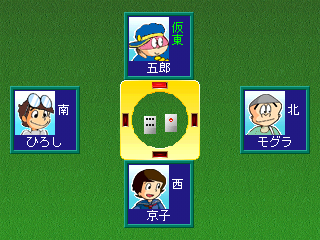
The game uses a top-down view for its mahjong action, putting the focus on the table and the information you need to follow a match. The manga license supplies the character framing around the games, while the core visual task is simply keeping the tile-based play legible.
Story
The story is intentionally light: it follows the titular character through a series of mahjong matches, with events between them. That structure gives the campaign a clearer sense of forward motion than a bare tournament ladder, even if the matches remain the main attraction.
The advice-giving frog T-shirt is the most distinctive piece of the setup, and it gives the game a suitably odd manga flavor. It is a small but useful contrast to the formal concentration of traditional mahjong; the license brings personality without asking the story to carry the whole experience.
You should treat the narrative as seasoning rather than a major dramatic draw. The payoff is getting another match in a character-led context, not reaching some elaborate narrative climax. Fans of Dokonjō Gaeru have the clearest reason to choose story mode, while everyone else may find free play the more direct route to what they came for.
Overall Experience
Dokonjō Gaeru: The Mahjong is a focused PlayStation mahjong game with a welcome on-ramp for beginners. Its best decision is pairing a substantial rules explanation with modes for both structured progression and self-directed matches. That combination respects the fact that mahjong can be rewarding precisely because there is a lot to learn.
The license adds charm, but it is not a substitute for enjoying traditional mahjong. If the thought of studying rules and settling into repeated tile matches sounds like work, the character scenes will not change your mind. If you enjoy the game already, or have wanted a guided way to learn it, the straightforward format has real value.
Ultimately, this is worth a chance for Dokonjō Gaeru fans who want their manga wrapped around an actual mahjong game, and for mahjong newcomers who appreciate being taught before being tested. It is a narrower recommendation for anyone hunting for an expansive strategy title, but within its lane it makes a sensible, approachable case for another hand.


Reviews
There are no reviews yet.