 Retro Replay Retro Gaming History, Reviews & Emulation
Retro Replay Review
Gameplay
The first hour of Formula Nippon has a satisfyingly grounded pull because it does not throw you straight into its fastest cars. Starting in Go Karts and working upward through Formula 3 toward Formula Nippon gives each step a reason to matter. You are not merely selecting a more powerful machine from a menu; you are earning your way toward the series the game is built around.
That structure is especially useful because the circuit list is compact. Go Kart racing has four track options through two layouts and their reverse versions, while Formula 3 and Formula Nippon bring the action to five real Japanese venues: Suzuka, Fuji, Mine, Sugo, and Motegi. A limited selection can become a frustration if you need a constant stream of fresh locations, but it also means you can learn the same roads across different classes instead of treating every race as a disposable lap.
Time Attack is where that familiarity should start to click. It gives you a clean excuse to focus on pace at a circuit, while Arcade and Scenario modes offer more immediate race-game routes. Two-player support is a valuable inclusion for a game this track-focused: a known circuit is often more fun when you and someone beside you both know exactly where the time is being lost.
Wet and dry track conditions add another reason not to treat a learned layout as solved. The real strength here is commitment to open-wheel circuit racing rather than a broad grab bag of car types or events. With six selectable real teams in Formula 3 and fourteen in Formula Nippon, the upper levels have a stronger connection to the series than the opening kart stage.
Graphics
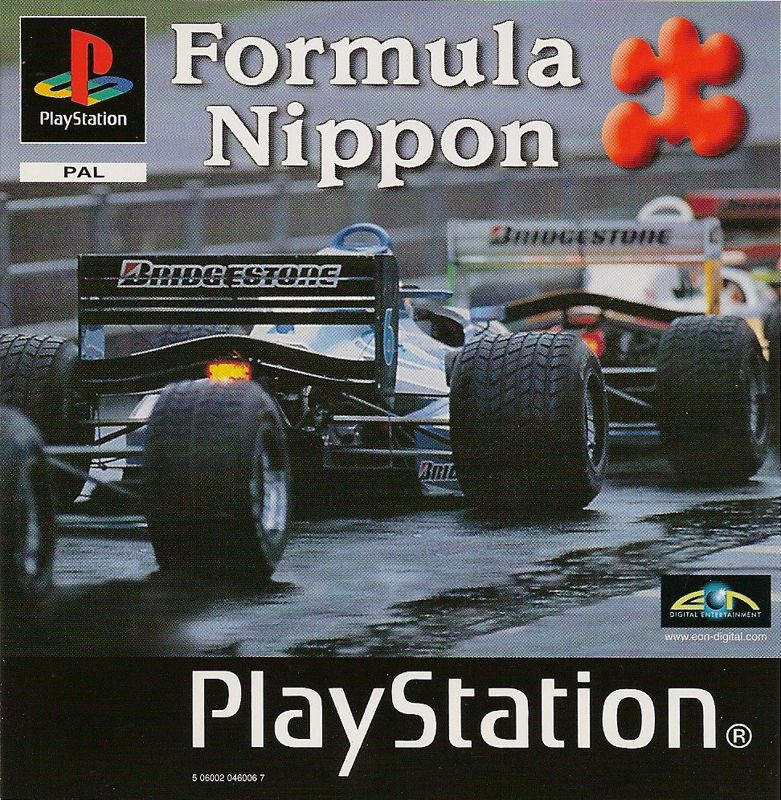
Formula Nippon keeps its eye on the machinery and the circuit. You race open-wheel cars at recognizable Japanese tracks, using first-person and behind-the-car viewpoints, and wet conditions give the same venues a different on-track look from dry races.
Story
Its story is a motorsport climb, not a dramatic tale. The move from Go Kart to Formula 3 and then Formula Nippon supplies the arc: begin small, prove yourself in a faster category, and reach the headline cars.
That simple framing works because it matches the subject. Formula racing is already built around advancement through machinery and competition, so the game does not need to overcomplicate its motivation. The reward is access to the higher tiers and their real-team choices.
Do not come in expecting character drama to carry the sessions. The momentum comes from your own improvement: getting comfortable with the early racing, returning to the same circuits, and making the transition to the top class feel deserved.
Overall Experience
Formula Nippon is a concentrated PlayStation racing game with a clear point of view. It favors Japanese open-wheel competition, real circuits, and progression through the ranks over a sprawling buffet of racing disciplines. That makes it easier to recommend to someone who specifically enjoys track racing and the rhythm of repeated laps.
The biggest trade-off is repetition. Five main circuits for Formula 3 and Formula Nippon is not a lot of geography, and the kart portion is smaller still. If you need a large championship calendar to stay interested, you may hit the wall early. If you enjoy returning to Suzuka or Fuji with a different class of car, the modest scope feels more like focus than shortage.
The payoff is the sense of moving from an accessible starting point into serious open-wheel racing, with enough modes to support both quick races and time-chasing. Formula Nippon will not be everyone’s all-purpose racer, but for a gamer drawn to late-1990s Japanese circuit simulation and a straightforward career climb, it has a pleasingly specific lane of its own.


Reviews
There are no reviews yet.