 Retro Replay Retro Gaming History, Reviews & Emulation

Retro Replay Review
Gameplay
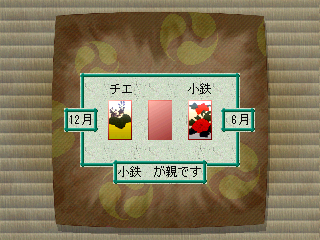
The first few hands put the real question in front of you quickly: can you turn the cards in your hand and the eight open cards on the table into better matches than your opponent? Jarinko Chie: The Hanafuda is built around that familiar Hanafuda tension, where each pairing can move you closer to a worthwhile collection of flower- and season-themed cards or leave a useful card available for the other side.
That makes it more deliberate than a game where you simply chase the first available match. You are trying to collect suits and score more points, so every choice has a small push-and-pull between taking what is there now and considering what your opponent may be able to claim next. If Hanafuda already clicks for you, the rhythm should be immediately comfortable: inspect the table, make the pairing, and watch the score race take shape.
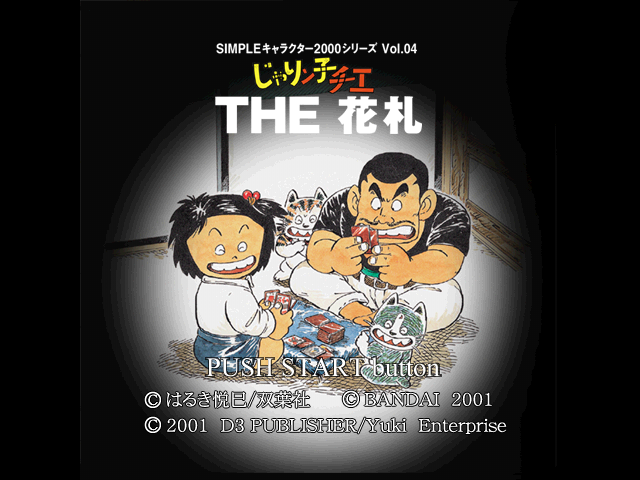
Newcomers should know what they are signing up for. This is a card game first, not a broad strategy title that happens to use cards. Its satisfaction lives in reading a compact table state and making smarter collections over a series of hands. That focus can feel dry if you are only here for Jarinko Chie, but it is exactly why the game can work as a repeatable match-based pastime.
Story mode gives the card play a welcome forward motion by putting Chie against manga opponents in a set order. Once you have worked through it, free play is the better fit for a quick session, letting you pick both the character you use and the character you face. It is a sensible split: one mode supplies structure, while the other lets you return to the core contest without ceremony.
Graphics
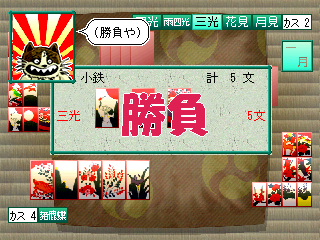
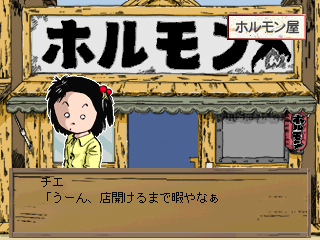
The most concrete visual draw is the Hanafuda deck itself, with its flower and seasonal imagery, alongside the Jarinko Chie characters used for the matchups. On the table, the eight face-up cards give each round a clear card-game layout: you can see the immediate matching puzzle at a glance.
Story
Do not come in expecting an elaborate manga adventure. The story mode frames a sequence of card matches in which Chie faces different opponents from Jarinko Chie, and that is its main narrative function. It gives the license a reason to exist beyond a character-select screen.
There is still value in that structure. Facing a fixed run of opponents gives each victory a little more context than an anonymous exhibition match, especially if you know the manga and enjoy seeing its cast turned into rivals across the card table. The story is a motivator for play, not a replacement for the Hanafuda itself.
If you have no attachment to Jarinko Chie, the narrative hook is understandably lighter. You will be progressing through opponents rather than chasing a richly described plot. Fans, meanwhile, get the more personal version of the same simple card-game climb.
Overall Experience
Jarinko Chie: The Hanafuda is a narrow game, but it is honest about that narrowness. It takes a traditional points-and-collections card contest, adds a recognizable manga cast, and offers both a structured opponent run and free play. There is no need to overthink the recommendation: your interest in Hanafuda is the deciding factor.
For a Hanafuda fan, the payoff is the steady pleasure of making good pairings, collecting cards efficiently, and outscoring a rival, with story mode giving those matches a modest sense of progression. The Jarinko Chie license sweetens the package rather than changing its fundamentals. That is enough for a pleasant specialist game.
For everyone else, frustration may set in if the card rules and scoring do not grab you early. The characters cannot carry the experience on their own because the bulk of your time is spent weighing card matches and point collections. Give it a chance if that sounds inviting, especially if you know the manga; skip it if you need your licensed games to offer more than a focused traditional card battle.


Reviews
There are no reviews yet.