 Retro Replay Retro Gaming History, Reviews & Emulation
Retro Replay Review
Gameplay
K-1 Revenge asks you to fight with a little restraint. A bout lasts up to three rounds, and the immediate temptation is to pour on attacks until somebody falls. That can work, but the three meters make reckless pressure a bad long-term habit. You are watching physical strength, stamina, and accumulated knockdown damage at once, so the first hour becomes less about finding one favorite move and more about learning when you can afford to spend energy.
That is the game’s strongest idea. A knockout is the cleanest finish, yet a fight that goes the distance is decided by how well each side performed across the full match. You cannot simply coast after a good opening, and you cannot assume a late flurry erases earlier mistakes. The result gives the action a more considered rhythm than a pure arcade slugfest, especially when you are trying to protect a lead rather than chase one.
The roster includes 14 K-1 fighters, with four more to unlock, and their ratings in speed, stamina, and power should push you to change your approach. Each has two special arts, such as an axe kick or right hook, which gives training mode a practical purpose: learn what a fighter does well before bringing them into a serious bout. Adjustable computer difficulty is also welcome. Start lower if the meter management feels fussy, then raise it once you understand why throwing everything at once leaves you vulnerable.
There is enough structure around the core fights to keep a competitive household busy. Versus is the natural test of whether your habits actually work against another person, while the eight-fighter tournament and three-fighter team battle add a reason to learn more than one combatant. The modes do not change what K-1 Revenge fundamentally is, but they give its central ring game several useful places to breathe.
Graphics
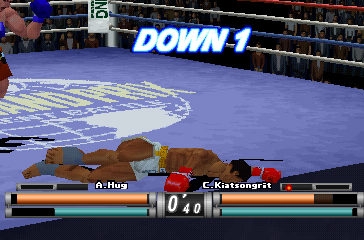
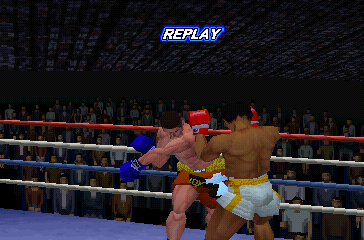
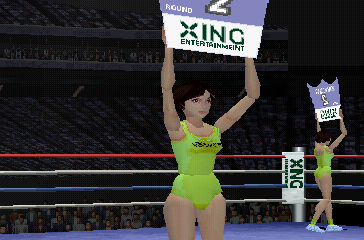
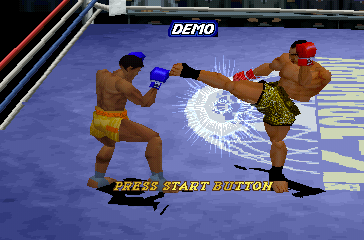
The action stays centered on two fighters in a ring, which suits a game built around reading attacks, damage, and stamina. The most important on-screen details are the three fight meters: life, stamina, and knockdown damage. They are not decoration; keeping an eye on them is part of surviving a full three-round contest.
Story
K-1 Revenge is framed as a straightforward contest to establish the best fighter in the world. That is all the motivation it needs. You pick a martial artist, step into the ring, and try to win under the pressure of a limited number of rounds and a possible judges’ decision.
Instead of building a narrative campaign around that premise, the game lets competition supply the drama. A tournament creates its own small arc as eight fighters are narrowed to a champion, while team battle turns the same competitive idea into a three-fighter challenge. The stakes are sporting rather than personal, and that suits the licensed K-1 focus.
If you need characters, plot turns, or a long-form career story to stay invested, this will feel spare. If you enjoy creating your own rivalries through rematches, close decisions, and the satisfaction of finally mastering a fighter’s special arts, the lack of extra narrative clutter is easier to accept.
Overall Experience
K-1 Revenge earns its keep through tension rather than excess. The enjoyable moments come when a bout stops feeling random: you know your stamina is low, you can see knockdown damage mounting, and you have to decide whether to press for the finish or fight safely to the bell. That is a satisfying kind of pressure for a fighting game, and it makes decisions feel consequential.
Frustration is most likely to arrive if you expect every match to reward constant aggression. The scoring decision and stamina system ask for patience, while the roster’s different ratings mean a comfortable strategy with one fighter may not transfer neatly to another. Training mode is worth using, not as homework, but because it helps turn the game from a scrappy exchange of moves into a contest you can actually control.
The payoff is strongest for fans of kickboxing and karate-flavored fighting who like short, tactical matches and local competition. The computer difficulty setting, unlockable fighters, tournament bracket, and team battles offer reasons to return after a few exhibition bouts. K-1 Revenge is not trying to be everything to every fighting-game fan; it is a focused ring fighter whose best matches reward composure, familiarity, and a willingness to win on points when the knockout does not come.


Reviews
There are no reviews yet.