 Retro Replay Retro Gaming History, Reviews & Emulation
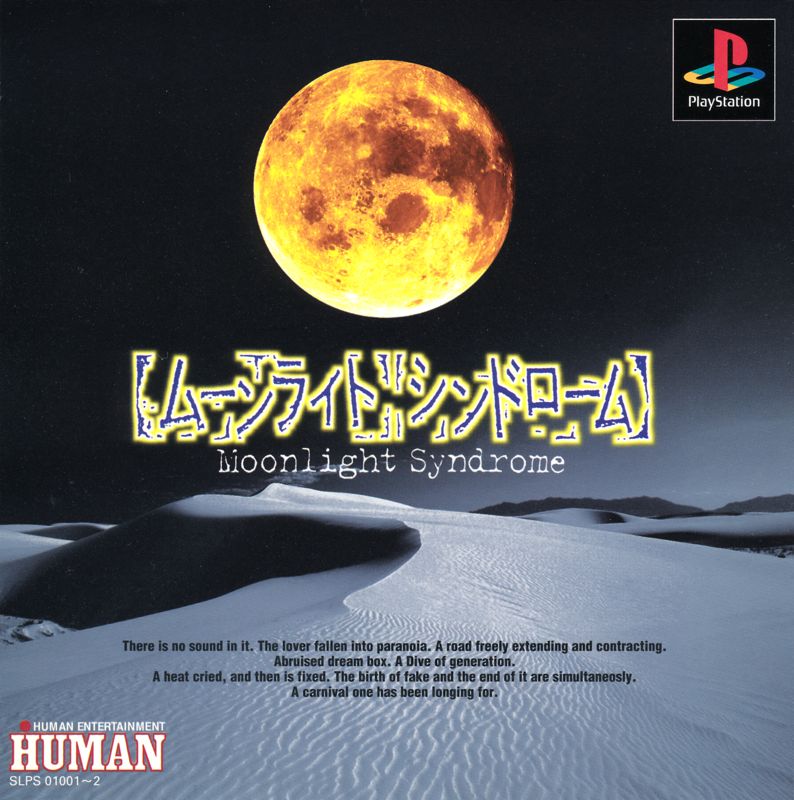


Retro Replay Review
Gameplay
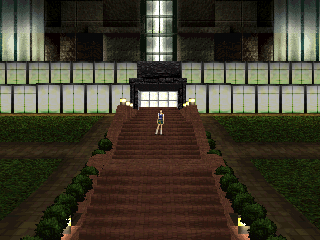
The first hour asks you to meet Moonlight Syndrome on its own terms. You guide Mika through limited 3D locations, walking or running toward the next screen and the next uneasy conversation. It is deliberately sparse: there are no items to collect and no traditional puzzle-solving layer waiting underneath the dialogue. Much of your time is spent moving a short distance, triggering a scene, then absorbing what the characters say or what they choose not to say.
That simplicity can either sharpen the tension or make the game feel thin. When the mystery has you hooked, the lack of busywork is a relief. You are not stopping to combine objects or searching every corner for a single hidden key; you are following a chain of troubling events at a brisk, story-first pace. But when a scene fails to grab you, the basic run-to-the-next-trigger structure becomes obvious very quickly.
Choices are the important wrinkle. Dialogue and action decisions can alter the course of the narrative, giving you reason to pay attention instead of treating every exchange as pure exposition. The game later shifts control from Mika to Ryo, Kyoko’s brother, which helps the investigation feel broader than one person’s bad night. Go in for a focused, linear horror adventure with branches around the edges, not an interactive mystery full of systems to master.
Graphics
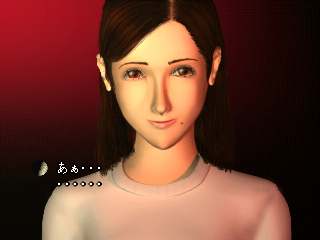
Moonlight Syndrome mixes limited 3D areas for character movement with pre-rendered images for scenes such as the full-screen dialogue portraits. The third-person navigation gives you a physical sense of moving through each small location, while the larger character images put the emphasis back on faces and conversations when the story turns personal.
Story
The story earns attention through accumulation. A cancelled meeting, a boy who may have been following Mika, a warning from a stranger, then a schoolmate’s death: none of these details needs to shout to feel wrong. Mika’s near-forgetting of the previous evening gives the opening an especially unsettling hook, because you are left wondering whether she is missing the truth or being pushed away from it.
Kyoko’s death gives the mystery real weight, and Ryo’s strange dreams pull the game toward a second viewpoint rather than leaving everything inside Mika’s uncertainty. That switch is a smart fit for the material. It suggests the events around the school are larger than one witness’s fear, while still keeping the focus on people close to the victim.
Its text-heavy structure means the writing has to carry much of the horror, and that will be the dividing line. You need to enjoy lingering in dialogue, suspicion, and gradual revelation. If you do, the story’s mundane starting point and mounting weirdness offer a distinctly intimate kind of dread; if you need frequent action or investigation mechanics to stay engaged, the plot may feel like it is doing all the lifting.
Overall Experience
Moonlight Syndrome is a committed piece of late-1990s Japanese horror adventure design: linear, dialogue-led, and almost startlingly unwilling to distract you with side activities. That makes it easier to recommend to someone who wants to sit with a strange story than to someone browsing for a conventional game loop. Its strongest moments should come when you surrender to the pace and let the unanswered questions pile up.
The trade-off is substantial. Walking to the next event is not the same thing as investigating it, and the game offers little mechanical variety when its scenes do not land. Some gamers will find that restrictive rather than atmospheric. The occasional consequential choice helps, but it does not transform the experience into a puzzle adventure or a freeform exploration game.
Still, there is value in how cleanly it pursues its particular mood. Mika and Ryo’s connection to the unfolding deaths and dreams gives you a clear reason to continue, and the absence of inventory clutter keeps the focus on people, dialogue, and dread. Give it a chance if you have patience for an old-school, low-interaction horror narrative; skip it if you need your adventures to challenge your hands as often as they challenge your curiosity.


Reviews
There are no reviews yet.