 Retro Replay Retro Replay gaming reviews, news, emulation, geek stuff and more!


Retro Replay Review
Gameplay
The first stretch gets its tension from how exposed you are. Yuri, Masa, Atsushi, and Aya enter the school to try a spirit-summoning game, and the game asks you to guide them through confined 3D areas with no weapon or bag of useful tools to fall back on. When ghosts appear, escaping danger matters more than mastering a system. That simplicity can make each trip into another dim corner feel unnervingly direct.
Exploration is intentionally minimal. You move the characters, search for clues, and progress through a limited set of locations; there are no items to use and no combat to break up the investigation. That makes the pace easy to understand, though it also means your enjoyment rests heavily on whether the haunted-school atmosphere and story hooks grab you. Anyone hoping for elaborate puzzle chains may start feeling the boundaries of the design before long.
The dialogue and action prompts add the needed uncertainty. Some choices merely alter the immediate conversation, while others can steer later dialogue or get the teenagers killed early. You should treat decisions as part of the suspense rather than expect every prompt to radically reroute the whole tale. The additional nighttime free-roam mode, where Yuri explores the school and its surroundings to collect more ghost stories, is the stronger extra for anyone who wants to linger in the setting instead of rushing straight through the central plot.

Graphics
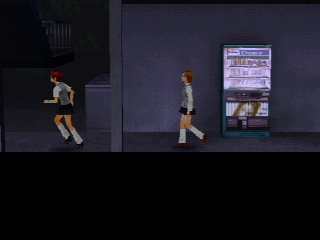
You see 3D models of the teenage cast moving through compact 3D school areas and nearby surroundings. The third-person view suits the group exploration, keeping the characters in frame as they search the places where the ghost stories take hold.

Story
The hook is a familiar one, but it is a good horror foundation: four teenagers hear that spirits are trapped in their school, dare each other into a nighttime summoning game, and learn immediately that the rumor has teeth. Yuri waking up ready to dismiss the night as a dream gives the story a useful moment of denial before the supernatural trouble continues.
Yuri sits at the center, with her sister Masa and friends Atsushi and Aya sharing the danger. The story’s stated mystery concerns the secrets of lost souls, revealed through the special sensitivity called Twilight Syndrome. That gives the haunting more purpose than a string of random scares; the ghosts are tied to secrets waiting to be uncovered.
The choice structure fits this material well because it puts some nervous responsibility in your hands. A bad call can lead to a premature death, which gives conversations and frightening encounters sharper stakes even when a choice only changes the next exchange. Don’t come in looking for a sprawling branching drama, but the possibility of consequences helps the school rumors feel personal rather than safely scripted.
Overall Experience
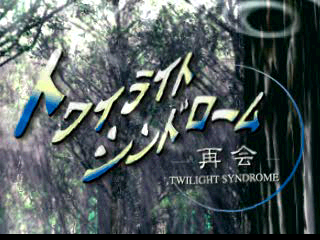
Twilight Syndrome: Saikai is at its best when you accept its restraint. It does not try to turn its teenagers into fighters or bury its ghost story under complicated adventure-game routines. Instead, it keeps you close to the vulnerable act of investigating a haunted school after dark, with choices that can make an already bad situation worse.
That lean approach is also where frustration can set in. With no item use, combat, or broad interaction, there is less mechanical variety than the genre often offers. If you need constant puzzle-solving or action to stay engaged, the limited exploration may feel more like a constraint than a source of tension.
For horror fans who enjoy a focused Japanese school ghost story, the payoff is the lingering unease of following Yuri and her friends into trouble they cannot simply fight away. The free-roam ghost-story mode is a welcome reason to spend more time in the school, while the decision points give the main story some edge. It is a niche, stripped-back adventure, but its lack of clutter is precisely why its premise can land.


Reviews
There are no reviews yet.