 Retro Replay Retro Gaming History, Reviews & Emulation
Retro Replay Review
Gameplay
The first hour has a nice, brisk rhythm. You pick one of five gangs, each with its own ability, and start bouncing through short jobs with very different objectives. One mission might ask you to steal a car, the next to protect a position from waves of enemies, then you are tailing a target, racing, or pushing into an enemy-held area. If you want a crime-action game you can play in bite-sized sessions, that constant turnover is a genuine strength.
On foot, it is straightforward third-person shooting. At times you bring fellow gang members and can issue them a few commands, which gives the action a small tactical wrinkle without turning it into a squad game. Driving is built for action in either first- or third-person view, while stealth stays simple: watch patrol routes, get behind guards, and take them out. None of these pieces sound difficult to grasp, and that is largely the point; you can get moving quickly.
That simplicity also puts pressure on the missions to carry the experience, and not every variation lands with equal force. The campaign has plenty of jobs, but familiar tasks such as escorting, defending, killing targets, and infiltrating posts can start to blur together when the underlying shooting, driving, and stealth remain so basic. Police will react if they witness a crime, but without a broader wanted system the law does not add the escalating chase-and-escape tension you may expect from a GTA-like premise.
The gang choice is a welcome nudge toward replaying, especially because abilities can affect how you approach a job—Triads, for example, drive faster. Still, this is more of a flavorful advantage than a reason to expect radically different campaigns. Go in wanting a stack of quick criminal errands, not a city where each choice dramatically reshapes your run.
The extra modes do a lot to keep the disc from feeling one-note. Free roaming lets you spend time in London outside the mission chain, while taxi driving and tourist photography offer a lighter change of pace. Fighting zombies is an especially strange detour for a crime game, but it gives the collection some welcome nonsense. The pub’s darts, bowling, pool, and Snake-style arcade game also make sensible two-player distractions.
The standout bonus is the strategic conquest mode. Here you run a crime organization across roughly 30 London districts, spend three actions per round moving men and making plays, then hire reinforcements or buy advantage-granting cards between rounds. With three difficulty levels and different win conditions, it has more room to breathe than a throwaway minigame. If the main campaign starts wearing thin, this is the mode most likely to pull you back.
Graphics
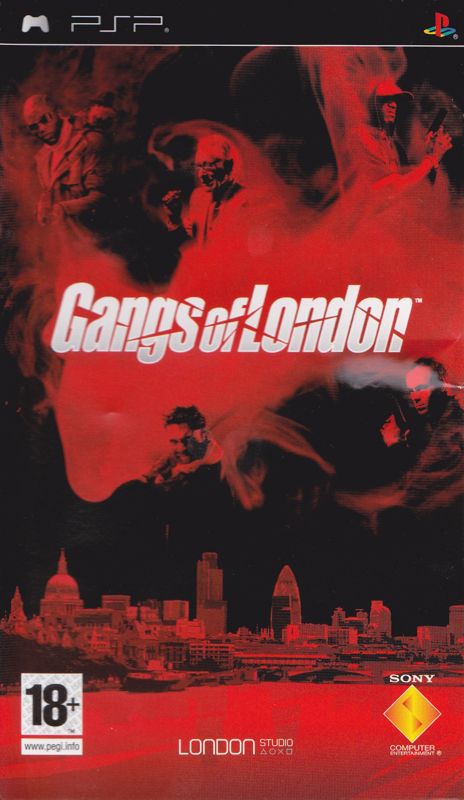
The campaign frames its story beats with comic-style sequences, a good fit for the gangland tone and an efficient way to get you into the next assignment. During play, the changing camera options for driving—first- or third-person—at least let you choose whether you want a closer road view or a wider look at the action around the vehicle.
Story
You begin as a gang member trying to take control of London, a clean crime-fiction goal that gives the mission list direction. Rather than sending you through one uninterrupted journey across the city, the game parcels that rise to power into 70 short episodes chosen from a menu. It feels more like working through a collection of criminal jobs than inhabiting a continuous underworld saga.
The comic-style sequences attached to every mission are important because they keep that campaign framework from becoming completely mechanical. They set up why you are kidnapping someone, stealing a vehicle, attacking a rival position, or holding your ground. That regular context helps when the goals shift quickly from mission to mission.
Still, the story’s main value is propulsion. The campaign is at its most convincing when you treat it as a brisk gang-war serial: take the next assignment, see where the next rivalry or dirty job leads, and move on. Anyone looking for a deeply developed crime drama may find the short-mission format too fragmented to build much weight.
Overall Experience
Gangs of London is easiest to enjoy when you stop comparing it beat-for-beat with open-world crime games. It borrows the broad fantasy—guns, cars, gangs, police attention, and control of the city—but trades freeform campaign roaming for a rapid-fire mission menu. That can feel restrictive if you came for spontaneous city chaos, yet it also makes the game unusually easy to dip into for one or two jobs.
There is a decent amount of variety packed around the central shooting and driving. The campaign cycles through enough objectives to avoid total monotony, and the side activities range from social pub games to tourism and zombies. Not every detour suits the crime tone, but the willingness to be messy and varied is preferable to padding the same combat loop without relief.
The strategic territory mode gives the package its strongest second wind. It turns the struggle for London into deliberate district management instead of another firefight, and the ability to choose difficulty and win conditions adds useful longevity. It will not rescue the campaign for you if the basic action feels flat, but it makes the overall package more interesting than its most routine missions suggest.
Give it a chance if you want a PSP crime-action game built around short sessions and you are happy to sample a lot of modes. Skip it if your main desire is a free-roaming GTA substitute or a sophisticated stealth and shooting experience. There is fun in its busy, pulpy mix, but it is intermittent rather than commanding.


Reviews
There are no reviews yet.