 Retro Replay Retro Gaming History, Reviews & Emulation
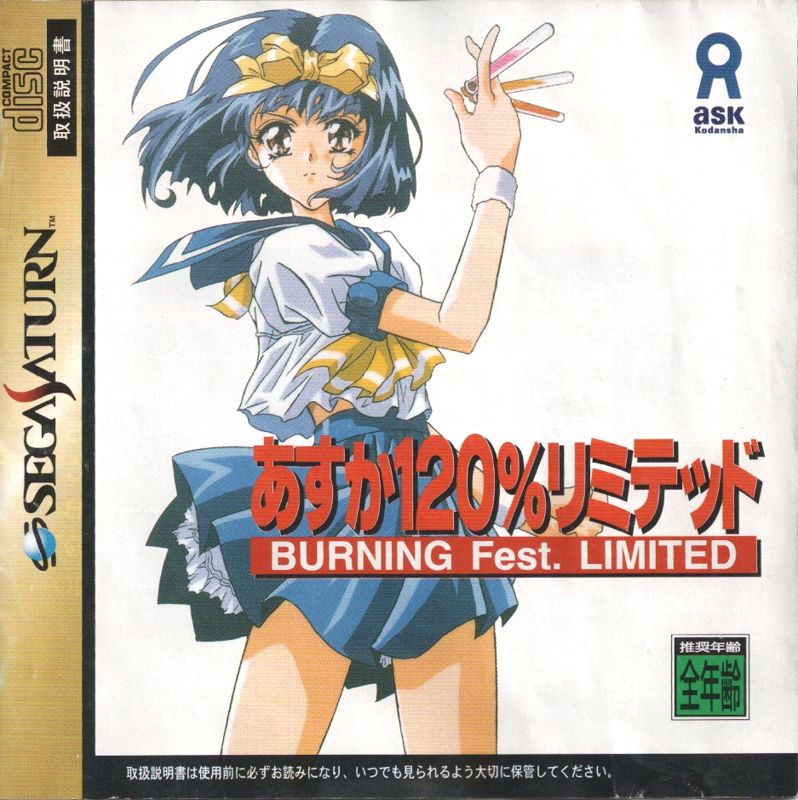
Retro Replay Review
Gameplay
The first few matches make Asuka 120% Limited feel pleasantly no-nonsense. You pick a fighter and get into the tournament, with the game trusting the existing series formula rather than stopping to introduce a stack of new rules. That directness is a strength: it is built around the satisfaction of fighting with a cast whose moves have been adjusted to make the matchups more balanced.
That also defines the limitation. This is not the entry to buy because you want the series shaken up. There are no new systems here; the work went into tweaking the fighters. If you already know Asuka 120%, that is a meaningful reason to revisit it, because subtle move changes can alter which characters feel dependable and which situations demand more care. If this is your first encounter with the series, the appeal depends on whether a polished, traditional fighting-game framework is enough to pull you in.
Story mode is a linear sequence of fights with dialogue breaks, so it works as an easy way to sample the roster without fuss. Versus mode covers human versus CPU, human versus human, and CPU exhibition matches, while survival mode adds a smart bit of pressure: your health restoration depends on how well you score in each bout. That gives solo play a reason to reward stronger performances rather than merely letting you scrape through. Tetsuko is a welcome new contender, and unlocking the principal gives completion-minded fans an extra target.
Graphics
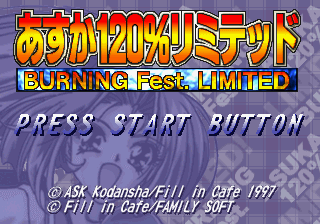
The Saturn version uses larger character sprites than the prior PlayStation game, giving the schoolgirl fighters more space on screen during matches. The trade-off is the lack of true transparencies, a familiar rough edge of Saturn-era visuals. Bigger sprites are the more important change in play, since the fighters themselves remain the center of every bout.
Story
This is a school tournament story in the most functional sense. Ryōran School for Young Women’s fighters meet inter-school rivals, then the plot moves forward through text dialogue between matches. It gives the bouts a light competitive frame without pretending to be a deep branching campaign.
Tetsuko’s inclusion has immediate value because she is Asuka’s mentor, adding a personal connection to the expanded lineup. The principal being an unlockable combatant also keeps the tone knowingly playful. These are small character hooks, but they suit a fighting game that wants to keep the pace moving.
Do not come in expecting the dialogue to carry the package. The story is there to link a series of fights, and its linear structure never complicates that job. It is best enjoyed as a quick excuse to see the cast trade words before returning to the action.
Overall Experience
Asuka 120% Limited: Burning Fest. Limited earns its place as a carefully revised fighting game rather than a major leap forward. The best reason to play is the confidence of its focus: balance adjustments, a few new faces, and a set of modes that make it easy to play alone or with someone beside you.
Its frustrations are equally clear. A veteran hoping for a new system or a dramatically different structure may feel the limits quickly, and the linear story mode will not provide much surprise once you settle into its rhythm. This is a sequel for appreciating the details of the fights, not for discovering a fundamentally new direction.
Give it a chance if you enjoy 1990s fighters with a school-tournament flavor and can appreciate a revision that concentrates on the roster. Survival mode’s score-based recovery gives solo sessions a useful competitive edge, while local versus remains the most natural place for the balance work to matter. It is a modest but worthwhile Saturn outing for the series, and the payoff is strongest when you meet it on those terms.


Reviews
There are no reviews yet.