 Retro Replay Retro Gaming History, Reviews & Emulation

Retro Replay Review
Gameplay
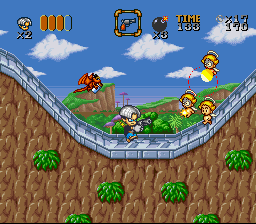
The first stretch gets its claws into you by making Ackman feel like a platform hero who would rather start a fight than avoid one. A basic punch handles close trouble, while the charged energy wave gives you a reason to make space and line up a shot. That alone makes the action more active than a platformer built around jumping on everything.
What starts to click is how many uses the enemies have. Some can be jumped on to stun them, then rammed so they skid forward as a projectile. It is a simple interaction, but it turns an enemy into a short-lived weapon and gives crowded encounters a welcome bit of improvisation. The three-bomb limit matters too: a screen-clearing escape is valuable precisely because you cannot casually throw one away.
Weapons add another shifting layer. Finding a sword, boomerang, or pistol can make you feel briefly over-equipped, but getting hit strips it away, so there is real tension in carrying one through a dangerous stretch. The levels run in a linear direction, yet detours for hidden items and weapons reward you for checking the less obvious paths instead of charging blindly to the exit.
Its limits are also clear. The combat tools are clever within a tight, arcade-like format rather than part of a sprawling platforming toolbox. If you want a huge world or a long campaign of radically changing objectives, this is not that kind of game. If you enjoy learning how a small set of attacks can solve trouble in different ways, Ackman’s aggressive rhythm holds up well.
Graphics
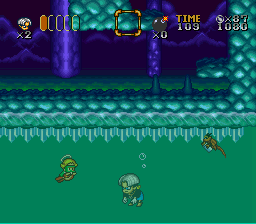
The game uses a side-view, scrolling format with an anime-and-manga lead at the center: Ackman is a small demon protagonist facing angels and hired assassins. That comic-book setup gives the constant fighting a knowingly impish tone, and the clear side-on view keeps punches, jumps, and sliding enemies easy to track.

Story
There is no moral ambiguity in Ackman himself: he murders people and steals souls for the Demon Lord, and he is bored when nobody is around to kill. Making that character the hero is a deliberately mean little gag, and the game is stronger for leaning into it rather than trying to make him noble.
Tenshi, the angel opposing him, sends angels and hired assassins after Ackman in an effort to end his work. That is a clean excuse for the action, but it also flips the expected fantasy roles. You are not saving the innocent from monsters; you are playing the monster while heaven’s forces become the attackers.
Do not come in looking for a dense narrative with layers of character development. The story’s payoff is its mischievous premise and the contrast between angelic opposition and demonic protagonist. It keeps the mood pointed without getting in the way of the platforming.
Overall Experience
Go Go Ackman is at its best when you stop treating it like a simple run-and-jump game and start using every messy option it gives you. Charge a wave when the lane is clear, stun an enemy when one is in reach, send it sliding into the next problem, and save bombs for the moments that really turn ugly. That small cycle gives the action more texture than its premise initially suggests.
The trade-off is that it remains a compact linear platformer. Exploration is about finding useful hidden gear and items, not losing yourself in a maze, and the weapon-loss rule can sting when a good pickup disappears after one hit. Still, that fragility makes a weapon feel earned instead of permanent.
Give it a chance if you like SNES action platformers that favor quick reactions and a few satisfying combat wrinkles over elaborate scale. The demon-versus-angels setup is fun, but the real reason to play is that Ackman’s punch, energy wave, enemy sliding, bombs, and temporary weapons fit together into a lively little brawl.

Reviews
There are no reviews yet.