 Retro Replay Retro Replay gaming reviews, news, emulation, geek stuff and more!
Retro Replay Review
Gameplay
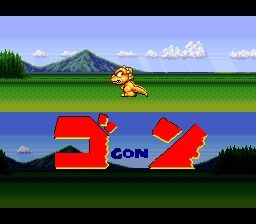
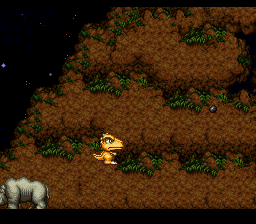
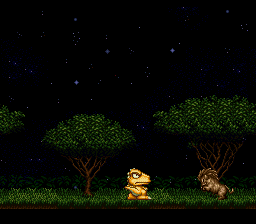
Gon gets its first impression right by making its hero feel like more than a mascot dropped into a platformer. You are moving a midget T-rex through side-scrolling stages, and his head, teeth, and tail are all part of how he deals with the hogs and rhinos blocking the way. That immediately gives the game a more scrappy, animalistic flavor than a standard jump-and-bop routine.
The combat has a pleasingly blunt premise. Gon does not look like he should be the intimidating one beside a rhino, which makes it satisfying when you push through enemies with a bite, a tail strike, or a charge of the head. The game’s action-platform structure keeps that focus clear: keep moving, deal with what is in front of you, and do not let the opposition dictate the pace.
Its most memorable gamble is the lack of a life bar. As Gon takes punishment, the music becomes wilder and his hissy fit escalates until he eventually dies. It is expressive and much more characterful than a row of numbers, but it is not always the cleanest way to judge how close you are to failure. You need to pay attention to the audio and Gon’s mood rather than glancing at a meter, and that can turn already tense stretches into frustrating ones.
That system makes the game feel less clinical, yet it also asks for patience. If you like platform games where a character’s behavior communicates danger, it is a neat twist. If you want exact information and a calm chance to reset after a hit, Gon’s escalating panic can feel like it is making a bad situation louder rather than clearer.
Graphics
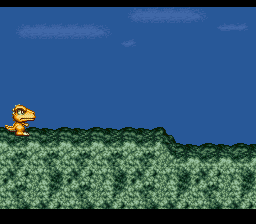
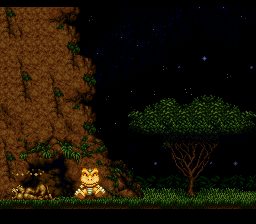
The side-view action is framed around Gon’s compact dinosaur body and the larger hogs and rhinos he fights, so the contrast between the little T-rex and his opponents is easy to appreciate. The story is delivered in comic-book fashion without text, leaning on the character art and visual situations rather than dialogue boxes.

Story
There is not a wordy plot to unpack here. Gon draws from the Japanese manga of the same name and tells its story in a comic-book style with no actual text, putting the burden on expressions and action instead of exposition.
That suits a character whose personality is tied to physical outbursts. Gon’s growing hissy fit is not just a gameplay warning; it also keeps his temper at the center of the game’s tone. You understand that this is a stubborn little creature who meets trouble head-on without needing anyone to explain it.
The trade-off is simplicity. The wordless approach can be charming because it lets you read the game at a glance, but it is unlikely to satisfy you if you come to a licensed manga game hoping for a detailed narrative adaptation. Treat it as a brisk character piece built around Gon’s reactions and confrontations.
Overall Experience
Gon is the kind of 16-bit platformer that earns attention through oddball personality rather than a complicated pitch. A small T-rex fighting hogs and rhinos is already a strong image, and tying danger to increasingly frantic music and temper gives the action a memorable edge.
The payoff depends on how much you enjoy that tension. The missing life bar is clever because it turns damage into performance, but it can also leave you wishing for a more straightforward read on your condition. That friction is central to the game, not a tiny quirk you can ignore.
I would recommend Gon to platform fans who want a manga-licensed game with a distinct lead character and an unusual way of handling health. Go in for the tactile brawling and wordless comic energy, not for elaborate storytelling. Its ideas are narrow, but they are specific enough to make the game stick in your memory.


Reviews
There are no reviews yet.