 Retro Replay Retro Gaming History, Reviews & Emulation


Retro Replay Review
Gameplay
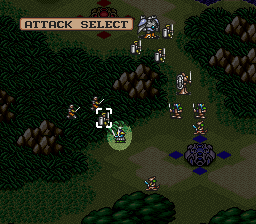
Jutei Senki puts you in the useful kind of uncomfortable position from the opening battles: there is a map to win, an enemy army in the way, and only so many turns to make it happen. You either defeat that army or take its headquarters, so every advance has a purpose. The turn limit stops the familiar strategy-game habit of building a perfect formation at your leisure. You need to decide when to press ahead, when to protect your position, and whether the headquarters is vulnerable enough to make a direct push worthwhile.
What starts to click is the relationship between recruitment and unit roles. Your headquarters can produce new soldiers, but the army has a cap, so recruitment is not an endless solution to losses. Since units differ in range, speed, and attack power, the interesting decisions come before combat: which unit can get into position, which one can threaten safely, and which one is too valuable to waste. That is a solid foundation for turn-based tactics, especially if you enjoy making a plan from limited resources rather than overwhelming the map with numbers.
The catch is that battles resolve automatically and play out through animations on a separate screen. That makes Jutei Senki less about clever mid-fight intervention and more about accepting the consequences of your deployment. For some, that is the point: combat becomes the payoff for sound positioning. For others, it can be frustrating to watch an important encounter unfold without direct input. Go in wanting a command-level strategy game, not a tactical brawler where every attack is yours to steer.
Campaign, Tutorial, and Expert modes give the game a sensible progression path. The tutorial is the natural place to learn how much those core statistics matter, while Expert offers a tougher destination once the basic rhythm settles in. The two-player versus option is also a good fit for a game built around limited armies and map pressure; another human commander can make each decision feel less predictable than a computer-held line.

Graphics
Combat is broken out into its own animated battle screen rather than remaining solely on the top-down strategic map. That separation gives engagements a clear moment of resolution: you set the encounter up on the battlefield, then watch the result play out before returning to the larger fight.
Story
The premise is enjoyably odd in a way that suits early-1990s strategy games: humanity fights beside tree soldiers called Junei against Letum, a robot race powered by magic. It is a collision of fantasy and science fiction that immediately distinguishes the sides without needing a complicated explanation before you start issuing orders.
You command the human army, which gives the campaign a straightforward military perspective. The conflict has enough built-in contrast to keep the objectives from feeling entirely abstract: your limited human force and its Junei allies are pushing back against a magical machine enemy. That is a stronger backdrop than a generic red-versus-blue war, even if the game’s attention remains fixed on battle conditions.
Don’t expect the premise to replace the strategy. Jutei Senki’s story matters most as motivation and flavor for its maps: humans and living tree soldiers versus enchanted robots is a fun matchup, but the lasting question is still whether you can meet the objective before time expires.
Overall Experience
Jutei Senki is a compact, no-nonsense turn-based strategy game with a better premise than its plain objectives might suggest. Its limited recruitment, differentiated unit statistics, and turn-bound victory conditions create real pressure without requiring an elaborate ruleset. Once you understand that positioning is the battle, the game’s automatic combat feels like a deliberate commitment to planning rather than a distraction.
It will test your patience in a specific way. If you enjoy controlling every strike, the automatic encounters can make a loss feel removed from your hands. But if you like examining range, movement speed, and attack power, then committing to a route and living with the result, that same distance can be satisfying. The tension comes from making the right call before the animation begins.
The recommended audience is narrow but clear: give it a chance if you want a Japanese-only SNES strategy game that mixes fantasy creatures, magical robots, and disciplined map objectives. The Tutorial and Campaign modes make it approachable enough to learn, while Expert and versus play offer reasons to keep testing your command decisions. It is not a grand strategy epic; it is a focused tactical contest whose best moments come from turning a limited army into a timely win.


Reviews
There are no reviews yet.