 Retro Replay Retro Gaming History, Reviews & Emulation
Retro Replay Review
Gameplay
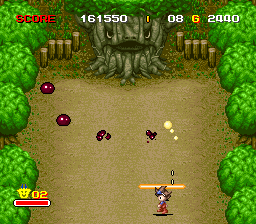
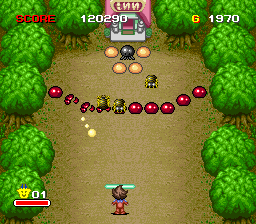
The first few minutes of Zig Zag Cat are immediately strange in the right way: your character marches forward while you work below them to stop a cat from dropping off the bottom of the screen. The cat is your ball, your block-breaker, and your biggest source of panic. You are not simply clearing a board; you are maintaining a moving emergency while the stage keeps dragging you into fresh obstacles.
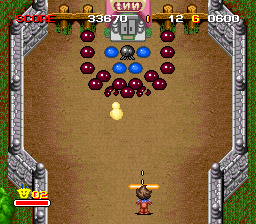
That blend of Breakout and scrolling shooting has real tension. Smashing blocks can uncover money and short-lived paddle upgrades, and the upgrades matter because they change how much control you have over the escalating mess. A wider paddle buys breathing room, bullets offer another way to push back, and cat-curving power gives you more agency over rebounds that might otherwise feel unruly. Learning to turn those temporary advantages into safer routes is where the game starts to click.
There is a nice wrinkle in how danger is divided. Your avatar can walk through ordinary enemies and blocks without harm, but enemy and boss projectiles can still hurt them; meanwhile, the cat falling below the screen also costs a life. That asks you to watch two different threat zones at once. Black octopus blocks are especially effective at forcing focus, since progress stops until the cat destroys them.
Frustration can set in when the scrolling pace and bouncing-cat responsibility collide. You may be trying to line up a useful rebound while also needing to respect projectile fire, and a single bad angle can turn a controlled run into a scramble. Still, the game’s odd rules are coherent once you accept that it wants your attention split. It is more interesting than a standard paddle game precisely because it refuses to let you settle into one routine.
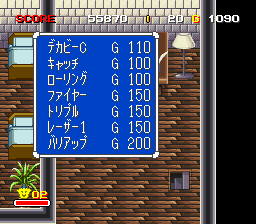
Inns break up the action well. You can save, talk with locals, spend money on temporary paddle upgrades, play a bonus board for more cash, and check your trip around the island. These pauses give the journey a welcome sense of structure, rather than making the action stages feel like disconnected boards.
Graphics
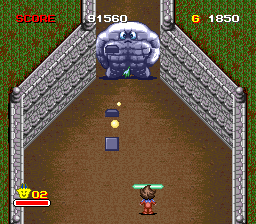
The action is built around a 2D scrolling view: the avatar advances through the stage while the cat ricochets across the playfield below. That unusual layout makes the central balancing act easy to understand at a glance, and the black octopus blocks stand out as clear progress gates amid the breakable obstacles.
Story
This is knowingly familiar material: evil has taken over the land, a princess needs saving, and the hero wants a route home. Zig Zag Cat does not need that setup to carry dramatic weight, because its real personality comes from folding in the comedy stylings of Dachō Club.
That comic angle is the reason the standard quest framing feels less anonymous than it otherwise would. The game is not presented as a solemn fantasy rescue mission; it has room for a licensed performance-group sensibility alongside the adventure. For a game built on such a bizarre mechanical hook, that tonal looseness fits.
The inn conversations are the main opportunity to spend time with the world between stages. They also make the island journey feel like a trip with stops and progress, not just a sequence of obstacle-filled corridors. Do not come here expecting a densely plotted RPG, but the light comic framing gives the familiar goals enough flavor.
Overall Experience
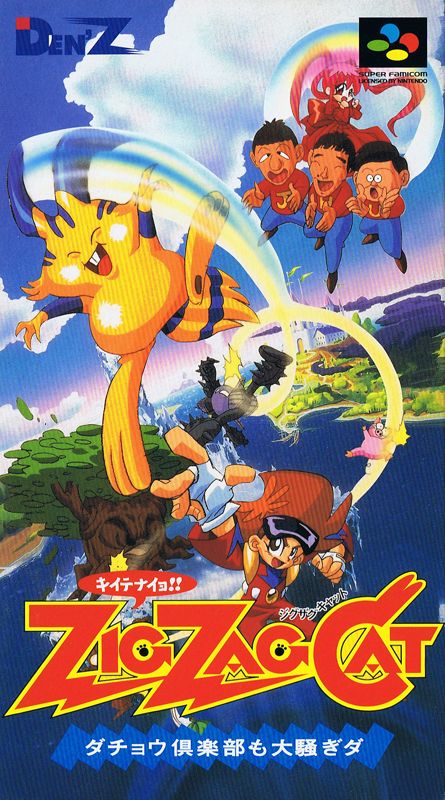
Zig Zag Cat: Dachō Club mo Oosawagi da is the sort of game that sounds like someone combined incompatible ideas as a joke, then discovered they had made a tense action puzzle. The cat-bouncing loop has enough moving parts to stay engaging, especially once upgrades let you respond more deliberately instead of merely surviving.
Its demands will not suit everyone. If you want clean, relaxed Breakout sessions, the forced scrolling, projectile pressure, and responsibility for both avatar and cat can feel exhausting. But if you enjoy games that ask you to adapt to a strange premise rather than wait for it to become conventional, its disorder has a genuine pull.
The payoff is an unusually memorable SNES curio with more game in it than the premise suggests. Give it a chance if you have patience for sudden pressure and a taste for Japanese licensed oddities; the inn progression and upgrade economy help turn the chaos into an actual journey. It is not elegant, but it is inventive enough to earn your attention.


Reviews
There are no reviews yet.