 Retro Replay Retro Gaming History, Reviews & Emulation

Retro Replay Review
Gameplay
The opening has the kind of blunt, cheerful confidence that makes old Japanese adventures memorable. A singer disappears out of a television broadcast, you follow her into a magical dimension, and almost immediately you are stranded in a forest. It gets you moving quickly, and the central task—find NORI-P, then deal with the magician behind the trouble—is never hard to grasp.
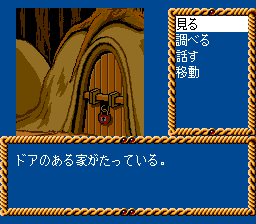
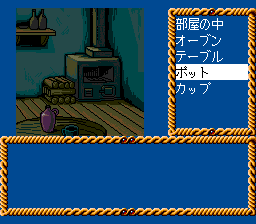
Interaction is built around a verb menu. Examine and Talk turn up often, while Take appears only after you have investigated a location thoroughly enough to reveal something worth carrying. That structure gives the game a simple rhythm: inspect each screen carefully, speak when somebody is present, and use the inventory when the moment calls for it. It is approachable, though gamers hoping to untangle clever adventure-game logic may find it unusually light.
The key thing to know is that there are no real puzzles. Progress is more about choosing the right command and continuing the search than combining odd objects or decoding elaborate clues. Movement is generally selected through the Move command, with a few pseudo-3D areas using directional input instead. Wrong decisions can lead to Game Over, so the game can still punish a careless choice even when it is not asking much of you intellectually. That makes it a better fit for someone who enjoys a short, curious tour through an odd premise than someone seeking a demanding adventure challenge.

Graphics
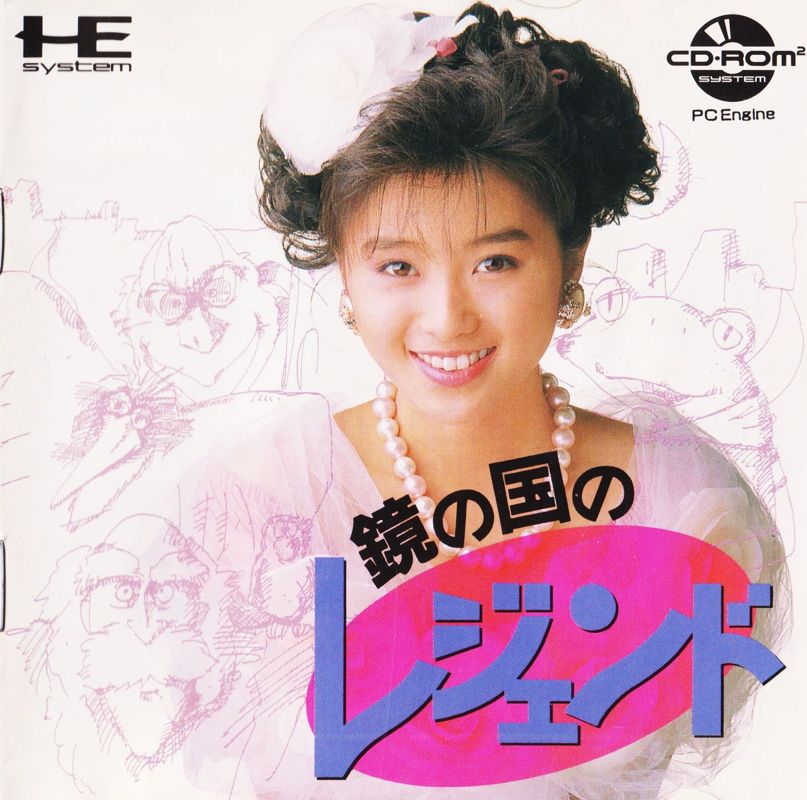
Most locations and characters use anime-style artwork, which suits the fantasy detour from an ordinary TV broadcast into a magical forest. NORI-P stands apart from the drawn cast through digital photos, and her appearances can be paired with song performances. That contrast is undeniably unusual: the real singer becomes a special guest inside an otherwise illustrated adventure.
Story
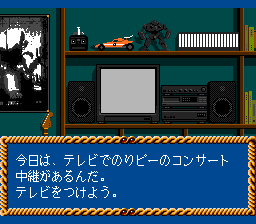
The story is simple, but its opening image is strong. Watching NORI-P get swept away by a whirlwind on television is a much more memorable inciting incident than the standard “mysterious letter” or “lost treasure” setup. Following her into another dimension gives the whole game a fan-driven, almost dreamlike energy.
Once the hero lands in the forest, the plot becomes a straightforward rescue mission. You are searching for the missing singer while working toward a confrontation with an evil magician. There is no need to wrestle with a dense web of motives or lore; the story keeps pointing you toward the next destination.
That simplicity cuts both ways. The premise has enough novelty to carry a brief adventure, especially if the combination of fantasy anime art and a real pop singer sounds charming to you. But the rescue plot itself is not layered enough to be the reason you stay. Its value is in the peculiar tone of the journey rather than narrative depth.
Overall Experience
Kagami no Kuni no Legend is an artifact of a very specific kind of adventure design: first-person screens, menu verbs, occasional inventory use, and a direct path through a bizarre celebrity-fantasy setup. The first stretch pulls you in because it is so odd, and the game stays easy to understand once its examine-and-move routine clicks.
Its biggest limitation is also its clearest warning label. Without substantial puzzles, the interaction can feel more like methodically uncovering the next allowed action than solving an adventure. Game Over outcomes add a little tension, but they do not replace the satisfaction of a well-built puzzle chain.
Give it a chance if you have a fondness for late-1980s Japanese adventure games, anime artwork, and premises too peculiar to be polished away. Skip it if you need complex riddles, deep storytelling, or a lot of mechanical variety. For the right gamer, the payoff is not mastery; it is spending time in a strange little world where a television performance turns into a magical rescue mission.



Reviews
There are no reviews yet.