 Retro Replay Retro Gaming History, Reviews & Emulation

Retro Replay Review
Gameplay
The Pro Yakyū Super starts from a sensible place: it does not ask you to relearn the sport or its predecessor. The underlying mechanics are nearly identical to The Pro Yakyū, so the first hour is about choosing how hands-on you want to be rather than wrestling with an overhaul. If you enjoyed the earlier game’s rhythm, this follow-up should feel immediately comfortable.
The useful wrinkle is the range of control options. Pitching and batting can be handled through simulation and auto modes, while the new auto-catch mode takes another piece of fielding off your plate. That makes the game easier to tailor to your mood. You can focus on the moments you care about, or let the game handle more of the routine work when you would rather watch a contest unfold.
That flexibility is also where the game’s limits show. Anyone coming in hungry for a dramatically different sequel may find that familiar foundation too conservative. This is a refinement built around updated licensed Japanese professional teams, not a bold new interpretation of baseball. Still, the returning Versus, Open, and Pennant modes give the core game enough places to breathe.

Graphics
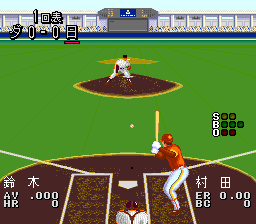
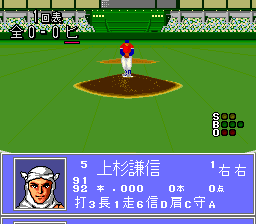
The game uses a top-down baseball viewpoint, putting the field and player movement in view during play. It is a practical fit for following a baseball game rather than an attempt to turn each match into a close-up broadcast.
Story
Baseball supplies the stories here. A Pennant campaign naturally gives individual games a longer context, turning wins and losses into part of a season instead of isolated results.
Dream mode offers the clearest hook: contemporary All-Stars face historical ones. That is a simple fantasy matchup, but it gives a one-off game more personality than a standard exhibition.
The licensed, season-updated Japanese teams add another layer of recognition to the matches. If you care about taking a familiar club into a game, that connection can make even the quieter modes feel more personal.
Overall Experience
The Pro Yakyū Super earns its name as a follow-up by improving around the edges rather than tearing up what already worked. The new auto-catch setting may sound modest, but it fits a game already built to let you choose between direct control, simulation, and automation.
Its strongest quality is that it accommodates different baseball moods. Versus mode suits a direct matchup, Open mode keeps things simple, Pennant mode gives you a longer run, and Dream mode supplies a pleasing historical what-if. Few of those ideas are flashy on their own; together, they make the package feel rounded.
Give it a chance if you want early-1990s Japanese baseball with licensed teams, familiar mechanics, and adjustable involvement in the action. Skip it only if your main requirement is a sequel that substantially changes the previous game. For everyone else, the payoff is a dependable, flexible baseball game that understands not every player wants to handle every catch.

Reviews
There are no reviews yet.