 Retro Replay Retro Gaming History, Reviews & Emulation



Retro Replay Review
Gameplay
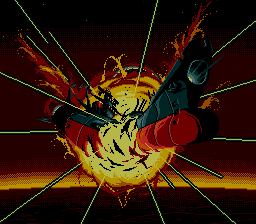
The hook is immediate: instead of commanding abstract units from above, you are effectively running the Yamato from the inside. One crew member handles power, another mans a gun, another turns the ship, and victory depends on getting those jobs to line up at the right moment. It is a smart way to make a single-ship conflict feel busy and consequential.
The real-time structure gives every decision some urgency, but the ability to pause when accessing crew members is the crucial concession. You can stop, assess what the ship needs, and issue orders rather than simply being overwhelmed by the pace. That creates a compelling rhythm of quick action, interruption, and regrouping.
What starts to click is the chain of responsibility: a weapon is not just something you select and fire, because the people and systems behind it need attention too. The tradeoff is that you are managing a lot of individual duties. If you want immediate, broad battlefield control, this close-in approach may feel fussy; if coordinating a crew sounds more interesting than pushing armies across terrain, it is the whole reason to play.
Graphics
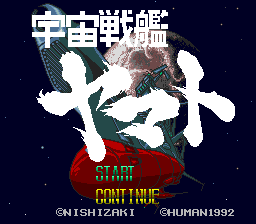
The central image is a memorable one: the ruins of the World War II battleship Yamato rebuilt as a spaceship for humanity’s last direct fight against the Gamila. That fusion of historical warship imagery and far-future invasion is a strong match for the anime source.

Story
The game begins with Earth already in terrible shape. Gamila bombardment has made the surface uninhabitable, forcing humanity underground and leaving the rebuilt Yamato as its means of fighting back. It is an effective crisis setup because the ship is not merely a military asset; it represents the first chance to answer an attack that has pushed humanity off its own planet.
Rather than ranging across the full saga, this adaptation follows the events of the anime’s initial episodes. That makes it a focused entry point for Space Battleship Yamato—also known as Star Blazers—rather than an attempt to compress the entire larger story into one strategy game.
If the opening premise grabs you and you want more Yamato after this early-series chapter, the later series connection continues with Saraba Uchū Senkan Yamato: Ai no Senshitachi. Here, though, the draw is seeing that desperate opening conflict translated into the daily work of operating the ship.
Overall Experience
Uchū Senkan Yamato earns its interest through commitment to its premise. A series about a legendary ship does not become a routine unit-based strategy game; it becomes a crew-coordination game where power, guns, and movement all demand somebody’s attention. That is a much more personal and unusual reading of space warfare.
The payoff is strongest when you enjoy pausing under pressure, sorting out competing needs, and then watching your plan resume in real time. There is a satisfying command-room tension in knowing that no single order wins the battle by itself. You have to keep the ship functioning as a whole.
Give it a chance if you are drawn to old-school strategy experiments or already care about Yamato’s opening struggle against the Gamila. It is less suited to anyone who wants large-scale maneuvering and instant results, but its narrow focus gives it a character many licensed games never find.


Reviews
There are no reviews yet.