 Retro Replay Retro Replay gaming reviews, news, emulation, geek stuff and more!


Retro Replay Review
Gameplay
The first few minutes make UltraBox 2-gō’s scattershot format clear: this is a disc to browse, not a game to settle into for a long campaign. The follow-up to Kamen Victor immediately changes direction from the prior issue’s side-scrolling approach, putting you on a motorcycle in top-down stages where hearts provide speed boosts and yakuza gangsters must be avoided before time runs out. It has the clean, immediate pressure of a score-chasing diversion: grab what helps, dodge what hurts, and keep moving.
Its most substantial mechanical contrast comes from the daruma-doll puzzle. Rather than simply clearing pieces, you are trying to force an AI opponent into the bad position of having only one doll left in each column. That adversarial wrinkle gives the puzzle more bite than a solitary board-clearer, and it is the part most likely to reward a few repeat attempts once the basic objective clicks.
The dating game is built around choosing the right responses while meeting three women at a bar, so its success depends on whether you enjoy conversational trial and error. Cusuto goes the opposite route: it is mostly animated, voiced scenes with only a short first-person segment in which you choose where to go. Then there are the magazine-style extras—game previews, a PC Engine database, wrestler astrology, fan art, and Mission School. The latter is an especially dated curiosity, centered on viewing schoolgirls in uniforms rather than offering a meaningful game. Variety carries the disc, but no single interactive piece gets enough runway to become a standout on its own.

Graphics
UltraBox 2-gō changes its look as often as it changes genres. Kamen Victor uses a top-down driving view, Cusuto leans on animated voiced cutscenes, and the wrestler astrology material swaps the earlier digitized-photo approach for graphics. The fan-drawing section also fits the disc’s magazine spirit: you are flipping between small, distinct attractions rather than entering one consistent world.

Story
There is no overarching story binding this package together, and that is fine; it is a compilation built around fragments. Kamen Victor continues an existing adventure, but the focus here is the motorcycle stage action rather than a large narrative push. If you have no attachment to the previous issue, it plays more like a detached arcade episode.
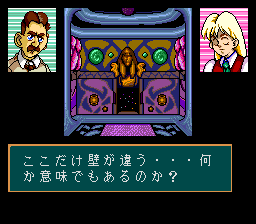
Cusuto has the strongest narrative hook by a comfortable margin. Mysterious crystals abandoned on Earth by aliens are a wonderfully direct piece of pulp sci-fi, and archaeologist Royce E. Grant finding one with his daughter gives the opening a human point of entry. The voiced animation matters here because it lets the disc spend its energy on introducing a mystery rather than asking you to read through a large wall of setup.
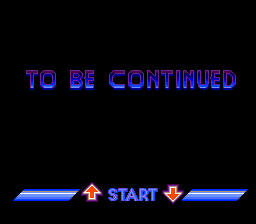
Still, this is explicitly an opening chapter, and it feels like one. The brief directional dungeon exploration gives you a small way to participate, but it cannot develop the crystal mystery very far. You may finish more intrigued than satisfied, which is a reasonable result for a teaser but a weak payoff if Cusuto is the reason you put in the disc.
Overall Experience
UltraBox 2-gō is charming precisely because it is so uneven. You can feel the CD-magazine mindset in every jump from game to database to oddball side material: the point is to poke around and see what sticks. In short sessions, that can be more enjoyable than a collection of fuller but more predictable mini-games.
Frustration sets in when you want depth. The driving game is constrained by its timed stages, the dating game lives or dies on finding correct dialogue options, and Cusuto stops just as its premise begins to gain momentum. The puzzle is the clearest candidate for repeat play, but even it sits among a lot of material that feels closer to a period bonus feature than a lasting game.
Give it a chance if you enjoy TurboGrafx CD curiosities, especially discs that preserve the odd mix of games, previews, databases, and fan culture surrounding the era. Anyone wanting one polished adventure should skip it. UltraBox 2-gō is more rewarding as a guided rummage through 1990 game-magazine culture than as a cohesive sequel or a dependable multi-game compilation.

Reviews
There are no reviews yet.