 Retro Replay Retro Gaming History, Reviews & Emulation



Retro Replay Review
Gameplay
The first hour of Virgin Dream is about committing to a dream and realizing that the dream has a price. Pick a future for your contestant—singer, photo model, school teacher, and more—and suddenly the daily calendar becomes a long negotiation between the stats that career wants and the ordinary life she still has to maintain. That basic structure is familiar to anyone who enjoys character-raising simulations, but it remains compelling because every choice points back toward a concrete outcome.
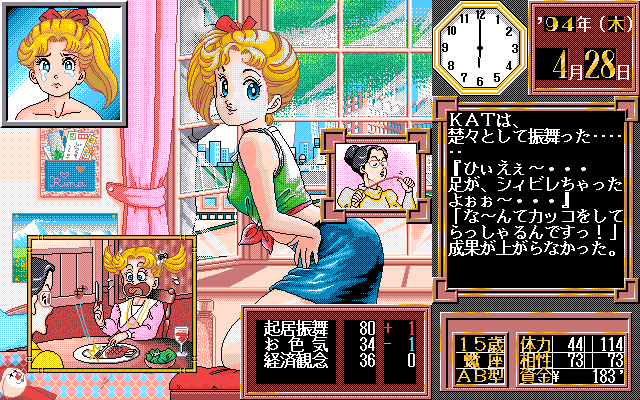
Weekdays divide your attention between training, work, and learning. Training covers areas such as singing, art, bodybuilding, and sports; jobs range from waitress and cook to private tutor and construction worker. The contrast matters. A lucrative job is not automatically the right job, and an activity that improves one parameter may pull your contestant away from another priority. The game’s best quality is this steady pressure to plan instead of simply selecting the highest-paying option.
Learning has a smaller footprint than the other categories, yet it is necessary for keeping her school life going. That makes it more than dead time on the schedule: you cannot just turn the year into an endless training camp or work shift. If you enjoy games where progress comes from thinking several weeks ahead, the routine starts to click as you build a schedule around the goal you chose.
Holidays break up the management loop by letting you explore the city, visit shops, buy clothes and accessories, and meet the other girls in the dormitory. These outings are not a detached side activity; purchases and conversations can affect parameters for better or worse. That gives your time off some tension, though it also means you need to stay mindful of consequences even when you are ostensibly relaxing.

Graphics
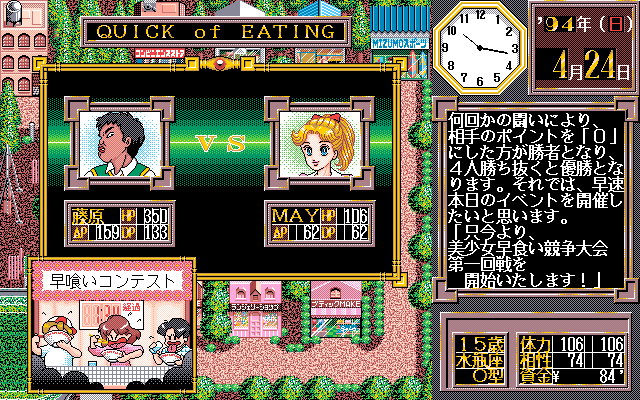
The city is explored from a top-down view, with shops, boutiques, and offices forming the places you visit on holidays. It is a practical perspective for moving around town and separating the day-to-day management from the moments when you take your contestant out into the world.
Story
Virgin Dream begins with a stronger framing device than a generic “raise some stats” simulator. The Pretty Girl Contest is not merely about appearance: the stated goal is to turn a young contestant into a star within a year, with beauty and ability both carrying weight. That deadline gives the entire game a useful sense of purpose.
Your chosen profession supplies most of the personal direction. A singer, a photo model, and a school teacher demand different priorities, so the story you create is less about a fixed plot and more about the path you carve through the same year. It is a premise that invites you to role-play as a manager with a plan rather than merely optimize a spreadsheet.
The dormitory relationships add a competitive edge. The other girls are potential rivals, but you can also talk and bond with them, and those interactions affect your contestant’s development. That is a smart fit for the contest setup: success is shaped not only by how hard she works, but by the social life around her.
Overall Experience
Virgin Dream is at its best when you accept that a year is too short to do everything. You will be weighing paid work against development, normal education against career preparation, and city outings against the discipline of a schedule. The pleasure comes from making an imperfect plan, adjusting it, and seeing whether it carries your contestant to the future you envisioned.
That same structure can frustrate anyone looking for immediate action or a heavily scripted drama. Much of the game is deliberate routine, and the consequences of training, employment, shopping, and socializing all feed back into parameters. If that sounds like homework, the contest deadline will not magically change your mind. If it sounds like a satisfying puzzle, it gives each decision a reason to matter.
I would recommend it to fans of the Princess Maker-style life simulation above all else. The profession-based goals, mixed weekday activities, and holiday city visits make it more than a single-track training exercise. It is a focused management game built around nurturing a career under pressure, and that clear purpose makes its climb to stardom worth taking for the right kind of strategist.



Reviews
There are no reviews yet.