 Retro Replay Retro Gaming History, Reviews & Emulation
Retro Replay Review
Gameplay
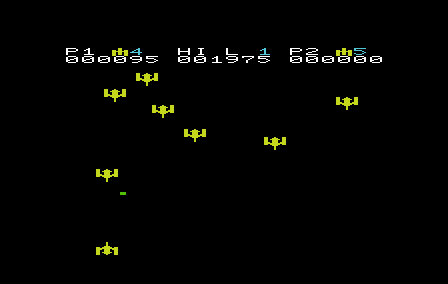
Fourth Encounter starts with the kind of instant pressure that fixed-screen shooters do well. You move a ship along the bottom edge, fire upward, and try to survive enemies built around a specific threat. In the first stage, that means attackers crashing directly toward you. There is no long runway before the game asks whether your reactions are sharp enough.
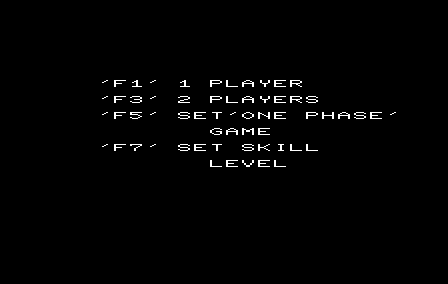
What helps it stand apart from a simple four-round gauntlet is stage selection. You can play all four encounters in sequence, but you can also choose any stage from the start. That makes a big difference when one enemy style has your number: rather than treating a loss as a command to replay familiar material, you can go back and drill the difficult wave. Three skill levels add another useful way to tune the challenge.
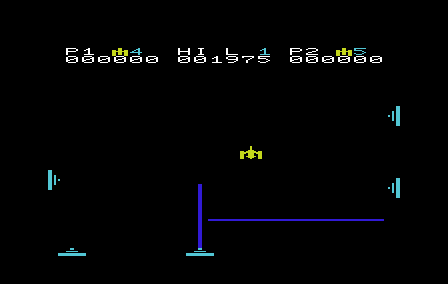
The middle stages shift the danger from collisions to aliens firing at you. Your basic move set remains deliberately narrow—slide along the bottom and shoot up—so the tension comes from reading where danger is headed and finding safe gaps. With five lives, it is forgiving enough to let you learn, but not so generous that you can ignore a bad habit.
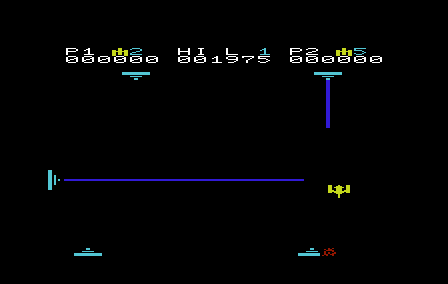
Stage four is the payoff. Enemies travel around the screen edges and fire inward, while your ship is no longer confined to the bottom. Being able to move freely and shoot in both directions makes this encounter feel like a proper escalation rather than another variation on the same screen. It also asks you to reorient quickly after three stages of bottom-bound play. That change gives Fourth Encounter more shape than its tiny four-stage structure suggests.
Graphics
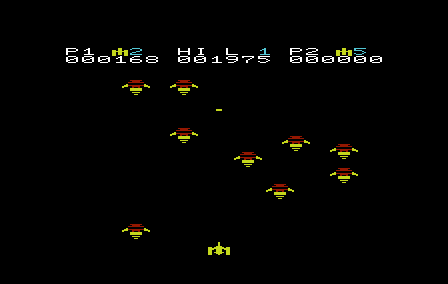
The action is shown on fixed screens with your ship facing waves of alien enemies. The first three stages keep your craft along the bottom while threats descend or shoot toward it; the fourth opens the whole screen for movement, with enemies tracing its edges and firing inward. That clear change in layout mirrors the change in rules and should make the final encounter easy to distinguish at a glance.
Story
There is no detour into character drama here. Fourth Encounter frames its action as a run-in with alien enemies, then puts all of its energy into the four combat setups.
That stripped-back approach fits the game’s arcade instincts. The “story” you carry from one attempt to the next is practical: which enemies ram, which ones shoot, and how much room their attacks leave you.
For a little historical context around this compact VIC-20 shooter, the Fourth Encounter overview is a useful companion. In play, though, the only narrative momentum that matters is reaching the fourth encounter with enough lives left to handle its rule change.
Overall Experience
Fourth Encounter is concise, direct, and more thoughtfully structured than a four-stage description first suggests. Its first three rounds teach variations on a restricted bottom-of-screen duel; the fourth deliberately overturns that routine. That one twist gives repeated runs a destination.
Frustration will set in if you want constant upgrades, new systems, or a long campaign. This is a pattern-learning shooter where every life lost points back to positioning and reaction time. The selectable stages soften the sting because you can practice the part that is stopping you, rather than earn another chance through busywork.
Give it a chance if you like early arcade games that make a small rule set work hard. The game is at its best when you stop treating each stage as disposable and begin recognizing its particular threat, then hit the fourth screen ready to rethink how you move and shoot. It is a brief challenge, but a purposeful one.


Reviews
There are no reviews yet.