 Retro Replay Retro Gaming History, Reviews & Emulation

Retro Replay Review
Gameplay
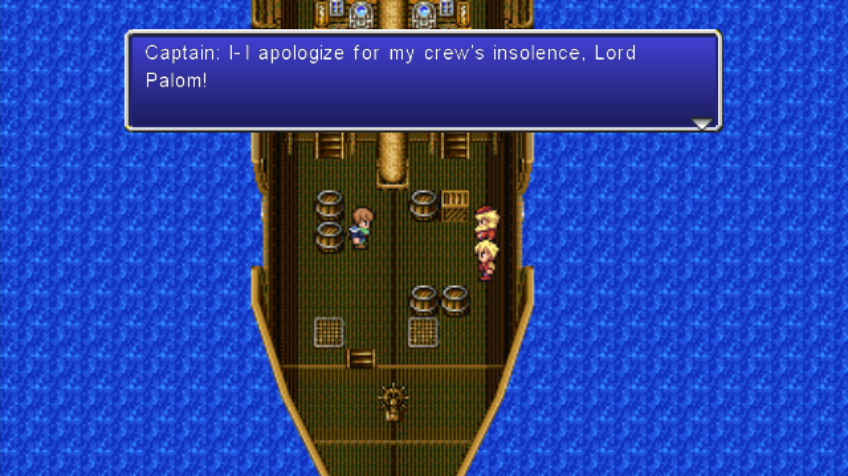
Palom’s Tale starts with a smart hook for a character chapter: you are not merely revisiting an old favorite, but watching Palom try to teach Leonora the black magic he already takes for granted. That makes the early stretch feel more purposeful than a simple nostalgia lap. You have a small, character-focused journey with a clear destination in Troia, and the arrival of the Mysterious Girl gives the chapter its momentum.
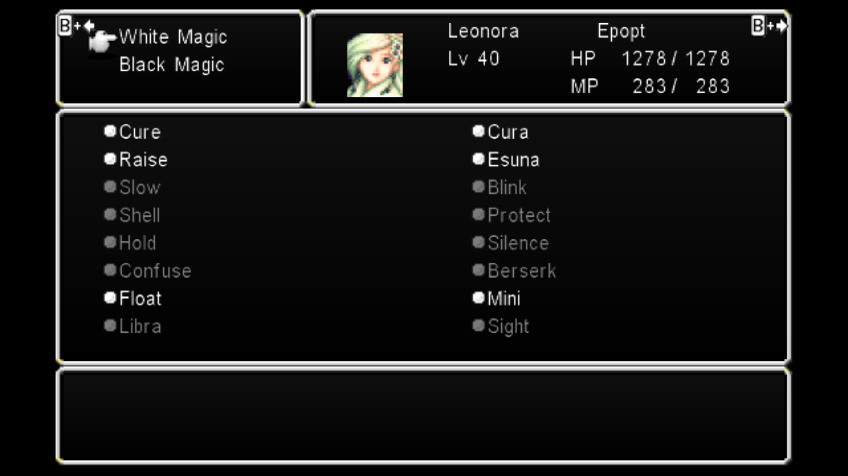
The familiar After Years additions matter here. Bands encourage you to think about how Palom and Leonora work together instead of treating the party as two separate spell lists, while moon-phase changes add another moving consideration to combat. Neither idea turns this into a radically different kind of RPG, but they give the chapter a little more texture than a straightforward Final Fantasy IV throwback.
The real long-tail feature is Palom’s Challenge, unlocked after the story. Its floors are chosen randomly when you enter, with each floor carrying its own theme and enemy set. That can be a satisfying post-game test when you want an unpredictable dungeon run; it can also be the point where repetition sets in if you came only for the story. The practical reward is strong, though: completion lets you export these characters, their equipment, items, and characteristics into The Crystals.
Graphics
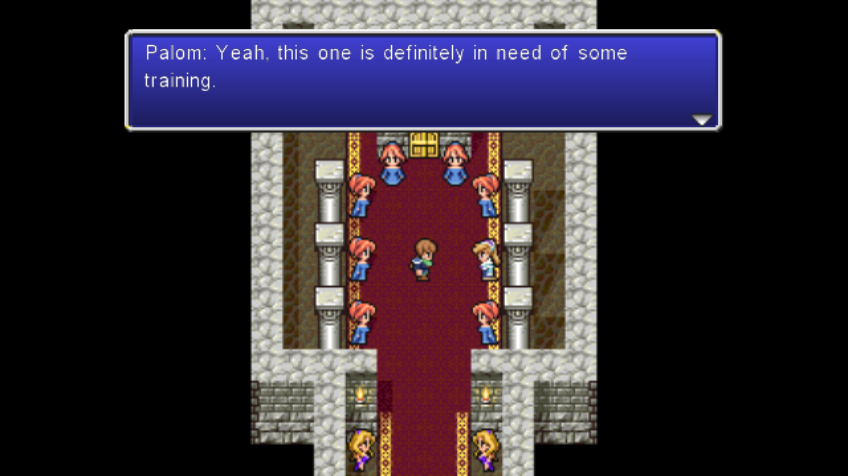
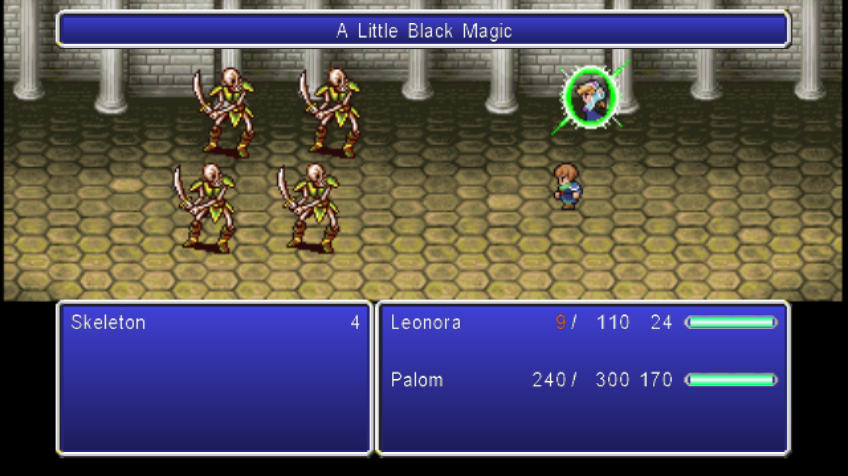
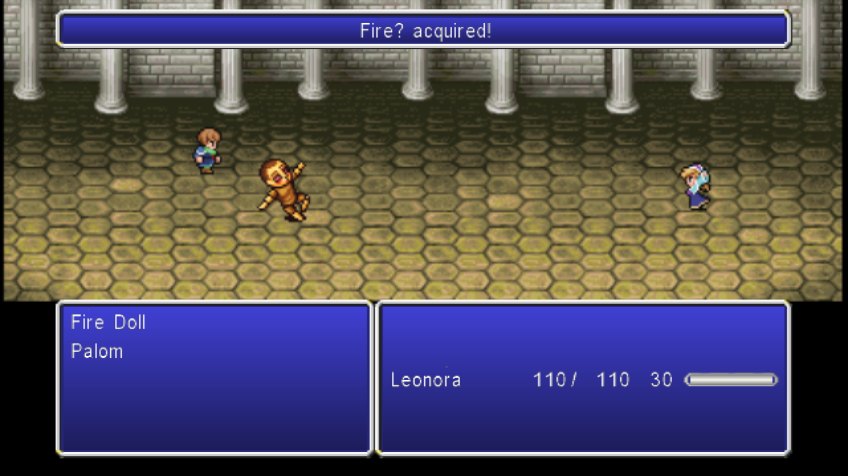
Palom, Leonora, and the Mysterious Girl are the chapter’s central on-screen figures, with the journey moving from Palom’s assignment to the trouble unfolding in Troia. The focus stays tight on this small cast rather than spreading attention across a larger ensemble.
Story
This is one of the more natural uses of Palom in an optional chapter. Making him Leonora’s instructor puts a little pressure on his usual confidence: he has knowledge to pass on, a young priestess depending on him, and an escalating threat that does not politely wait for lessons to end. That setup gives his adventure a distinct angle within The After Years.
Leonora is important because she keeps the tale from being a solo victory lap. The story is explicitly about Palom training her, so their relationship supplies the chapter’s emotional center even as they investigate the Mysterious Girl’s arrival. It is a cleaner, more personal frame than a broad world-spanning plot, and that suits an optional downloadable tale.
Do not expect this chapter to be mandatory connective tissue. You can finish The After Years without it. Its value lies in spending more time with Palom, seeing his role as mentor, and building a party that can later be carried into The Crystals. If you are moving through every character chapter, it feels like worthwhile context; if you are only chasing the main route, it remains an easy skip.
Overall Experience
Palom’s Tale is a good side dish rather than a main course. Its best quality is focus: one established black mage, one student, one destination, and a threat that pushes the lesson into a proper adventure. The first hour has an immediate pull if Palom was already one of your Final Fantasy IV favorites, and the chapter’s payoff comes from seeing that personality used in a more responsible role.
The randomized Challenge dungeon gives the download more life after the credits, but it is not equally compelling for everyone. Go in for the story and the character export first; treat the dungeon as a bonus if you enjoy repeated runs through changing floor themes and enemy groups. That mindset avoids turning an optional chapter into a grind.
At 7.1, this is an easy recommendation for a complete After Years run and a more selective one for everybody else. Palom and Leonora’s setup, the band and moon systems, and the export reward give it genuine purpose, even if its optional status means it never carries the larger game on its own. For another character-focused stop in this collection of tales, Yang’s Tale is worth comparing alongside it.


Reviews
There are no reviews yet.