 Retro Replay Retro Gaming History, Reviews & Emulation
Retro Replay Review
Gameplay
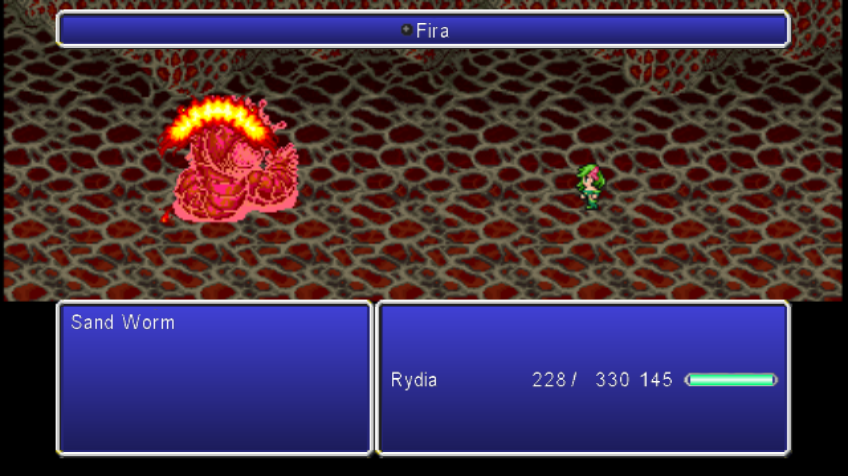
The first good decision Rydia’s Tale makes is forcing you to reconsider its lead. Rydia begins without the ability to summon Eidolons after finding them turned to stone, so this is not simply a victory lap built around a famous Final Fantasy IV character doing the thing she is best known for. It creates a direct, useful dramatic wrinkle in battle: you are guiding a summoner through a crisis where summoning is off the table.
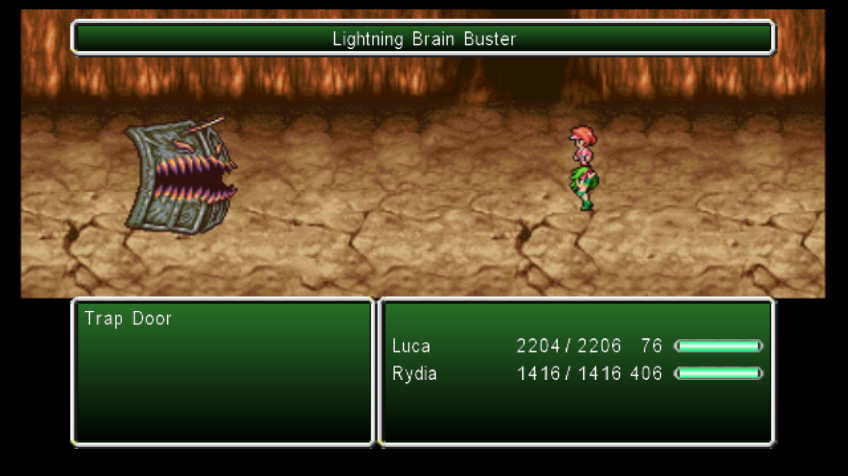
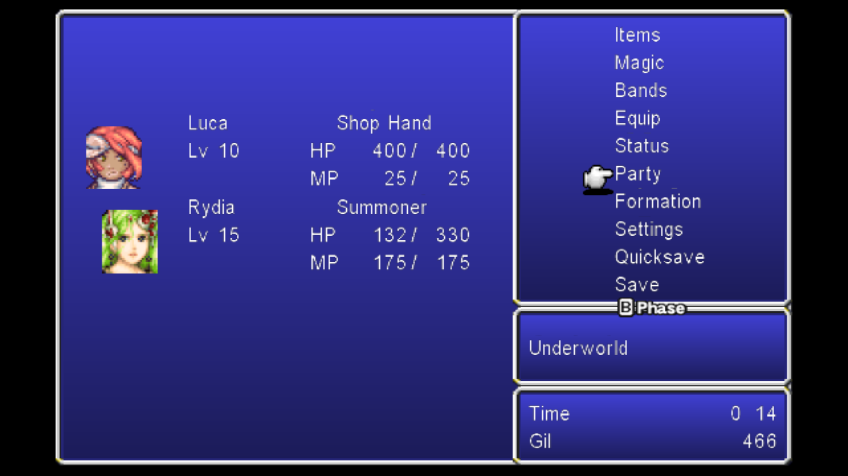
The chapter uses the Bands and changing moon phases introduced in The After Years. That makes it feel connected to the larger game rather than like a detached character vignette, and returning players will already understand the broad shape of its systems. The payoff comes from working with this particular party—Rydia alongside Luca and the mechanical dolls Calca and Brina—rather than expecting a radically different combat game.
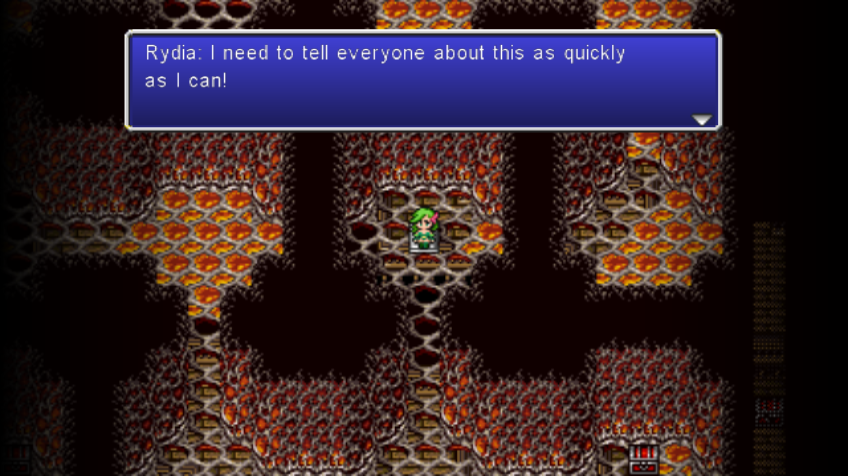
There is also a Challenge dungeon after the story, built as an underground maze. That matters most if you are preparing for The Crystals, since clearing Rydia’s tale lets you export the group’s items, equipment, and character progress into that final tale. If you only want the narrative, the maze is a welcome extra. If you want to optimize your eventual party, it turns this optional chapter into a more meaningful stop.
Graphics
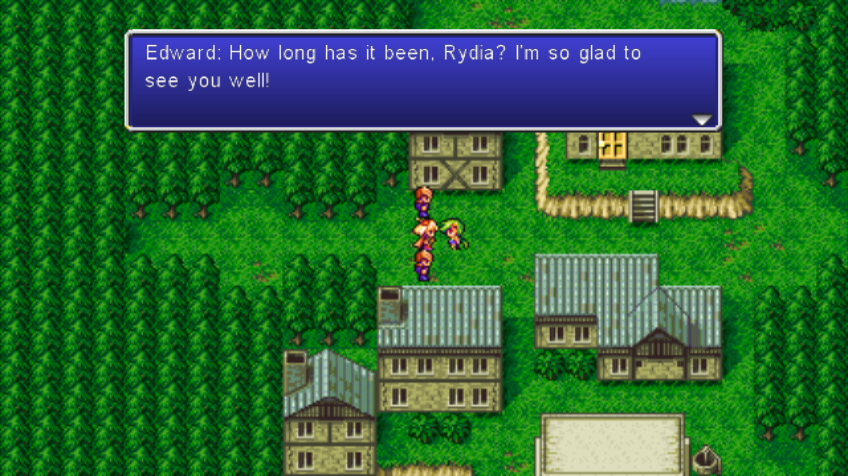
The party has a pleasantly odd mix on paper: Rydia and Luca travel with Calca and Brina, two mechanical dolls. That contrast fits a story that moves between Mist, the Eidolon realm of Feimarch, and an underground challenge maze, giving the chapter a different cast flavor from a standard all-human adventure.
Story
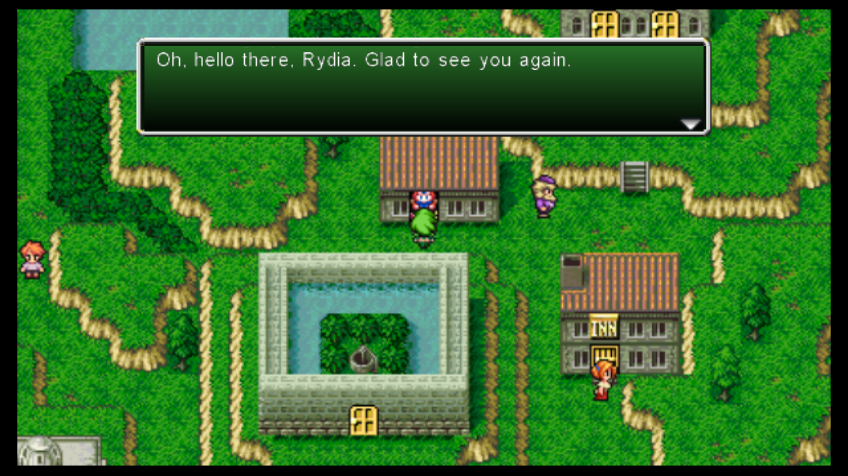
This is a focused Rydia story rather than a mandatory piece of the main route. Eidolon Queen Asura forbids her from visiting Feimarch; Rydia goes anyway; and she discovers that the Eidolons have been petrified by the Mysterious Girl. It is a clean setup, and it immediately gives Rydia a personal reason to push forward rather than merely showing up for another side quest.
Rydia works well as the center because the central problem cuts directly into her history as a summoner from Mist. Losing access to the Eidolons is not a random inconvenience; it puts her relationship with them at the heart of the chapter. The search for answers therefore has a stronger pull than a routine errand would have.
Luca is a sensible companion for the journey, while Calca and Brina add a stranger edge to the group. The tale’s compact premise is its strength: it does not need to carry the entire weight of The After Years, only give Rydia a real conflict and move her toward an answer about the petrified Eidolons.
Overall Experience
Rydia’s Tale is worth playing when you want more than completion credit from an optional episode. Its strongest hook is simple and effective: a summoner has to confront the loss of her summons. That gives the gameplay restriction and the story problem the same center, which is exactly what a character-focused add-on needs.
You can skip it and still complete The After Years, so there is no reason to treat it as required homework. But if Rydia is one of the characters you came back for, this is an easy recommendation. It also carries tangible value for anyone heading into The Crystals with the intention of importing their party’s gear and growth.
The main reservation is equally clear: this is an optional tale nested inside a larger game, and its systems are inherited from that larger game. Go in for Rydia’s predicament, the unusual supporting party, and the useful post-story progression rather than for a standalone reinvention. On those terms, it earns its place.


Reviews
There are no reviews yet.