 Retro Replay Retro Gaming History, Reviews & Emulation
Retro Replay Review
Gameplay
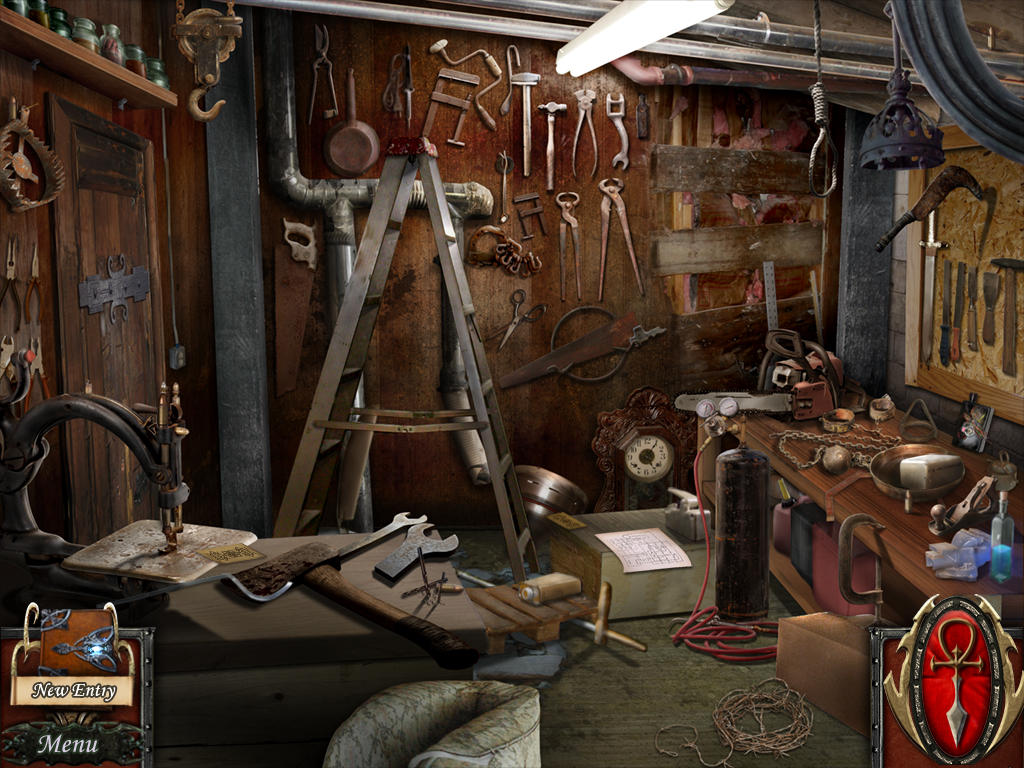
The opening pull in Blood Oath is straightforward: you are dropped into a deserted village as a newly turned, amnesiac vampire and immediately start clicking through its dark corners for answers. This is a hidden-object game with point-and-click adventure bones, so expect progress to come from finding items, identifying a problem in one location, then roaming elsewhere to locate the things needed to solve it. If you enjoy the small satisfaction of turning a screen full of clutter into a completed task, it has a dependable rhythm.
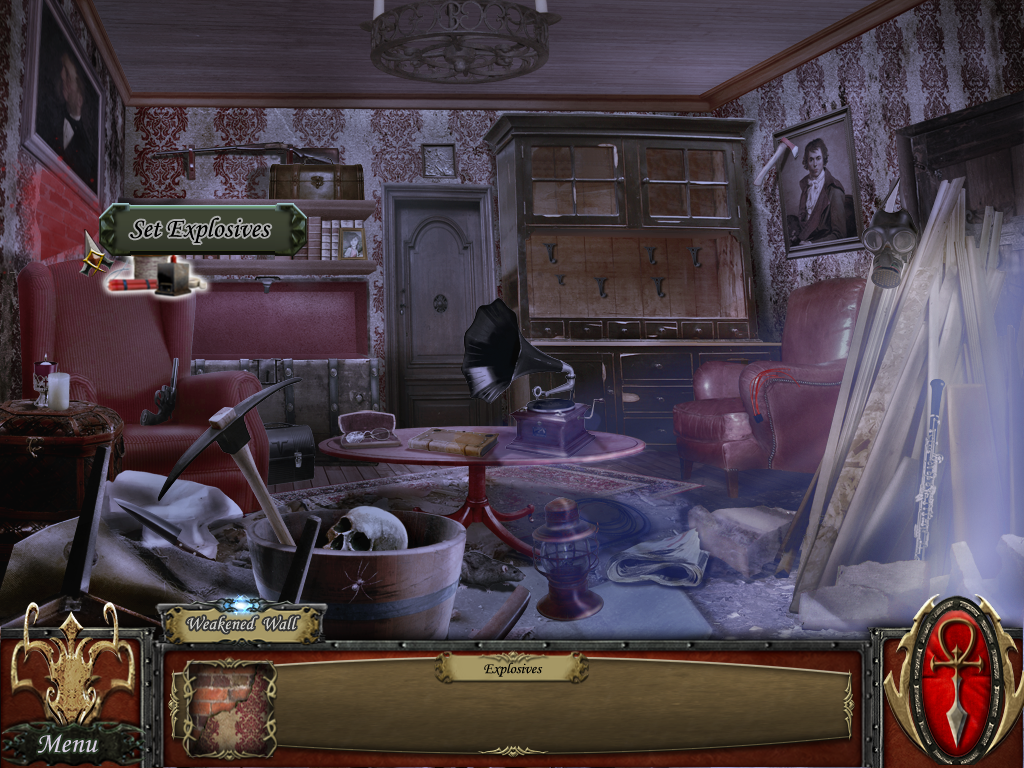
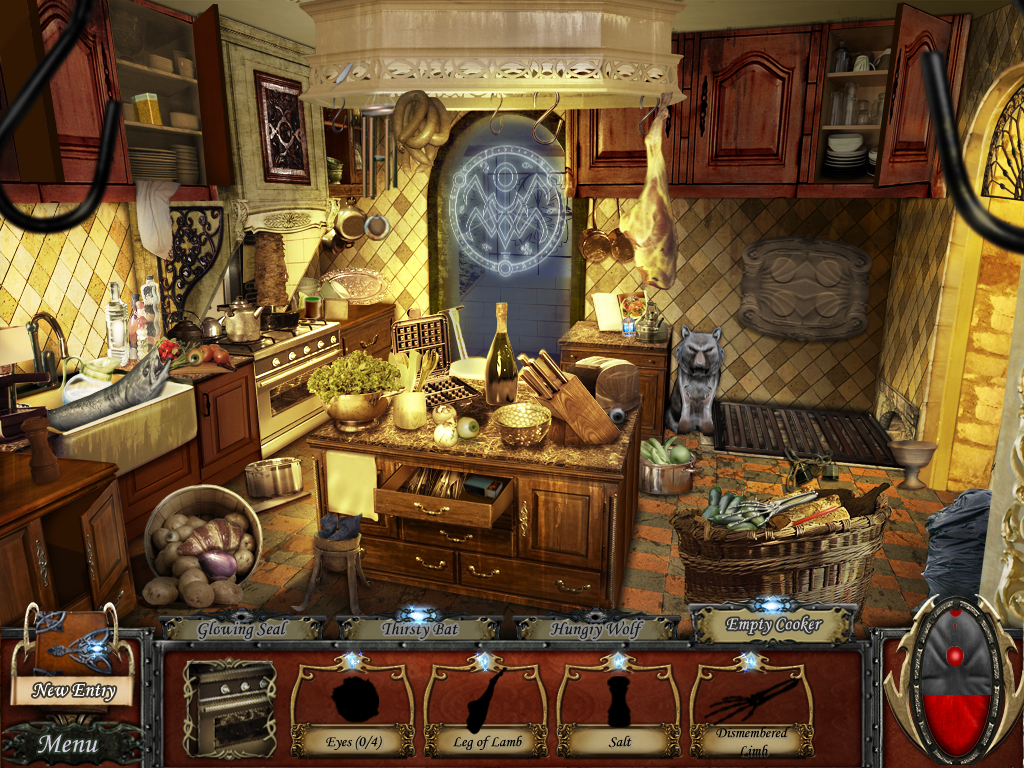
The hotspot system is unusually clear. Objects that matter pulse red under the cursor, and clicking one opens a tab showing silhouettes of the items needed for that interaction. Gems light up when a needed object is currently visible, which takes much of the blind pixel-hunting sting out of the process. The blood-vial hint button can point out an object or mark a map location with unfinished business, though its refill time means you cannot lean on it constantly.
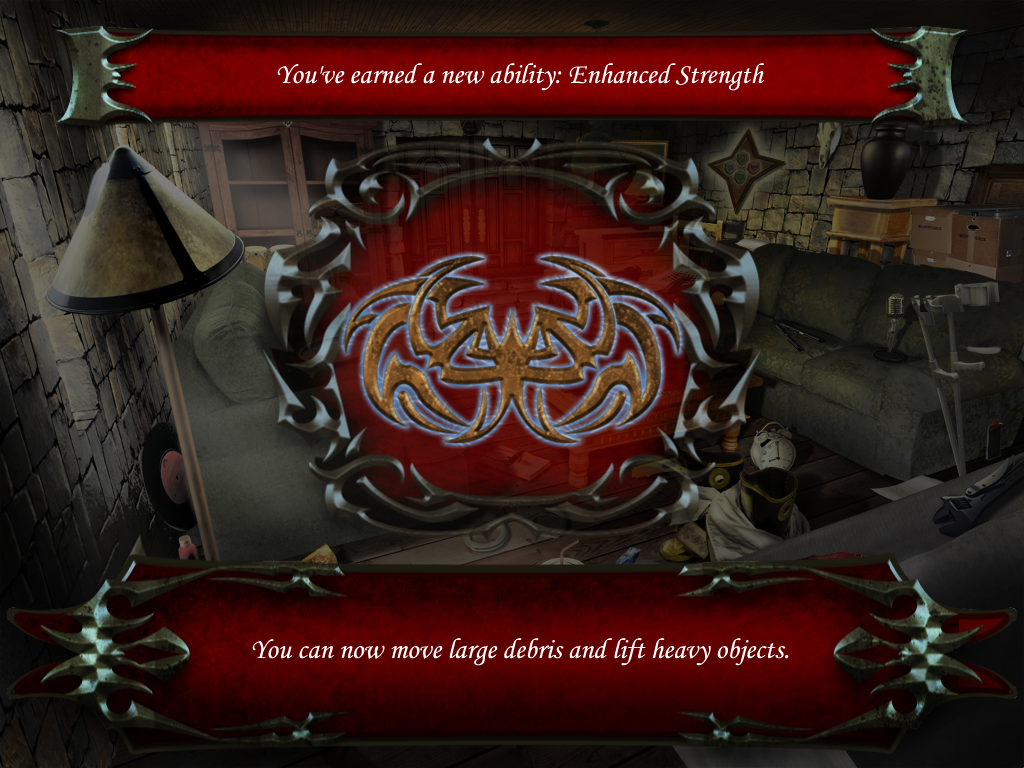
Where the game asks for patience is in its backtracking. Required items often sit in different scenes from the hotspot they belong to, so you will revisit locations repeatedly. That can feel like busywork when you remember the puzzle but not the exact screen where its missing component was left. Still, the game does more than shuffle keys and locks: vampire powers acquired at set points let you become a bat, turn to mist, and reach areas that had been blocked off. Those moments give the searching a stronger sense of forward motion.
The domino collection is a smart side layer. Scattered symbol dominoes feed a checkered-board mini-game where matching chains improve your assistance options: ankhs speed hint recovery, blood drops increase points, moons make powers activate faster, and skulls lessen the penalty for incorrect clicks. It will not transform the core loop, but it makes incidental collecting feel useful instead of disposable.
Graphics
The game leans into gloomy village scenery and a dark vampire-horror mood rather than bright, cheerful object-hunt backdrops. Bright red hotspot pulses stand out sharply against those environments, while item silhouettes, glowing gems, and the blood-vial hint icon make the bottom interface easy to parse during a search.
Story
Amnesia is doing a lot of the early narrative work, but it suits this kind of adventure. Waking up as a vampire without a past gives every new encounter a practical purpose: you are not only looking for puzzle pieces, but trying to understand what happened and what kind of creature you have become.
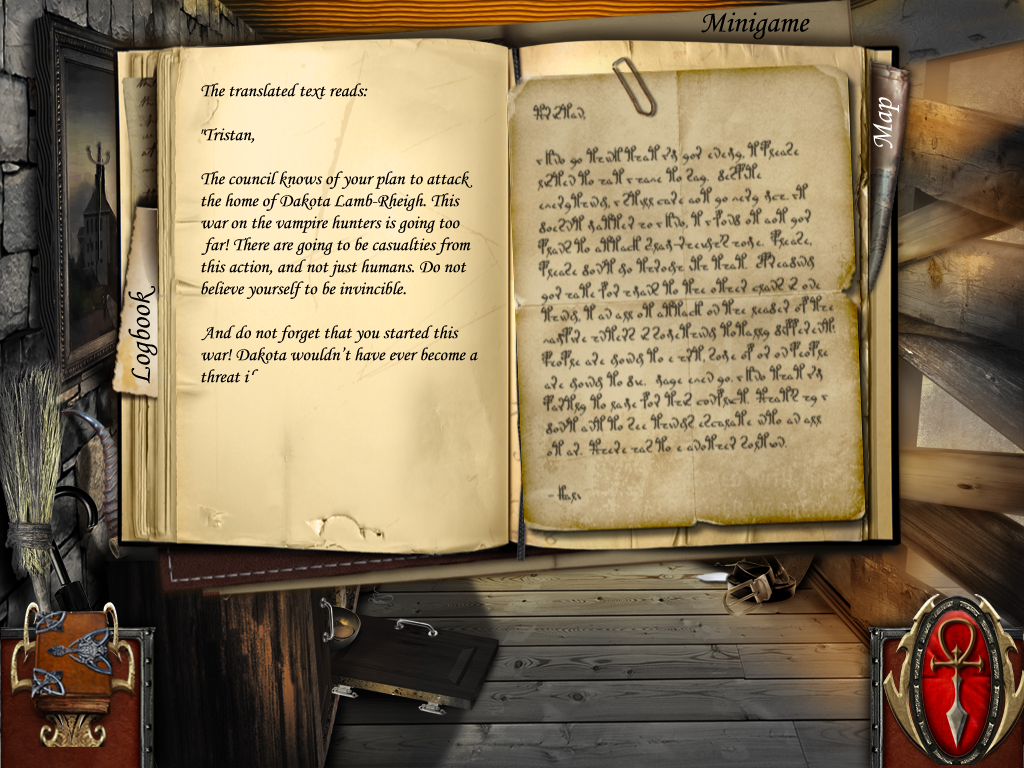
Other vampires and characters gradually fill in the situation and try to pull the novice vampire toward competing alliances. That gives the otherwise familiar item-hunt structure a welcome thread of uncertainty. You are not simply clearing a village screen by screen; you are being asked to weigh who deserves your trust.
The moral decisions are the part that keeps the horror premise from feeling entirely decorative. Do not come expecting a densely detailed vampire saga from the setup alone, but the choices and competing persuasion give the journey more flavor than a purely mechanical hidden-object crawl.
Overall Experience
Blood Oath is best when you settle into its loop instead of rushing it: inspect a location, spot a glowing lead, collect the necessary pieces, and return later with a new vampire ability or the final item a puzzle needs. Its guidance is generous enough to keep progress understandable without making every solution automatic.
The tradeoff is clear. If repeated trips through the same available locations and silhouette-based searches already wear you down, the back-and-forth will test your patience. The hint system softens that friction, but it does not remove the underlying structure. This is a game for a relaxed evening of methodical scavenging, not a fast-moving horror adventure.
Give it a chance if you like hidden-object puzzles with a little more adventure-game structure and enjoy a vampire theme that matters to exploration. The transformation powers, alliance pressure, and domino upgrades add enough texture to separate it from a plain checklist hunt. It is a modest, approachable genre piece, but a thoughtfully guided one.


Reviews
There are no reviews yet.