 Retro Replay Retro Gaming History, Reviews & Emulation


Retro Replay Review
Gameplay
The first hour is built around a reliable hidden-object rhythm: enter a new area, search for story-relevant items, then use what you found to push past the next obstacle. Brunhilda’s search has more connective tissue than a bare scavenger hunt, because ingredients can lead into potion-making and pages belong to a book rather than simply disappearing into an inventory tally. If you enjoy seeing collected objects pay off in the next step of an adventure, that small bit of logic helps.
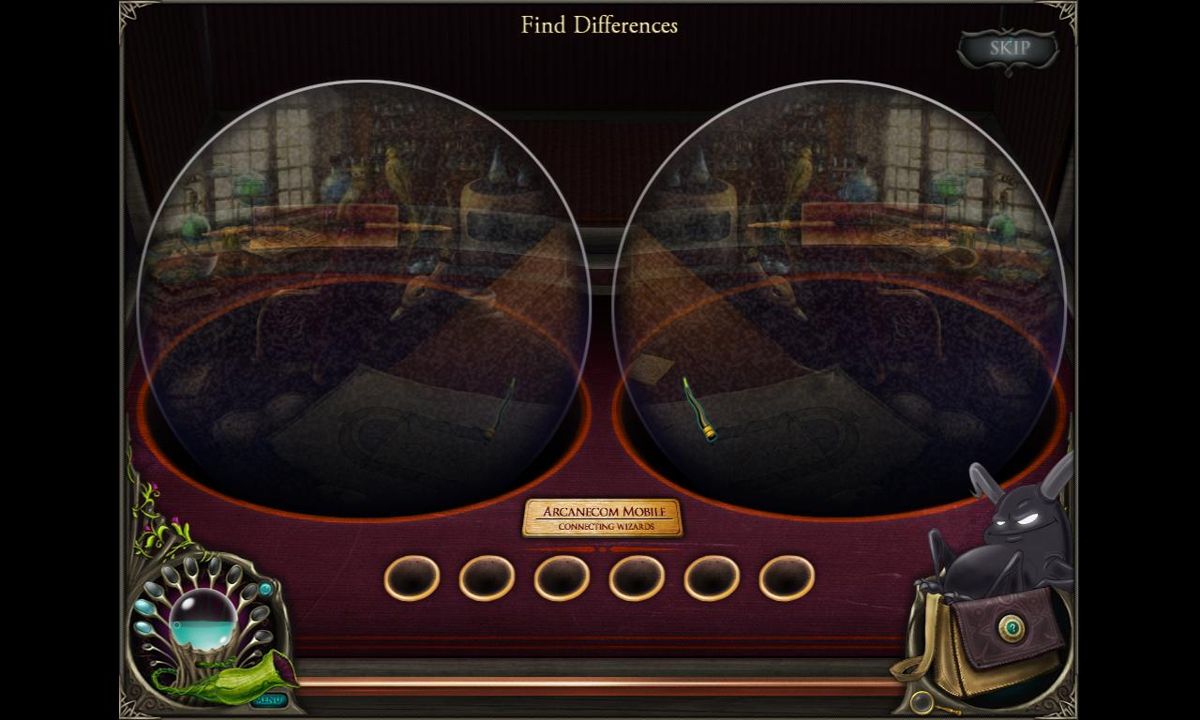
Magic arrives through mini-games instead of becoming a complicated system. Catching the right falling drops and selecting runes on a scrolling bar sound straightforward because they are; the point is to break up the scene-searching, not to stop you cold. Doing well unlocks these diversions for replay from the main menu, a nice extra for anyone who finds a favorite. They are less convincing as a reason to buy the game on their own, especially if you want elaborate puzzle chains.
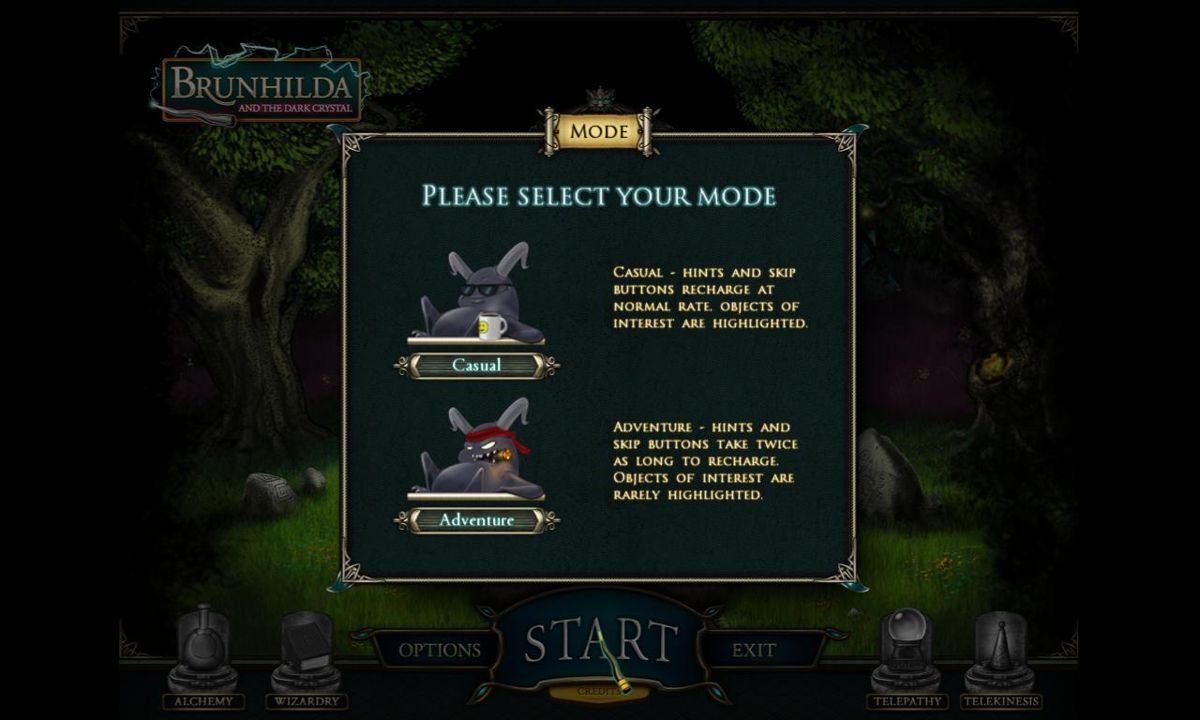
This is deliberately low-pressure. You cannot die, wrong clicks carry no penalty, and the square magnifying glass is always available for a closer look at a scene. Difficulty changes both the wait for the demon’s hints and whether objects are highlighted, so choose the tougher setting if you want to spend more time actually combing each location. Choose the easier one if you are here for the tale and don’t want a single misplaced ingredient to slow the whole evening down.
Graphics
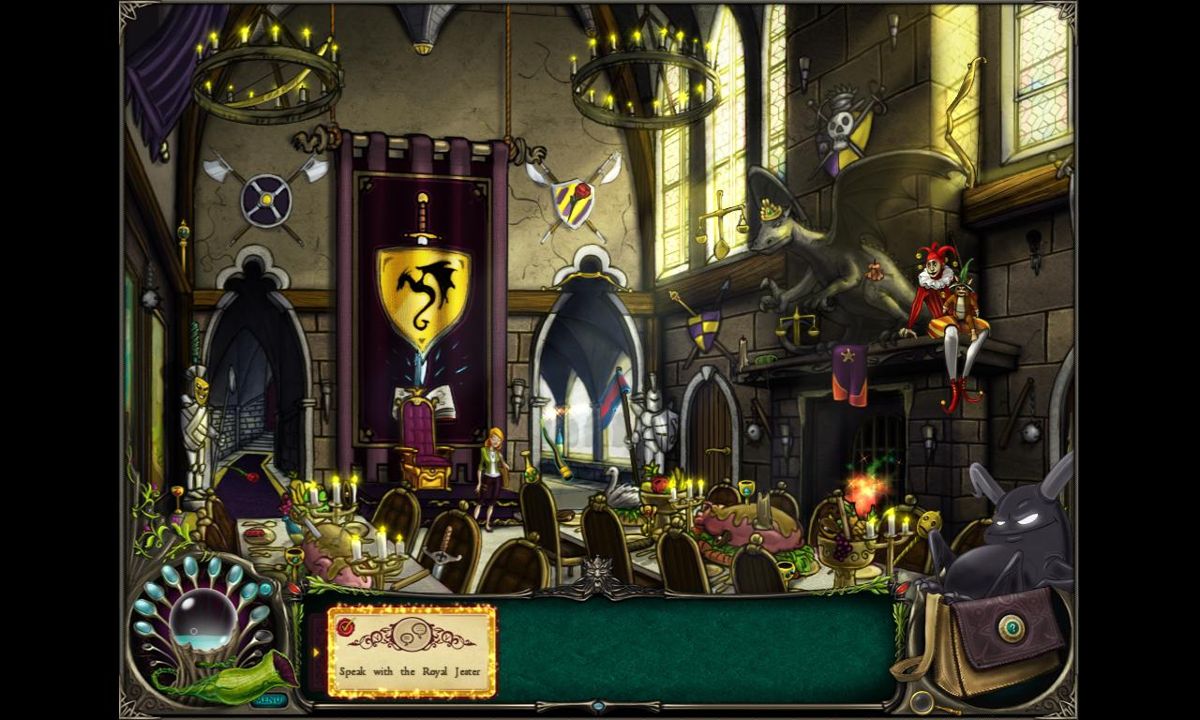
The game is viewed through hidden-object scenes that you can inspect with a square magnifying glass, making small search targets easier to examine. Object highlighting on the easier difficulty can further cut through the clutter when a scene has you stuck.
Story
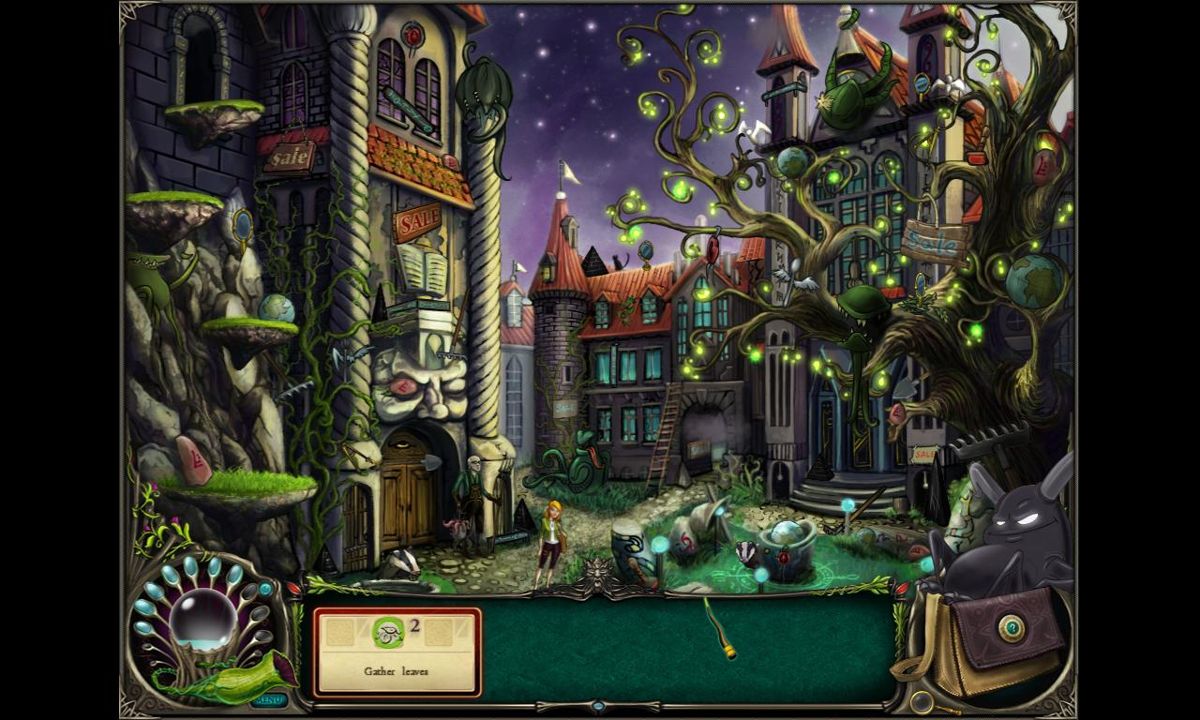
Brunhilda is an appealing lead on paper precisely because she begins outside the magical world. She is a New York linguistics student doing a favor for her aunt, not a destined wizard already fluent in every supernatural rule. Finding a demon in that forgotten bag is a brisk way to turn an ordinary errand into a fantasy adventure.
The threat is clear and suitably old-fashioned: magic is fading, a king has concentrated what remains in a Dark Crystal, and a prophecy points to a savior from another world. It is familiar fantasy material, but it gives the collecting a reasonable sense of direction. You are looking for ingredients and pages in service of a realm in trouble, not just emptying rooms of arbitrary trinkets.
Fully voiced dialogue should make the journey easier to settle into, particularly for anyone who prefers to follow a light adventure without reading every line. Don’t expect the premise to turn into a dense occult mystery; the setup points toward accessible magical stakes, a demon companion who can offer clues, and a clear path forward.
Overall Experience
Brunhilda and the Dark Crystal knows exactly what kind of game it is: a gentle blend of hidden-object searches, small magical diversions, and fantasy adventure progression. Its best quality is how little it asks you to fight the interface or fear failure. You can zoom in, ask for help after a difficulty-dependent delay, and experiment without being punished for an errant click.
That friendliness can also be its limit. The mini-games sound more like palate cleansers than deep tests, and the prophecy-driven quest follows a very familiar fantasy outline. If you need tough puzzles, high-stakes consequences, or a densely layered adventure, the relaxed structure may begin to feel slight before the magical realm’s fate feels urgent.
Still, there is value in a game that understands the comfort-food side of the genre. Give Brunhilda a chance if you want a voiced, low-friction hidden-object adventure where each search has some narrative use and the difficulty can be tailored to your patience. It is an easy recommendation for a calm fantasy puzzle session, but not a standout for gamers chasing serious challenge.


Reviews
There are no reviews yet.