 Retro Replay Retro Gaming History, Reviews & Emulation


Retro Replay Review
Gameplay
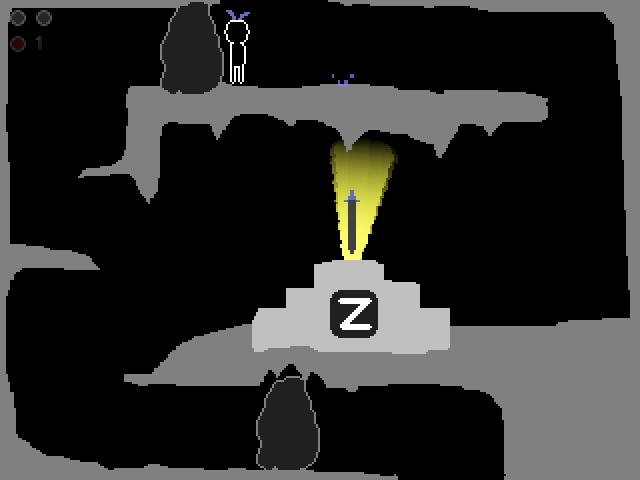
The opening hook is strong because Escape from the Underworld lets you begin at full strength, then immediately makes you live without it. You know the dark angel can fight and fly; now you have to rebuild that capability from nothing. That reversal gives the early exploration more bite than a routine search for upgrades. Finding the sword, gaining speed, and eventually recovering the wings are not just checkmarks on a progression list—they change what parts of the underworld you can finally push into.
This is firmly a metroidvania in the useful sense of the word. There is no prescribed route through the world, but inaccessible areas sit waiting for the right ability. You are encouraged to poke into side paths, remember barriers you could not clear, and circle back once a new skill changes the rules. The mini-map overlay is especially important in a game structured around revisits, since it tracks the locations you have already seen without turning exploration into blind wandering.
Black orbs serve as health, while red orbs increase your power, so searching around has immediate value beyond merely finding the next exit. Combat is simple in its choice: attack enemies or avoid them. Because foes respawn whenever you re-enter an area, though, backtracking can become more of a chore if you are repeatedly crossing the same stretch. Save points soften the consequences of a mistake and make it easier to take risks while mapping out another branch.
Graphics
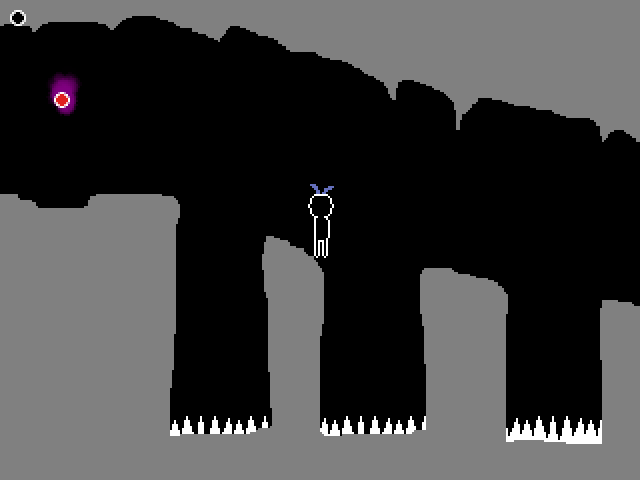
Escape from the Underworld uses a 2D side-scrolling view, keeping the focus on the dark angel, enemy encounters, and the routes opening through the underworld. The character’s changing equipment and movement abilities—sword and wings in particular—give the game’s progression clear on-screen markers.

Story
You play a dark angel punished for attacking people and fellow angels. Robbed of his powers and banished to the underworld, he has a clean, personal reason to keep moving: get back what was taken.
That setup does most of the narrative work, and it works because it is tied directly to play. The hero is not merely told that he has lost strength; you feel that loss in the opening shift from a fully capable fighter to a powerless explorer. Recovering abilities becomes the story’s tangible form of redemption—or at least survival.
Do not come expecting a densely plotted fantasy saga. The premise is lean, but it gives the exploration a satisfying direction. Every locked-off route and recovered power reinforces the same idea: this angel is fighting his way up from a hard fall.
Overall Experience
Escape from the Underworld understands one of the genre’s most reliable pleasures: seeing an obstacle, leaving it behind, and returning later with exactly the ability that makes it yield. Its large fight at the start makes the later rebuilding process feel more deliberate, and the map plus save points keep the free-form structure from becoming needlessly punishing.
The caveat is repetition. Enemies returning on every area re-entry means the game asks you to re-prove yourself during backtracking, even when your real goal is simply to test a newly acquired skill on an old path. If that sort of friction wears you down, the exploration may lose some momentum.
Still, this is worth playing if you like 2D action-platformers that make mobility feel earned. It does not need a complicated premise to create a satisfying loop: explore while weak, find an orb or ability, recognize a new possibility, and venture farther into the underworld. The payoff is the steady return of power and freedom.


Reviews
There are no reviews yet.