 Retro Replay Retro Gaming History, Reviews & Emulation

Retro Replay Review
Gameplay
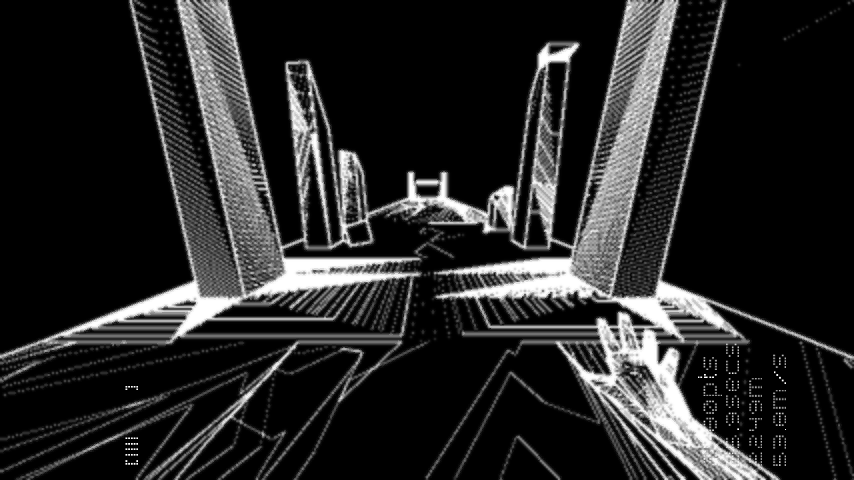
Fotonica starts with almost nothing between you and the finish: one button, a forward sprint, and platforms arriving fast enough that hesitation immediately feels dangerous. You run automatically, using that single input to jump across gaps while collecting white dots and building your score. That simplicity is its strongest trick. There is no long adjustment period; within minutes, you understand the rules and are already blaming yourself for a mistimed leap.
The first few jumps feel pleasantly direct, but speed soon changes the character of the game. As your pace rises, judging when to jump becomes less about reacting at the last second and more about learning a rhythm. You begin to read the platforms ahead, commit early, and try to keep a clean run alive. It has the same immediate score-chasing pull as Canabalt, but the first-person view makes each landing feel more personal and each missed platform more alarming.
That stripped-down control scheme is also where frustration can creep in. Fotonica asks for precision without giving you a pile of tools to rescue a bad decision. If you jump poorly, the run is over, and if you are not in the mood to repeatedly refine your timing, the challenge can feel harsh. Yet the controls are so clean that failures rarely feel mysterious. You know whether you got greedy for a dot, jumped too late, or simply lost the rhythm.
The five available levels offer different environments, with one built for endless runs, and that is enough variety to keep the basic loop from wearing out too quickly. This is not a game you play for sprawling progression. You return because a better run feels attainable, because speed makes success exciting, and because the next attempt begins before your competitive side has time to cool down.
Graphics
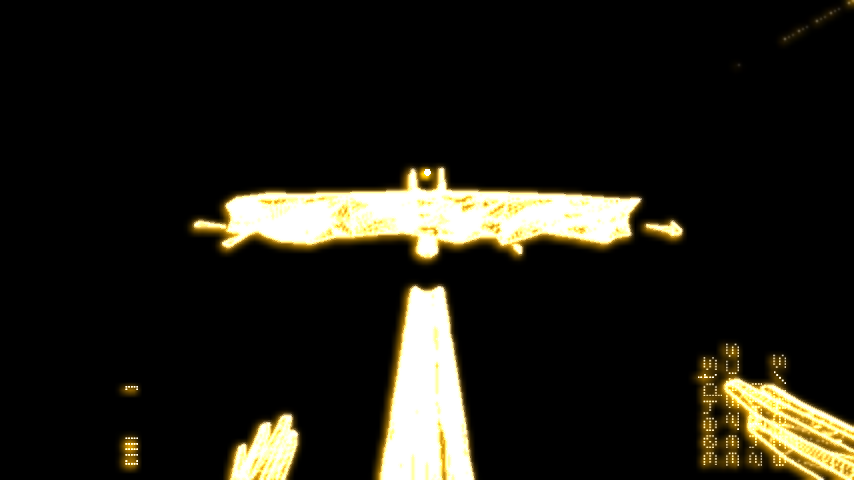
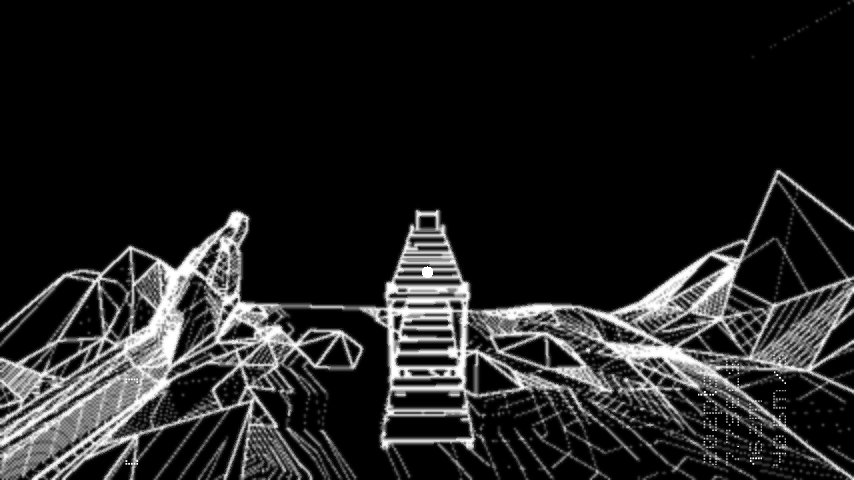
Fotonica uses low-count polygon wireframes rather than detailed scenery. Platforms and spaces are reduced to sharp geometric outlines, while color effects intensify as you accelerate. The result is clean at low speed and increasingly overwhelming when a run gets fast, matching the sensation that you are hurtling into a space you can barely process.

Story
Fotonica is not interested in building a narrative around its running and jumping. You are dropped into abstract environments and asked to move, survive, and score. That directness suits the game: a story layer would only interrupt the quick restart rhythm.
Instead, the sense of momentum carries the experience. Each attempt creates its own tiny arc, from controlled opening jumps to the point where speed turns confidence into tension. A good run has a beginning, a rising sense of risk, and an abrupt ending when your timing slips.
That may leave you cold if you need characters, context, or a reason beyond the leaderboard-like urge to improve. But for a game built around repetition and mastery, the lack of narrative clutter is a sensible choice. Fotonica lets the run itself be the drama.
Overall Experience
Fotonica is a focused, stylish sprint of a game that understands how much pressure a single button can carry. Its best moments arrive when you stop consciously thinking about the input and settle into the cadence of the course, collecting dots and clearing platforms at a pace that initially seemed impossible.
The trade-off is that there is nowhere to hide. The small set of levels and unforgiving nature of a high-speed run mean its appeal depends on whether you enjoy replaying a compact challenge for a cleaner score. If you want constant new mechanics or a generous platformer, it may feel slight and stern.
Still, its minimalism is purposeful rather than empty. The wireframe rush, the escalating speed, and the immediate retry impulse make Fotonica easy to pick up and hard to put down in short bursts. It is well worth a chance if you enjoy precision platforming and score attacks that turn a simple action into a demanding rhythm game.



Reviews
There are no reviews yet.