 Retro Replay Retro Gaming History, Reviews & Emulation
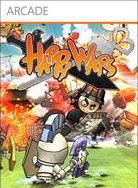
Retro Replay Review
Gameplay
The first few minutes of Happy Wars throw you into a crowd where the obvious objective—break into the enemy castle and smash the Big Tower—quickly becomes more complicated. Gates can be battered with siege weapons, ladders offer another route over the walls, and towers double as territory and spawn points. That means you are rarely just chasing kills. A neglected tower can become the reason your team loses ground, while a timely push at the gate can suddenly pull everyone toward the same goal.
The class split is straightforward but useful. Warriors belong at the front with swords and shields, Clerics keep teammates alive and can build siege equipment, and Mages trade shields for ranged spells and weapon enchantments. Berserker adds a more aggressive dual-weapon option for anyone who would rather press forward than protect themselves. You can make a real contribution without being the match’s best fighter, especially as a Cleric repairing the momentum of a stalled attack or a Mage disrupting a packed group.
Team Skills are where the game’s broad, cartoonish battles find their best rhythm. Coordinated Warrior rushes, Cleric teleports to friendly towers, and Mage meteor strikes or tornadoes reward sticking with allies rather than wandering off alone. The trouble is that the skill system is also random in its unlocks, and stronger equipment is tied to leveling and upgrading. You may enjoy a clever castle breach, then feel the game tugging your attention back toward chance rewards and gear management.
Matches have a decent fallback when neither castle falls: tower control decides the result, with sudden death demanding that one side build the winning tower. That structure prevents a failed siege from becoming dead time. It also gives defensive-minded teams something meaningful to do, although it can frustrate you when your side is busy dueling while the other team quietly owns the map.

Graphics
Happy Wars uses a bright fantasy look built around armored warriors, robed spellcasters, castles, ladders, siege gear, and deliberately silly magic. The diagonal-down view suits its busy battlefields: you can see the push toward gates, walls, and towers without losing track of where the fight is moving.
The most memorable sights come from its oversized group attacks and spells. Turning enemies into flowers, calling down meteors, and throwing tornadoes into crowded skirmishes give the action a playful exaggeration that fits a game named Happy Wars.
Story
Happy Wars is driven by match stories rather than a character-led tale. Each side has a castle, a tower to protect, and a clear reason to invade the other side’s territory. That is enough framing for its fantasy brawls, because the real drama comes from whether your team can turn a scattered mob into a siege force before time expires.
The best narratives emerge from the map state. Maybe your team has failed to crack the main gate, but a ladder push finally gets allies over the wall. Maybe a lost tower leaves your side spawning too far from the action, turning every defense into a desperate run back. These are simple stakes, but they produce clear reversals that make a round feel like it went somewhere.
Don’t come here for elaborate lore or a sweeping campaign arc. Come for compact battlefield anecdotes: the last-second tower build, the group teleport that rescues a collapsing defense, or the spell that breaks up a crowd at exactly the right time. For game-specific release history, see the Happy Wars history page.
Overall Experience
Happy Wars is at its best when you accept the chaos and pick a job your team needs. Its 15-on-15 battles have an accessible, almost toy-box energy, but the objectives have enough bite that you cannot simply mash through every encounter. One moment you are fighting at a wall; the next, the important decision is whether to defend a tower, construct a siege weapon, or join an ally’s coordinated skill.
The free-to-play systems are the caveat. Happy Stars feed the Happy Spinner, Happy Tickets buy random-item Happy Cards, and equipment can be enhanced by consuming lower-grade pieces. Even with performance-based rewards and missions that hand out currency or items, that structure makes advancement feel more erratic than it needs to be. If random rewards and premium-item pressure sour the mood for you, the game’s good-natured combat will not entirely erase that annoyance.
But if you want a light action RPG where support play matters, castles are objectives rather than decoration, and team coordination can produce ridiculous turnarounds, Happy Wars deserves a look. It lacks the purity of a tightly balanced competitive game, yet it understands the immediate pleasure of seeing a whole team rally around one reckless push. That payoff is real—just be prepared for its gear economy to test your patience between the best matches.


Reviews
There are no reviews yet.