 Retro Replay Retro Replay gaming reviews, news, emulation, geek stuff and more!
Retro Replay Review
Gameplay
The first hour has a particular old-school pleasure: you build a full party, step into a hostile frontier, and quickly learn that a careless encounter can tear that party apart. Icewind Dale uses real-time combat with pausing, so you are constantly making small tactical calls—where the front line stands, when spellcasters should act, and whether a fight is going bad enough to reset your plan. It feels deliberate rather than frantic once you settle into the rhythm.
Combat is the heart of the game, and it is not shy about making you earn progress. A well-built, balanced group has room for tough fighters, useful magic, healing, and practical skills, but you still need to pay attention. Positioning and spell timing matter. When a difficult battle clicks, the payoff is excellent: you are not merely watching characters gain levels, you are seeing a plan you assembled survive another ugly stretch of dungeon.
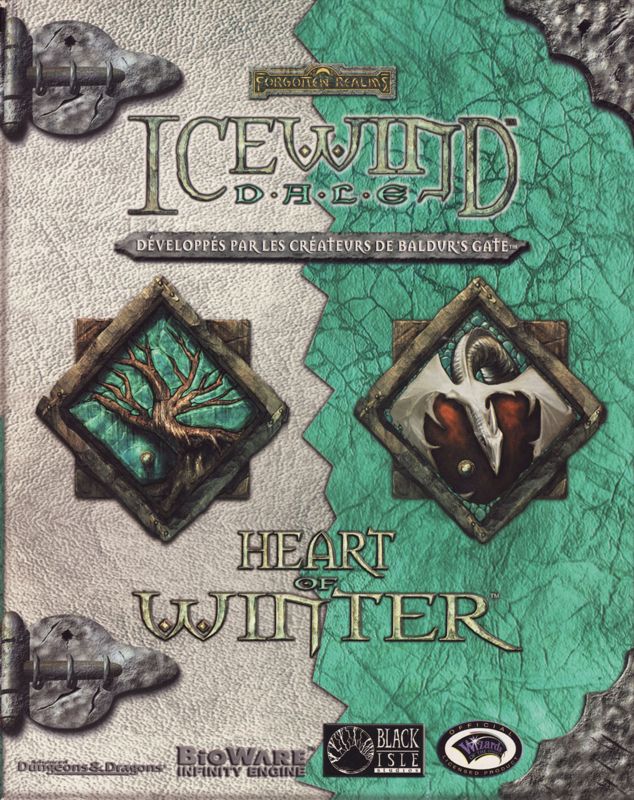
That focus is also the warning label. If you want every RPG session to be driven by conversations, personal companion drama, and branching decisions, Icewind Dale can feel lean. It spends much more of its energy on adventuring and fighting. Heart of Winter suits that structure well, extending the challenge for a party that has already found its footing rather than changing the game into something else.
Graphics
The isometric view still gives the frozen locations their own character. Snow-covered outdoor areas, dark interiors, and clustered party members are easy to read during exploration, while the fixed camera keeps tactical battles comfortably legible. The artwork has the detailed, hand-painted look associated with this era of computer RPGs, even if the character animation now feels stiff beside newer games.
Story
Icewind Dale tells a more straightforward expedition story than its famous Infinity Engine cousin. You create the entire party yourself, which gives the group a pleasing sense of ownership, but it also means the story does not get much personality from party banter. You are a band of adventurers pushing through a dangerous northern land, not a prewritten cast trading jokes around every campfire.
That can sound like a limitation, and sometimes it is. The plot rarely pulls you forward with the urgency of a character-driven RPG. Yet the sparse approach fits the journey. The cold, isolated setting and the steady pressure of hostile territory make the adventure feel like a long campaign rather than a tour of quest hubs.
Heart of Winter is best treated as an extension of that same road. By the time you reach it, the pleasure comes from taking a seasoned party into more demanding territory, not from expecting a radically different storytelling style. If the base game’s mood and combat have won you over, the expansion feels like more of what you came for.
Overall Experience
This compilation is at its best when you meet it halfway. Take time with party creation, save often, and do not assume every battle should be solved by charging the nearest enemy. The game can be punishing when your group is poorly prepared, but it is usually rewarding precisely because success asks for attention.
Its age shows in the slow, methodical pace and in a structure that favors long combat-heavy stretches over constant narrative surprises. For some, that will become fatigue. For others, especially anyone who misses the satisfaction of carefully managing a classic computer RPG party, it is the point. Few games make a hard-won victory feel quite so earned.
Icewind Dale + Icewind Dale: Heart of Winter is an easy recommendation for tactical fantasy RPG fans and a more qualified one for story-first players. The base game is a substantial, focused adventure; the expansion is a valuable extra chapter for anyone who finishes it wanting sterner fights. Go in for the party tactics and wintry atmosphere, and the long march is worth it.


Reviews
There are no reviews yet.