 Retro Replay Retro Gaming History, Reviews & Emulation



Retro Replay Review
Gameplay
The best part of Memorabilia is the mess. Each customer’s memory fills the machine’s circular viewing area with objects piled over one another in several layers, turning familiar hidden-object hunting into a small spatial puzzle. You are not merely scanning a room from left to right; you are deciding when to zoom through the layers, when an object is probably covered up, and whether it is worth chasing an easy patience refill before the clock becomes a problem.
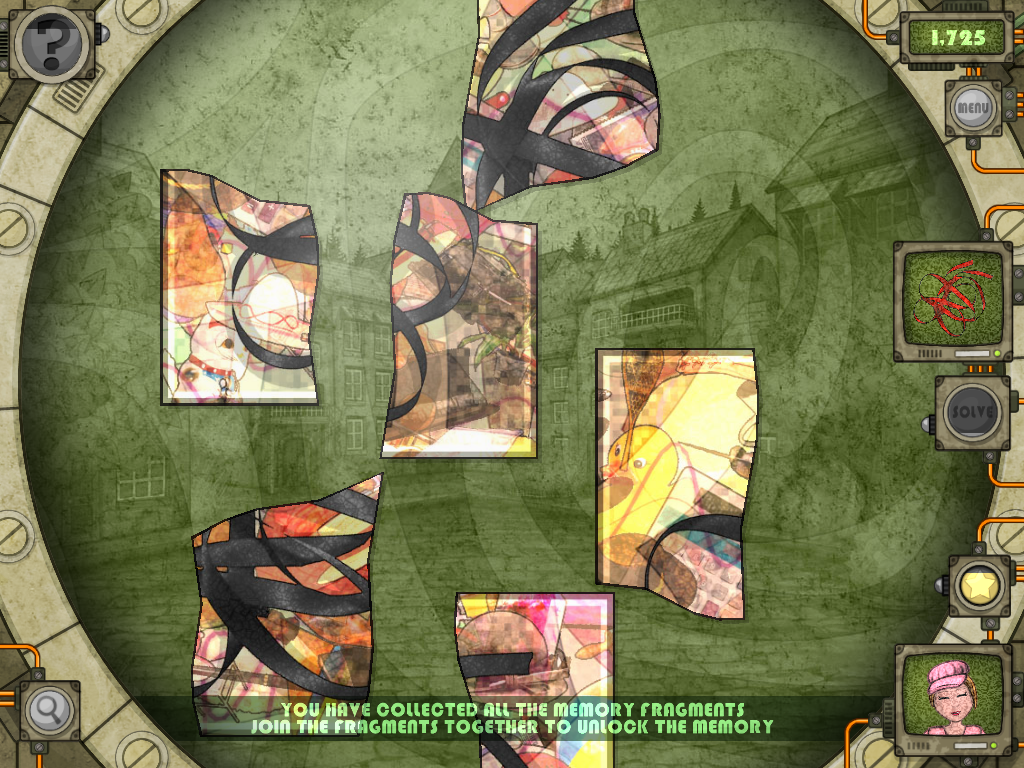
That patience gauge gives the searches more bite than usual. It steadily drains while you work, but locating a customer’s favorite item restores it, which creates a useful secondary priority amid the long item list. Clicking an entry to see its picture is welcome when the wording is vague, and the occasional conventional scene breaks up the machine-window format. Green-listed key objects add a stronger sense of progress because they lead to collectible memory fragments rather than simply crossing off another noun.
The match-three board used to charge power-ups is a decent change of pace, though it also makes the game feel busier than its basic premise suggests. Hints, clearing clutter, and tools that narrow your view can rescue a stubborn search, while the fragment-linking and puzzle-assembly powers tie into the larger memory-recovery goal. If timed hidden-object games make you tense rather than focused, choose relaxed mode early; the layered scenes remain the game’s most interesting challenge even without the countdown.

Graphics
The central machine view gives the searches a distinct look: objects float in a circular window, overlap heavily, and sit on different zoomable layers. That arrangement can be deliberately cluttered, but it makes the act of peeling back a memory easy to understand. Traditional location scenes offer a more familiar backdrop when the game steps away from the machine.
House-restoration screens let you pick wallpapers, paint colors, and other decorations, providing a simple visual payoff for the money earned from customers.

Story
Mia arrives in Berryside Mews, buys an abandoned farmhouse, and finds an old device in its decay. The machine’s manual identifies it as a mind-reading invention built in 1925 by A. J. Penburry. It is a charmingly pulpy setup, and it gives the repeated object hunts a better excuse than the genre’s usual scavenger-work premise.
Once Mia repairs the machine, the story settles into a practical rhythm: locals pay her to retrieve lost memories, and she spends the proceeds rebuilding her home. That is not a grand mystery so much as a tidy framing device, but it works because every completed job contributes to a visible domestic goal.
The memory fragments give each customer a final destination. Recovering them and reassembling the customer’s forgotten image makes the searches feel like pieces of a specific recollection instead of random lists. Don’t expect the premise to become a sweeping science-fiction tale; its strength is the cozy, eccentric reason it gives you to keep helping the next person.
Overall Experience
Memorabilia: Mia’s Mysterious Memory Machine is a solid choice when you want hidden-object play with a little more motion and pressure. The layered memory searches are the clear draw, and the favorite-object timer management stops them from becoming completely automatic. At its best, you get the satisfying moment where a seemingly impossible list entry reveals itself after one more zoom level.
The extra systems can feel like a lot: item lists, timers, key objects, memory fragments, match-three charging, power-ups, and renovation choices all compete for attention. Still, they are united by a straightforward loop of helping locals, earning cash, and fixing the farmhouse. The game is more successful as a varied casual puzzle game than as a pure, meditative object hunt.
Give it a chance if you enjoy sorting through visual clutter under light pressure and appreciate a concrete reward between stages. Pick relaxed mode if you would rather search carefully than race a draining gauge. The payoff is modest but satisfying: a series of recovered memories, a gradually restored home, and a hidden-object formula that makes you work through more than one flat layer of junk.


Reviews
There are no reviews yet.