 Retro Replay Retro Replay gaming reviews, news, emulation, geek stuff and more!

Retro Replay Review
Gameplay
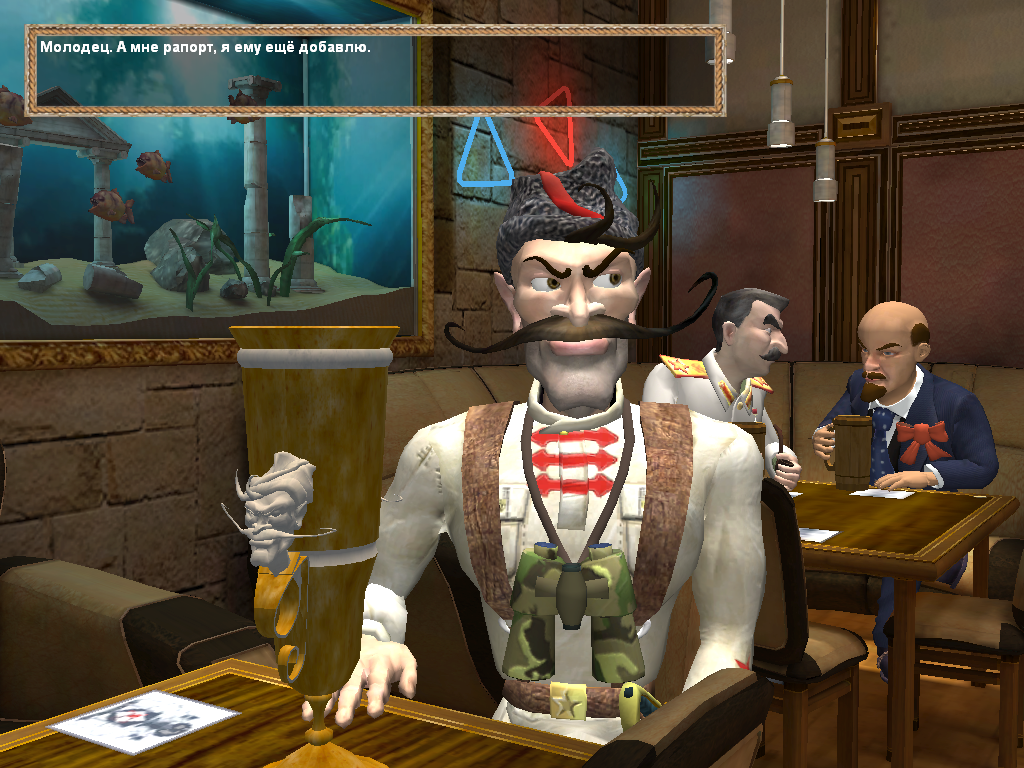
The first hour asks you to settle into a familiar adventure-game rhythm: speak to people, collect useful-looking objects, and work out which bit of inventory belongs with which obstacle. Proletarskiy Glamur does not chase action. Its momentum comes from the next conversation, the next task, and the satisfaction of turning an apparently useless item into progress.
That makes the game’s main strength and its likely point of friction the same thing. You need to enjoy puzzle-solving as a process of poking at a comic world, because the story advances primarily through dialogue and inventory manipulation. When a chain of tasks starts to connect, the format clicks nicely. When it does not, the pace can feel stubbornly slow, especially for anyone used to more immediate adventure design.
There is still something comforting about how direct the structure is. You are not being asked to master a deep combat system or juggle elaborate character builds; you are there to untangle problems and push Petka’s absurd mission forward. Veterans of point-and-click-style adventures will know whether that sounds inviting. Newcomers should come prepared to read, experiment, and accept that progress may depend on making a strange connection.
Graphics
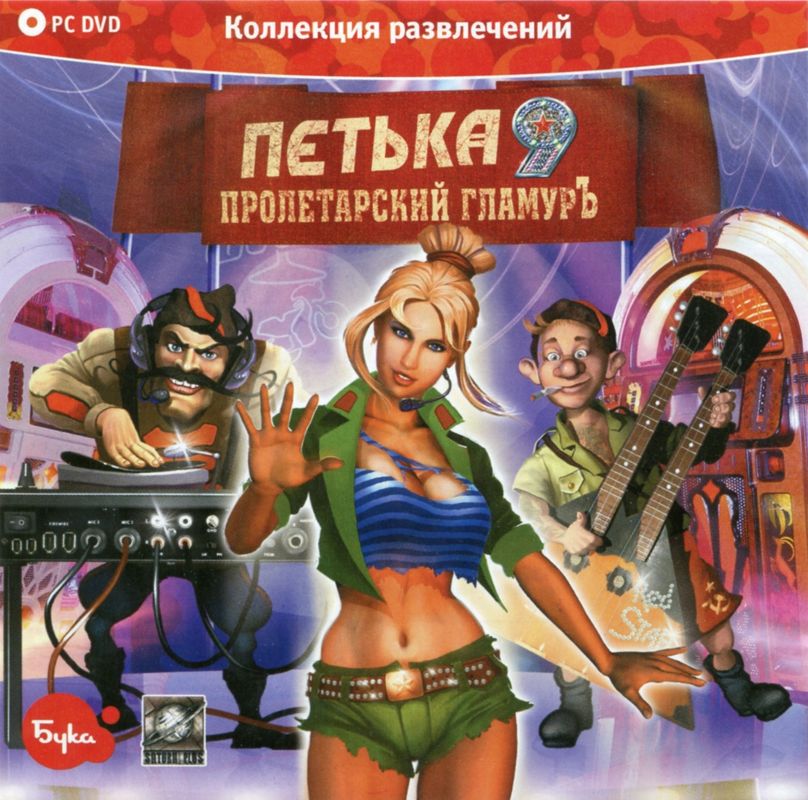
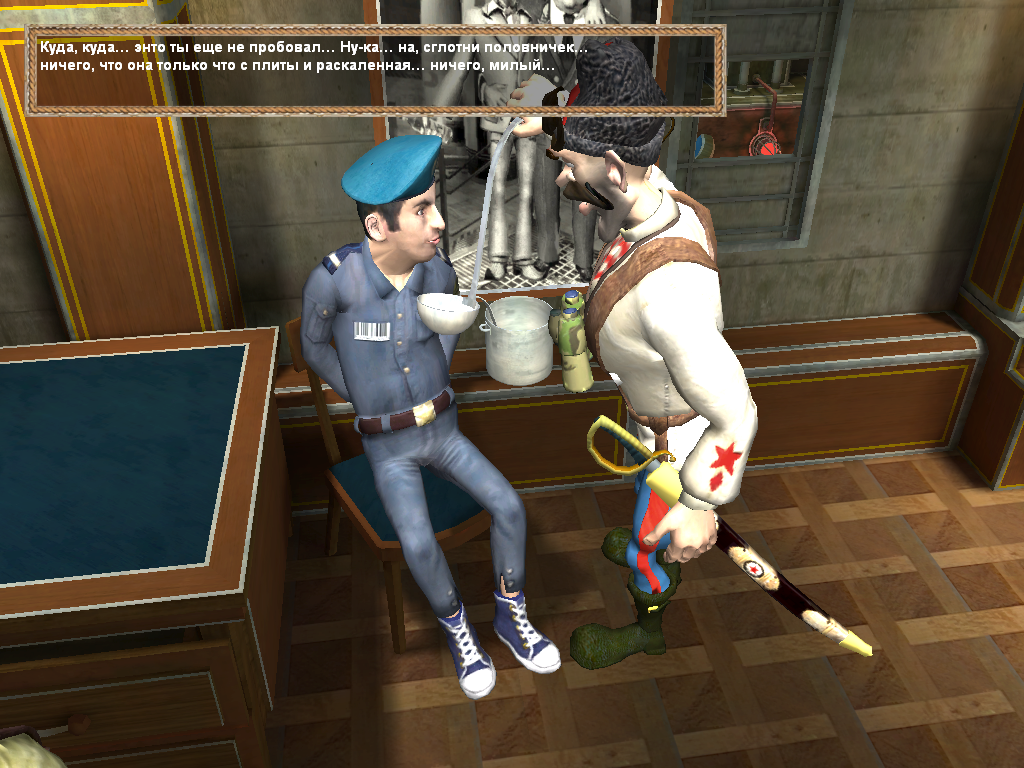
Like the preceding installment, the game uses full 3D for both its characters and backgrounds. Petka, Chapaev, and Anka move through a futuristic New Moscow rather than a purely historical setting, so the imagery has room to play with the collision of Civil War icons and 22nd-century Russia.

Story
The premise is cheerfully outlandish: in 2008, the United States and other countries turn Russia into a garbage dump, then brainwash its people so they will not resist. Petka, Chapaev, and Anka arrive in 2150 to save their homeland. It is broad satire from the start, not restrained science fiction, and that is exactly the lane this series belongs in.
Bringing the trio into New Moscow gives the recurring characters a fresh excuse to bounce off a different era. Their roots in Russian Civil War folklore and Soviet-era joke culture matter here; the humor comes from watching these familiar comic figures tackle a wildly exaggerated future crisis. You do not need a solemn history lesson to follow the mission, but a taste for this kind of irreverent cultural parody will make the setup land better.
The story’s hook is stronger as an excuse for absurd situations than as a serious futuristic warning. That is no criticism if you come for the joke. The garbage-and-brainwashing conspiracy is deliberately cartoonish, and the game is best when you meet it on those terms rather than expecting a weighty political drama.
Overall Experience
Petka 9: Proletarskiy Glamur is a very specific kind of adventure: a ninth-series entry that trusts its established comic trio, piles a ludicrous sci-fi crisis on top of them, and lets puzzles carry you from one gag-friendly situation to another. Its commitment to conversation and inventory tasks gives it a clear old-fashioned personality.
If you already like Petka, Chapaev, and Anka, the leap to 2150 is a worthwhile change of scenery without abandoning the series’ basic formula. If this is your first encounter with them, the game can still work as a self-contained oddball adventure, though its humor will naturally play best for gamers who appreciate the characters’ cultural baggage.
For the right audience, the payoff is the steady accumulation of bizarre problems solved in a bizarre future Russia. For everyone else, the same puzzle-heavy pace may feel like work before the jokes earn their keep. Give it a chance if you want a traditional, talk-and-inventory adventure with unapologetically broad Russian satire; skip it if you need your sci-fi games brisk, serious, or action-driven.



Reviews
There are no reviews yet.