 Retro Replay Retro Gaming History, Reviews & Emulation




Retro Replay Review
Gameplay
The first hour gives you a clear, grim little mission and quickly settles into the familiar hidden-object rhythm: inspect each location, gather useful pieces, and find the one place where an inventory item finally fits. That loop is simple, but it works because the investigation has a concrete stake. You are not just opening doors for their own sake; every solved obstacle feels like another step toward waking Jane and catching Felicia.
The inventory is handled through a fan in the lower-left corner, opened with the tools button. It is a slightly theatrical way to store ordinary adventure-game items, though it also keeps the screen from being permanently crowded with a long bar of objects. Once you have a useful item, you drag it onto the right piece of scenery. Anyone comfortable with casual point-and-click adventures will immediately know the drill.
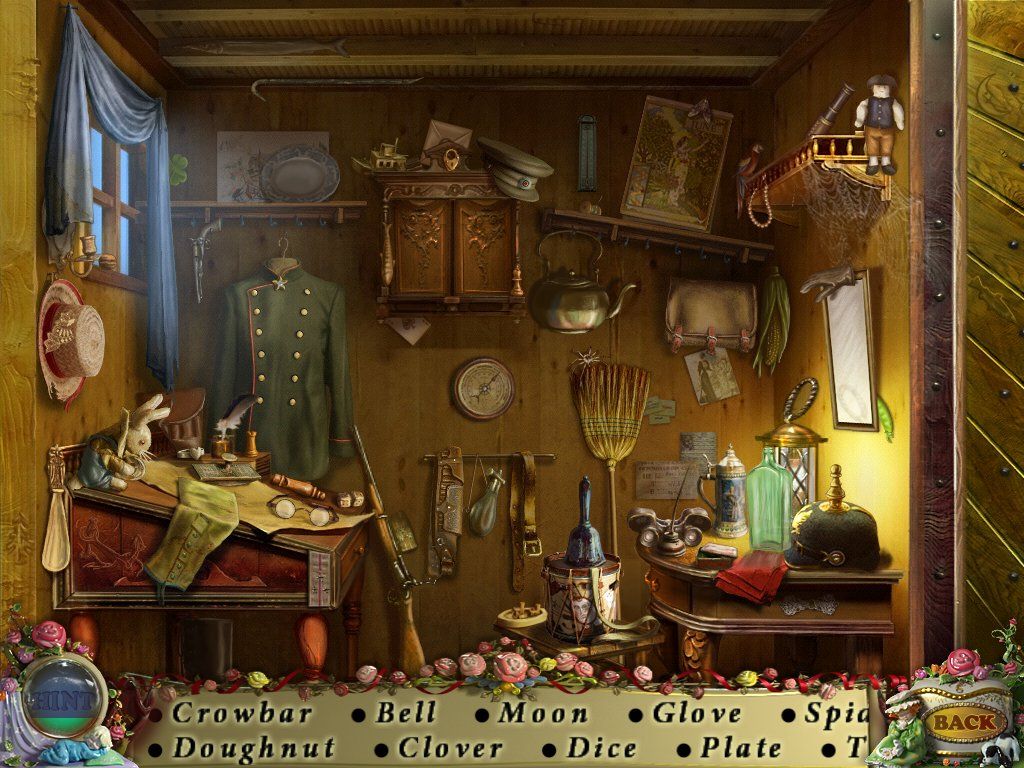
Hidden-object scenes break up the location-based puzzles with lists of items buried in dense piles of assorted objects. They are straightforward search challenges rather than deduction tests, and the hint button can point out a needed object when your eyes start to glaze over. Separate mini-games ask you to manipulate mechanisms and pieces; crucially, you can skip them after waiting a few minutes. That makes the game welcoming, although veterans may find that safety valve removes much of the tension.
Your biggest decision comes before the mystery really begins. Regular mode highlights active areas with sparkles and recharges hint and skip help more quickly, making it the sensible choice for a relaxed run. Expert mode removes the area hints and makes assistance slower, so it is better if you enjoy combing every screen yourself. Neither mode turns this into a punishing adventure, but expert at least asks you to pay closer attention.

Graphics
The game is viewed from the first person, with individual locations serving as the spaces where you inspect scenery, hunt for objects, and apply tools. Its most memorable imagery comes directly from the premise: Jane asleep with a headless doll, and mechanical dolls tied to Felicia’s soul-trapping threat. Hidden-object screens are deliberately cluttered with scattered paraphernalia, so finding the last listed item can become an exercise in patient visual scanning.
Story
A sleeping child and a headless doll is a strong opening image, and Souls of the Innocent wisely builds its mystery around it. Jane’s mother calls in a detective after her daughter falls into a deep, inexplicable slumber, giving the investigation an immediate emotional hook without needing a complicated setup.
The case also has a useful sense of continuity. Felicia, the Puppet Master’s daughter and inheritor of his creations, escaped the detective during an earlier investigation and now stands at the center of this one. Her mechanical dolls can trap human souls, which turns the puppet theme from a decorative spooky backdrop into the actual danger you are chasing.
Do not come in expecting the story to replace the puzzles as the main event. The narrative functions chiefly as momentum for the next locked-off location, hidden-object task, or mechanism. Still, it is a better frame than a generic missing-person chase: the threat is specific, the victim is clear, and stopping Felicia has a satisfying urgency.
Overall Experience
PuppetShow: Souls of the Innocent is a dependable casual mystery that understands the comfort-food appeal of the genre. You explore, spot objects in crowded scenes, carry a small collection of tools from place to place, and occasionally stop to solve a self-contained puzzle. It does not fight that formula, but the creepy puppet premise keeps it from feeling entirely anonymous.
Its friction points are also the genre’s familiar ones. If you dislike pixel-hunting through clutter or the repeated hunt for an item that will unlock a single obstacle, the investigation will eventually feel mechanical in more ways than one. The hints and optional skips are welcome because they prevent one stubborn object or mini-game from derailing the evening, but they can also make progress feel a little too automatic on regular mode.
Give it a chance if you want a spooky, approachable detective story with adjustable hand-holding and no appetite for being stuck indefinitely. Choose expert if you want to earn your discoveries through closer observation; choose regular if the goal is simply to unwind with a dark fairy-tale mystery. The payoff is a neatly focused rescue case, not a reinvention of hidden-object adventures, and that is enough when the mood is right.



Reviews
There are no reviews yet.