 Retro Replay Retro Gaming History, Reviews & Emulation
Retro Replay Review
Gameplay
The first hour of Red Clash ’93 has an immediate, no-nonsense pull. You are dropped into a military crisis and sent out on assignments with clear stakes: find enemy facilities, get friendly forces safely through hostile airspace, protect installations, or hit targets before they can become a larger problem. It is a campaign built around being useful rather than simply flying around looking for a fight.
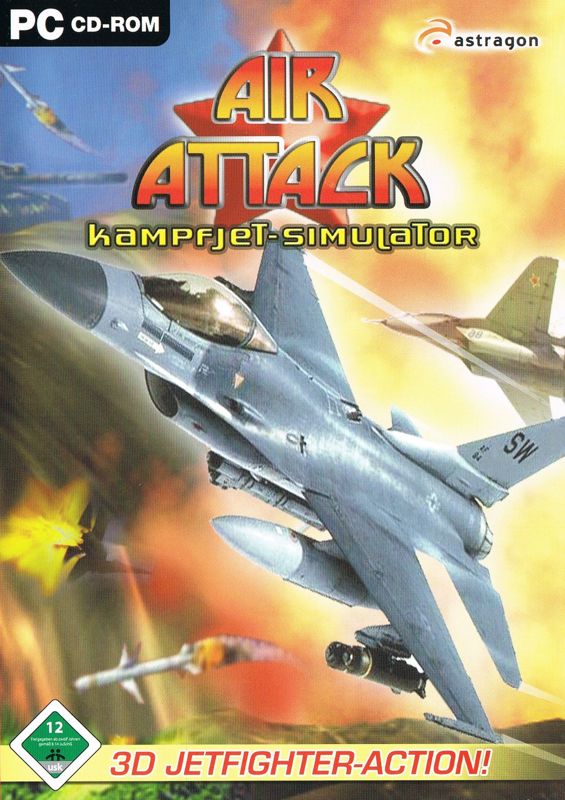
The plane selection is where the game’s mission list starts to click. Taking the F-14 when ground targets matter, loading into the Tornado for a bombing run, or choosing the F-16 for a mission likely to turn into a dogfight gives you a practical decision before takeoff. These aircraft differ mainly in armament, but that is enough to make the campaign feel less routine. You are not just picking a favorite silhouette; you are picking a tool.
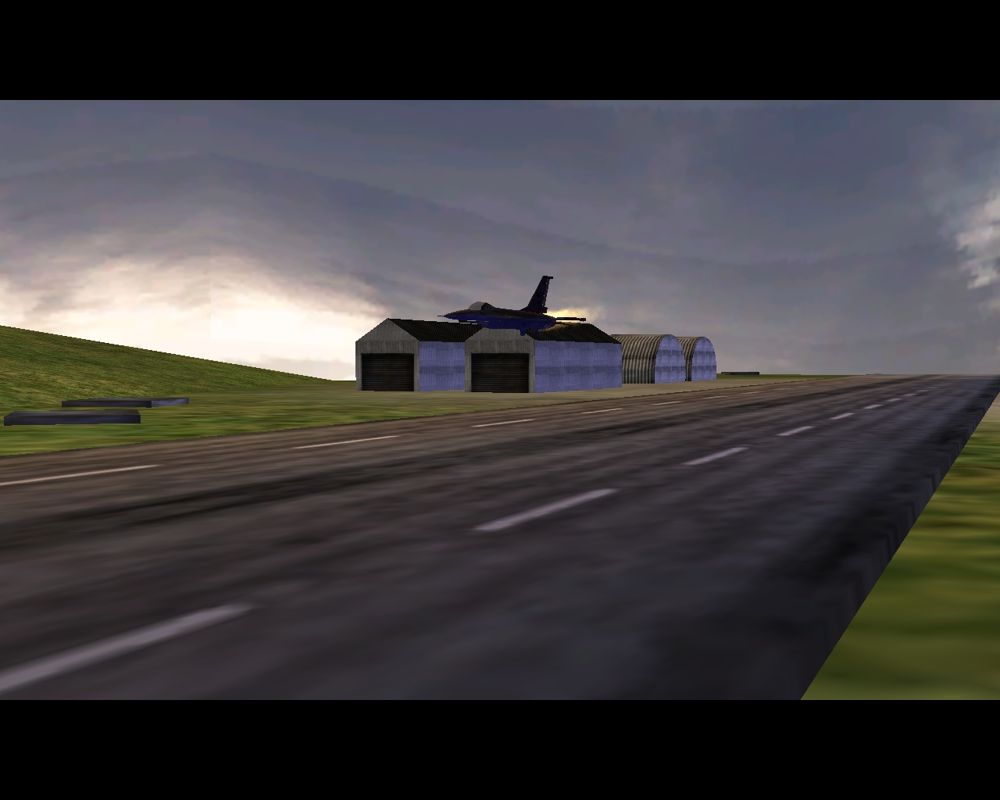
Landing at allied airfields during land missions is a welcome part of the loop. Refuelling, repairing, and restocking ammunition gives friendly territory real value and makes a sortie feel like an operation with room to recover, rather than a single all-or-nothing pass. Missions over the sea naturally do not offer that same safety net, which helps the campaign vary its pressure.
There are 20 missions here, and the spread of objectives does most of the heavy lifting. Reconnaissance assignments break up the attacks, while escorts and defenses ask you to think beyond simply destroying whatever appears in front of you. If you want a flight shooter where the mission brief matters and aircraft choice has a purpose, Red Clash ’93 has a solid, focused structure.
Graphics
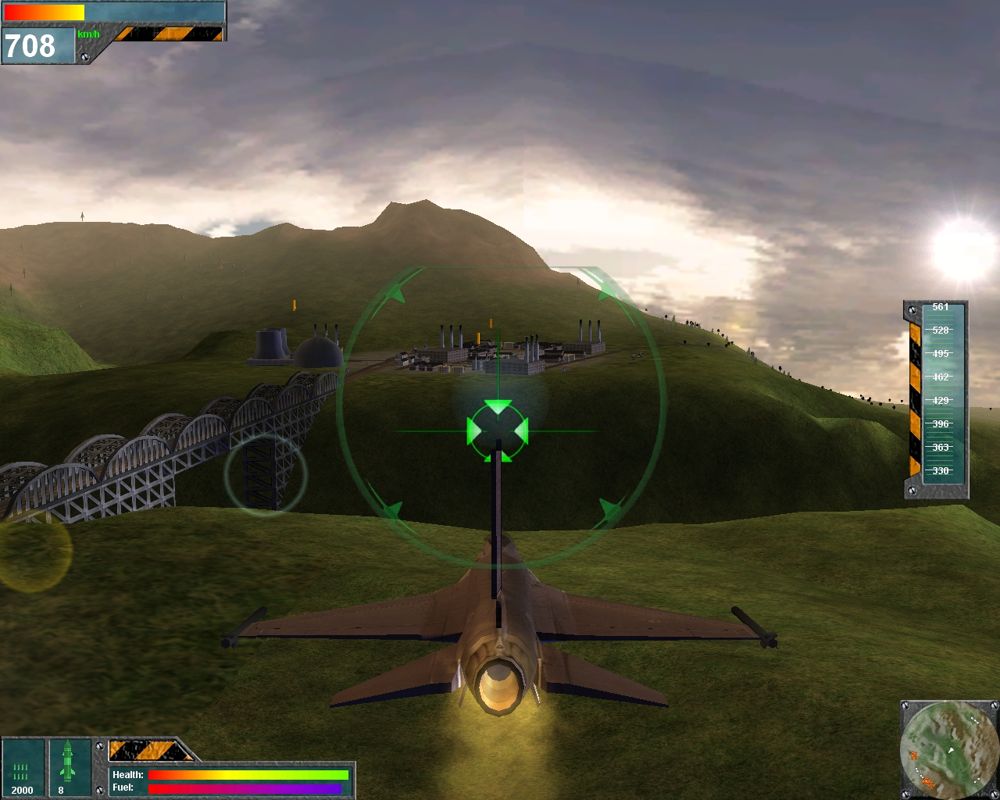
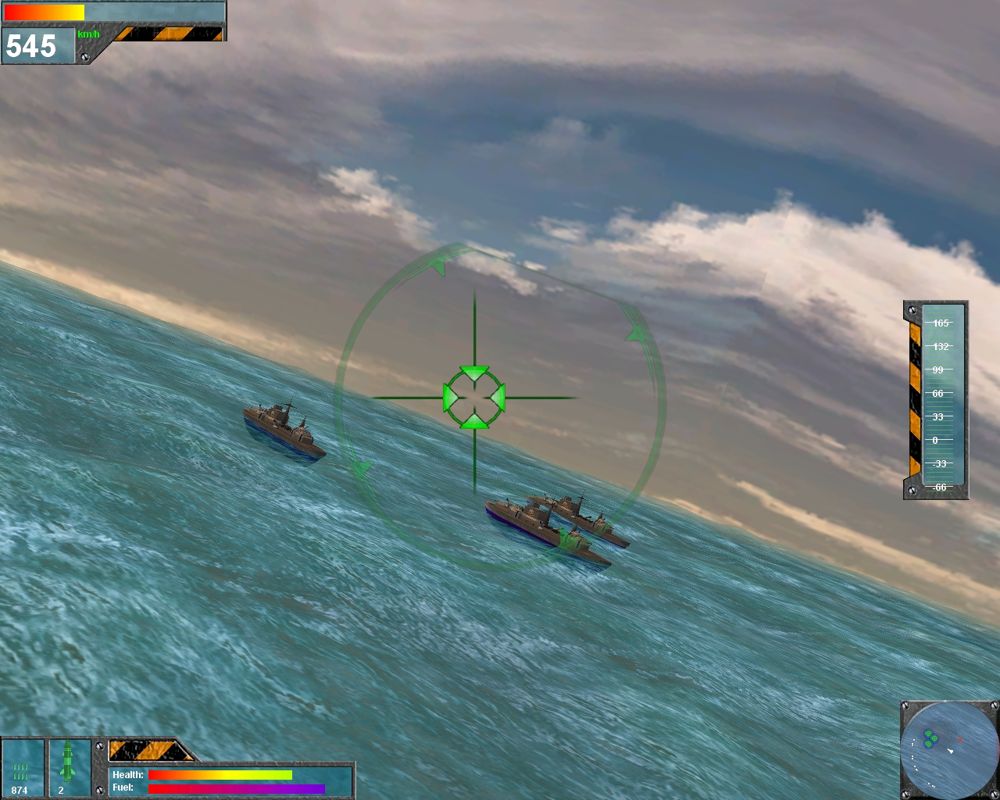
Red Clash ’93 puts its aircraft over coastal industrial areas, open sea, and missions high above the clouds. The different settings help the sorties avoid looking like the same battlefield repeated, while the F-14, Tornado, and F-16 give the hangar selection some recognizable military hardware to choose from.
Story
The campaign begins with a suitably tense alternate-political setup: ultra-nationalist generals revolt in ex-Soviet Russia, the president is forced into exile, and the Baltic states become the apparent target. It is a clean excuse to put a small NATO reconnaissance team into dangerous airspace, and it wastes little time getting you involved.
What works is the scale of your role. You are not positioned as the person resolving the whole crisis from a command bunker. You are part of a small unit asked to investigate growing military activity and deal with the threats it uncovers. That makes reconnaissance missions feel natural rather than like filler between combat sorties.
The story is most effective as a mission framework. Its geopolitical tension gives escorts, facility strikes, and defensive operations a shared purpose, so the campaign has more momentum than a disconnected set of aviation challenges. Come for the sorties, but the Baltic flashpoint is a good enough reason to care where the next flight takes you.
Overall Experience
Red Clash ’93 is a compact military flight shooter with a good instinct for changing the job before repetition sets in. Its best quality is not sheer aircraft count; it is the way three distinct loadout-minded choices meet a campaign that asks for reconnaissance, bombing, defense, escorting, and dogfighting. The Tornado’s 20 bombs are particularly easy to understand: when the brief calls for a serious bombing run, you know why you brought it.
The game will suit you if you enjoy structured sorties more than an aimless aerial sandbox. It asks you to follow objectives and pick the right aircraft for the assignment, then rewards that mindset with a campaign that moves across land, sea, and cloud-level missions. The local-network multiplayer, supporting up to eight people, is a worthwhile extra for a group that wants to turn the same aircraft roster against one another.
Its limitations are tied to its straightforwardness. With only three selectable aircraft and differences centered largely on weapons, the tactical range comes from mission context rather than deep aircraft management. Still, that focus is also its strength: Red Clash ’93 knows it wants to be a brisk sequence of military sorties, and the campaign gives each kind of flight a reason to exist.
Give it a chance if a focused early-2000s aviation campaign sounds more inviting than a sprawling simulation. The payoff is a varied run of missions where scouting, protecting, striking, and surviving dogfights all belong to the same escalating conflict.


Reviews
There are no reviews yet.